
Reverse Mortgage to Protect Against Inflation: Purchasing Power in Retirement
Use a reverse mortgage to hedge against inflation and preserve purchasing power in retirement. Maintain your lifestyle despite rising costs in Ontario.
What if inflation erodes your retirement savings faster than you expected? Many Ontario seniors are discovering that fixed pensions and investment returns struggle to keep pace with rising costs for healthcare, housing, and daily living. A reverse mortgage provides a strategic buffer—allowing you to access home equity now to maintain your lifestyle even as inflation persists.

The Hidden Threat: Inflation in Retirement
Retirement income planning typically assumes stable or modest inflation. But recent years have challenged that assumption. From 2021 to 2023, Canadian inflation peaked at 8.1%—the highest in 40 years. Though inflation has moderated, it remains above the Bank of Canada's 2% target.
For Ontario seniors on fixed incomes, inflation is quietly devastating:
- A $3,000/month income in 2020 has the purchasing power of $2,400 in 2024 (20% loss)
- Healthcare costs rise 4–6% annually, faster than general inflation
- Utilities, property taxes, and home maintenance costs are rising 3–5% per year
- Prescription medications and medical devices often outpace general inflation
The math is brutal. A retiree who planned a $60,000 annual lifestyle in 2020 needs roughly $75,000 today to maintain that same standard of living. Most fixed-income retirees haven't had corresponding income increases.
How Inflation Silently Erodes Retirement Plans
Let's model this in realistic terms. Consider a typical Ontario couple, both 65, with combined retirement income of $75,000/year (CPP, OAS, private pensions):
| Year | Planned Income | 3% Annual Inflation | Real Purchasing Power | Gap |
|---|---|---|---|---|
| 2026 | $75,000 | $75,000 | 100% | $0 |
| 2028 | $75,000 | $79,700 | 94% | $4,700 |
| 2030 | $75,000 | $84,500 | 89% | $9,500 |
| 2035 | $75,000 | $95,000 | 79% | $20,000 |
| 2040 | $75,000 | $106,800 | 70% | $31,800 |
Without additional income, a $75,000 retirement budget becomes a $43,000 budget (in real terms) by age 85.
This explains why so many retirees reduce spending, cut back on activities, and report feeling financially squeezed—even when their pensions seem adequate on paper.

Why Traditional Solutions Fall Short
Government Benefits (CPP/OAS) Don't Keep Pace Perfectly
While CPP and OAS are inflation-indexed, the indexing uses the Consumer Price Index (CPI), which lags real inflation for seniors. Seniors spend disproportionately more on healthcare, utilities, and housing—areas where inflation is highest.
Investment Returns Can't Always Match Inflation
Many retirees are in conservative portfolios (bonds, GICs, dividend stocks). In recent years, these have struggled to match inflation. A $500,000 portfolio returning 3% generates only $15,000 annually—less than inflation itself eats away.
RRSPs and TFSAs Get Depleted Over Time
If you're drawing down registered accounts to cover inflation gaps, you're reducing your capital base. This is a one-way street—once withdrawn, those funds are gone.
Working Longer Isn't Always Possible
While some retirees can stay employed longer to earn income, health issues, mandatory retirement, or caregiving responsibilities often make this impossible.
The Reverse Mortgage Inflation Hedge: A Different Approach
A reverse mortgage offers a strategic alternative: access home equity now, before inflation further reduces your purchasing power.
Here's the logic:
- Your home value rises with inflation. Historically, real estate in Ontario appreciates at or above the inflation rate.
- Your available borrowing capacity is tied to your home's current value. As inflation pushes home values up, your borrowing power increases.
- By accessing home equity today, you lock in today's prices. Money borrowed at age 65 has more purchasing power than waiting until age 75.
- You can use the proceeds strategically to either (a) increase your income through investments, or (b) directly fund higher living costs.
This is not a perfect hedge, but it's a practical one for homeowners with significant equity.
Real Example: The Wong Family's Inflation Strategy
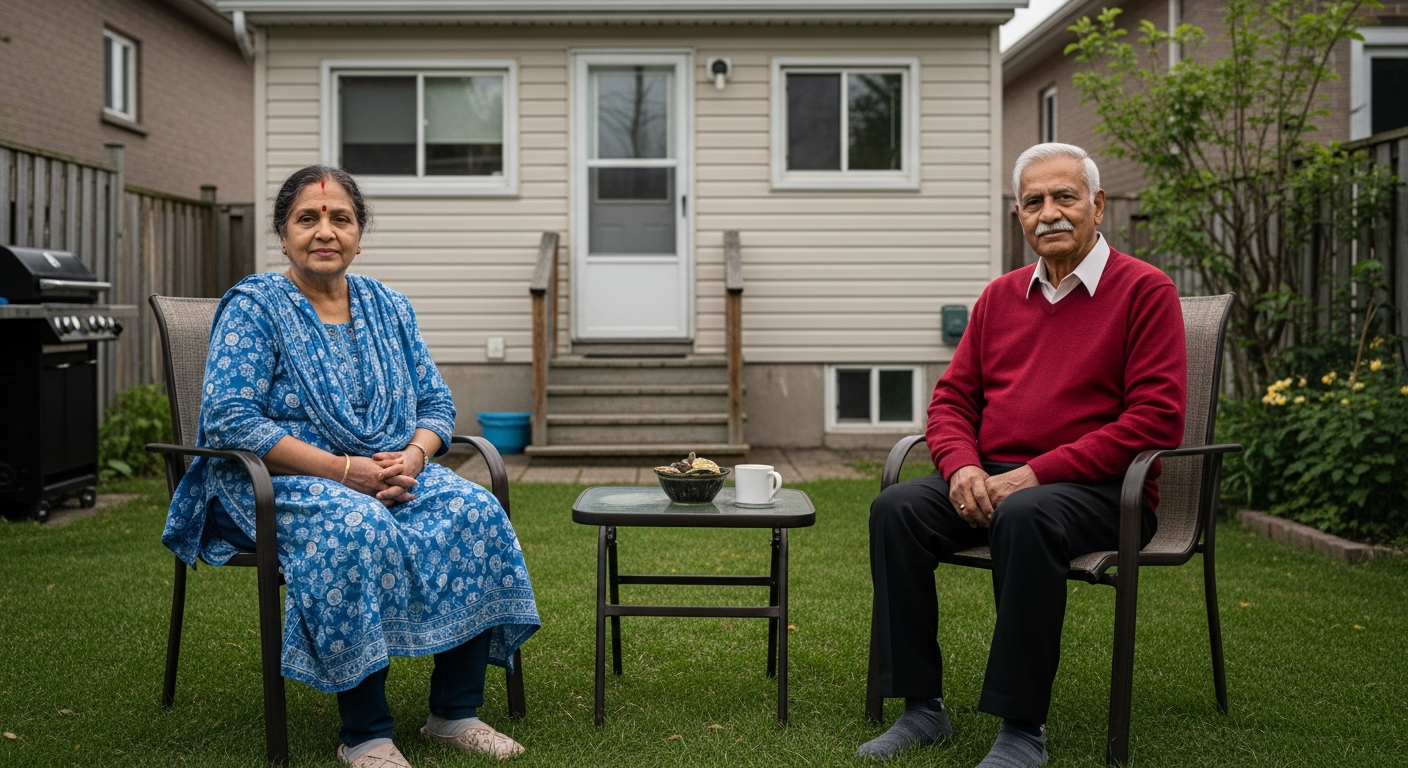
Robert and Linda Wong, both 68, live in a Toronto home valued at $850,000. Their combined annual retirement income is $80,000 (CPP, OAS, and a small pension from Linda's teaching career).
When they retired at 65, this income felt comfortable. But by 2024, inflation had eroded their purchasing power by approximately 18%. They were cutting back on activities, avoiding travel, and even delaying medical appointments to save money.
Rather than downsize their home (which they loved), they explored a reverse mortgage. They were able to access $425,000 (50% of home value). They borrowed $150,000 and implemented this strategy:
- $100,000 invested in a balanced portfolio generating 4–5% annually ($4,000–$5,000/year extra income)
- $50,000 held as a buffer for one-time costs (property repairs, medical expenses, helping grandchildren)
The result: their annual income rose from $80,000 to $84,000–$85,000. Over 10 years, the compounding effect helped them stay ahead of inflation. The reverse mortgage interest (approximately 6.5%) is less than the 4–5% return they're generating, creating a small spread in their favor.
More importantly, they maintained their lifestyle without downsizing—and they had a financial cushion for emergencies.
The Reverse Mortgage Numbers: Cost vs. Benefit
Of course, a reverse mortgage isn't free. Interest compounds over time. Here's an honest breakdown:
| Scenario | Home Value | Age | Borrow | Rate | Interest/10 Years | Real Value of Borrowed Funds (3% inflation) |
|---|---|---|---|---|---|---|
| Early Access (Age 65) | $700,000 | 65 | $100,000 | 6.5% | $42,000 | $74,000 |
| Mid-Age Access (Age 72) | $700,000 | 72 | $100,000 | 6.5% | $42,000 | $78,000 |
| Delayed Access (Age 80) | $700,000 | 80 | $100,000 | 6.5% | $42,000 | $82,000 |
Key insight: While the interest cost is identical ($42,000), the real value of that $100,000 has declined due to inflation. By accessing funds earlier, you get more purchasing power for your money.
According to the Bank of Canada, inflation persistence in 2025-2026 remains a concern for fixed-income households. Accessing home equity while your purchasing power is still intact may be strategically wise.
When a Reverse Mortgage Makes Sense for Inflation Protection
✓ You own a home with significant equity ($250,000+) ✓ Your retirement income is fixed or growing slowly ✓ You plan to stay in your home 10+ years ✓ You want to maintain your current lifestyle ✓ You prefer not to downsize or work longer ✓ You're comfortable with the concept of compounding interest
✗ You have only a few years left in retirement (reverse mortgages work best long-term) ✗ You plan to move or downsize soon ✗ Your home is declining in value ✗ You're uncomfortable with any debt ✗ Your health is deteriorating and you may enter long-term care soon
Integrating a Reverse Mortgage Into Your Retirement Plan
If you decide a reverse mortgage could help, here's a strategic approach:
- Get your home appraised to know your current equity
- Consult with a tax professional about the investment strategy you're considering
- Get quotes from at least 2-3 lenders to compare rates
- Work with a financial advisor to develop an investment plan (if borrowing for income generation)
- Discuss with your family about the implications for your estate
- Access funds in stages rather than all at once (most lenders offer line-of-credit features)
Speak with Rick Sekhon, a licensed reverse mortgage specialist in Ontario, for a no-obligation conversation about how a reverse mortgage could fit into your inflation-resistant retirement plan.
Frequently Asked Questions
Is inflation protection the best use of a reverse mortgage?
Not necessarily—it's one strategic use. Reverse mortgages work well for many purposes: home modifications for aging in place, debt elimination, healthcare costs, and helping family members. The key is identifying your specific financial need and whether a reverse mortgage is the best tool.
What if deflation happens instead?
Deflation (declining prices) would reduce the real cost of your mortgage interest, which would be favorable. However, deflation is unlikely in Canada in the foreseeable future.
Can I get a reverse mortgage just to protect against inflation, without any specific immediate need?
Yes. Lenders don't require you to have a specific spending plan. You can access funds and use them however you choose—including holding them as a buffer against future inflation.
What if interest rates rise after I get a reverse mortgage?
If you lock in a fixed-rate reverse mortgage now, future interest rate increases won't affect your rate. If you choose a variable-rate product, rates could rise, increasing your interest cost.
Does accessing a reverse mortgage for income generation affect my OAS or GIS?
No. The borrowed funds are not considered income. However, if you invest the funds and generate investment income, that income may be reportable for tax purposes and could affect means-tested benefits. Speak with a tax professional.
How do Ontario property taxes interact with inflation and reverse mortgages?
Property taxes in Ontario are rising 4–5% annually. You remain responsible for all property taxes on your home, even with a reverse mortgage. Factor this into your purchasing power calculations.
Conclusion: Staying Ahead of Inflation Without Sacrificing Your Home
Inflation is one of the hidden threats to retirement security. Many Ontario seniors who were financially comfortable at retirement are now struggling as purchasing power erodes. Without a proactive strategy, this only gets worse.
A reverse mortgage offers one solution: access home equity now, before further inflation reduces its real value, and use those funds to either (1) generate supplemental investment income, or (2) directly fund higher living costs. Combined with CPP, OAS, and private pensions, a strategic reverse mortgage can help you maintain your lifestyle and stay ahead of inflation.
The key is planning ahead—before inflation forces you to make difficult choices about your home and lifestyle.
Ready to explore how a reverse mortgage could protect your purchasing power? Get your free Ontario Reverse Mortgage Guide →
Ready to Learn More?
Get the free Ontario Reverse Mortgage Guide and find out exactly how much you could unlock from your home.
Get My Free Guide →Related Articles
Does a Reverse Mortgage Affect CPP, OAS & GIS? Government Benefits Explained
Reverse mortgage proceeds do not count as income for CPP, OAS, or GIS. Understand how to use reverse mortgages strategically to protect government benefits.
Read →Reverse Mortgage Interest Rate Forecast: 2026-2027 Outlook
Reverse mortgage interest rate forecast for 2026-2027: expert analysis of Bank of Canada policy, bond yields, and what Ontario borrowers should expect.
Read →Reverse Mortgage on a Condo in Ontario: Complete 2026 Guide
Learn about reverse mortgages on condos in Ontario, including eligibility requirements, special considerations, and fees involved.
Read →