
Reverse Mortgage for Home-Based Healthcare Services Business: Senior Entrepreneurship
How Ontario seniors can use reverse mortgages to fund startup of home-based healthcare services businesses, creating income and community impact.
The Senior Entrepreneur Opportunity
You're retired and healthy. You spent 30 years as a nurse, respiratory therapist, or home care coordinator. You left the institutional healthcare world, but you miss the work—the connection with people, the solving of problems, the feeling of making a difference.
Yet you're limited. You can't work full-time at a hospital (too demanding). But what about starting your own service? A small home-based healthcare business where you offer services like:
- Medication management coordination (helping seniors and families navigate complex prescriptions)
- Health coaching (supporting people managing chronic disease, lifestyle change)
- Post-hospital recovery coordination (helping seniors recover smoothly after discharge, preventing readmission)
- Caregiver training (teaching family members proper body mechanics, medication safety, communication with medical providers)
- Elderly care consulting (advising families on aging in place, accessibility, long-term care planning)
These services have real market demand: Ontario's aging population desperately needs coordinated care navigation. Families spend thousands hiring private consultants because government services are fragmented. You could fill that gap.
But startup requires investment: business licensing, insurance, technology platform for virtual consultations, marketing, 3-6 months of operating costs before revenue stabilizes. Total: $8,000-$20,000.
You don't have extra savings. But you have home equity. A reverse mortgage enables you to fund healthcare service startup—creating income and purpose in later years while maintaining the flexibility that part-time, home-based work allows.
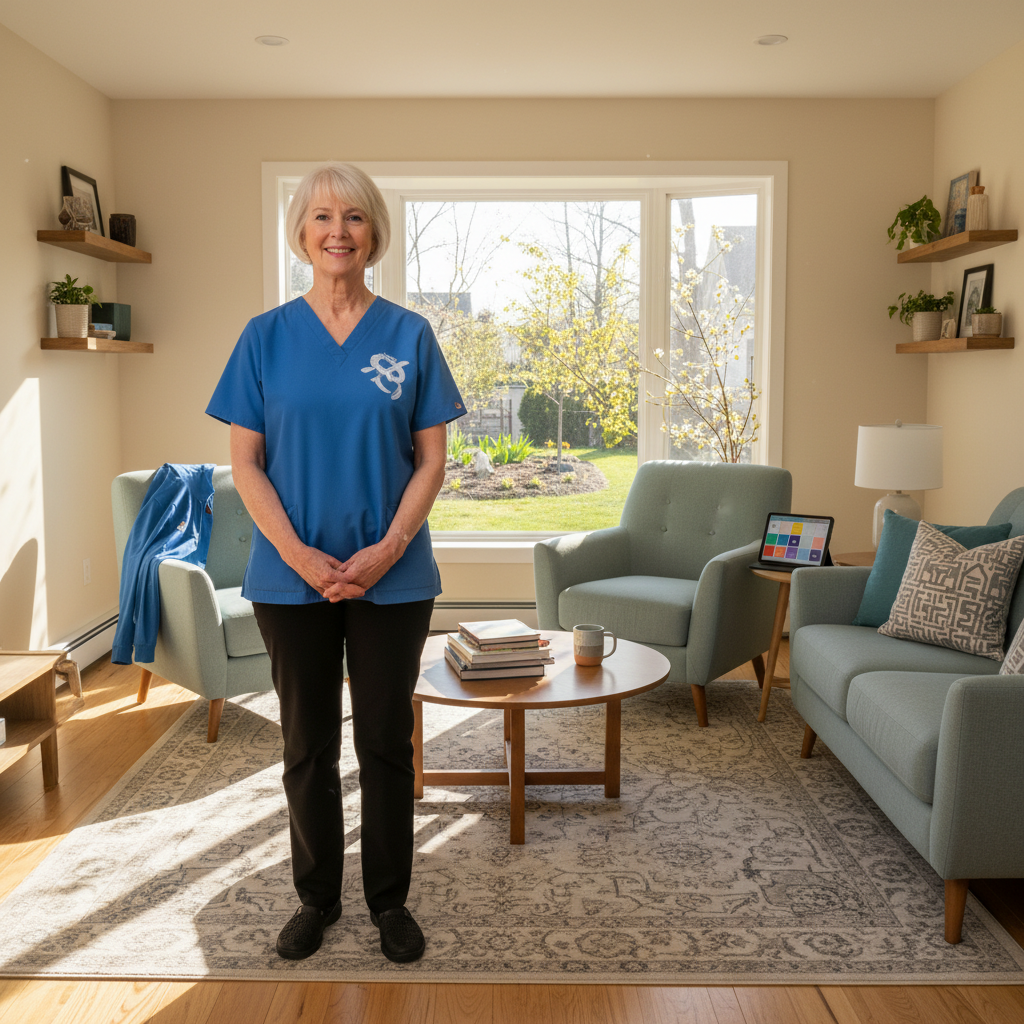
The Healthcare Services Market Opportunity in Ontario
Healthcare delivery in Ontario is fragmented. Seniors and families navigate:
- Multiple specialists (cardiologist, endocrinologist, nephrologist) with no single coordinator
- Hospitals discharging seniors with minimal transition support
- Prescriptions that interact dangerously because no one manages the full medication list
- Accessibility barriers (seniors don't know which programs exist; programs don't know about seniors)
- End-of-life planning that never happens until crisis forces emergency decisions
Families often hire private consultants (nurses, social workers, care managers) to coordinate and navigate. Cost: $100-$250/hour. Few families can afford ongoing support; many do it themselves despite lacking expertise.
This gap creates opportunity for senior entrepreneurs with healthcare background:
Market Demand:
- Ontario population 65+: ~2.3 million
- Many have adult children in other provinces/countries wanting to support but living far away
- Estimated willing to pay for professional coordination: 10-15% = 230,000-345,000 people
- Even capturing 0.1% of market = 2,300-3,450 clients
Typical Service Revenue:
- Medication coordination: $150-$300/consultation
- Health coaching: $80-$150/hour (can be part-time, flexible)
- Post-discharge support package: $500-$1,500 per client
- Caregiver training workshops: $50-$100 per person per session
A small home-based practice (5-10 clients/month at $200 average) generates $1,000-$2,000/month = $12,000-$24,000/year supplemental income.
This isn't get-rich-quick; it's meaningful supplemental income leveraging expertise while maintaining flexibility.
Types of Home-Based Healthcare Services With Highest ROI
Not all healthcare service ideas are equally viable. Focus on services with:
- Clear market demand
- Regulatory clarity (can you offer it without institutional affiliation?)
- Replicability (can you grow beyond yourself?)
- Part-time feasibility (don't require 40+ hours/week)
Highest ROI Healthcare Services:
1. Medication Management Coordinator
- Market: Adult children managing parent's prescriptions; seniors overwhelmed by multiple meds
- Service: Review all medications, identify interactions, coordinate with pharmacy and physicians
- Startup cost: $5,000-$10,000 (liability insurance, basic tech, marketing)
- Revenue: $150-$300/consultation; recurring clients common
- ROI: 12-18 month payback
2. Health Coaching (Chronic Disease Focus)
- Market: People diagnosed with diabetes, hypertension, COPD wanting lifestyle support
- Service: Regular coaching on medication compliance, diet, exercise, stress management
- Startup cost: $3,000-$8,000 (certification in health coaching if not already credentialed; tech platform; marketing)
- Revenue: $80-$150/hour; can be recurring weekly or monthly
- ROI: 6-12 month payback
3. Post-Discharge Care Coordinator
- Market: Hospitals discharging seniors with complex needs; families wanting transition support
- Service: Manage post-discharge medications, arrange home support, coordinate with specialists, prevent readmission
- Startup cost: $5,000-$12,000 (referral relationships with hospitals; tech for coordination; liability insurance)
- Revenue: $500-$1,500 per discharge support package; hospitals/families both pay
- ROI: 6-12 month payback with recurring referral stream
4. Caregiver Training & Education
- Market: Adult children new to caregiving role; need to learn body mechanics, safety, communication
- Service: In-home or virtual training sessions teaching proper techniques, recognizing complications, self-care
- Startup cost: $3,000-$7,000 (develop curriculum; tech for virtual delivery; marketing)
- Revenue: $50-$150 per person per session; can deliver to 2-3 family groups per month
- ROI: 6-9 month payback
5. Elderly Care Navigation Consultant
- Market: Families overwhelmed by choices (where to age in place, accessibility modifications, long-term care planning)
- Service: One-on-one consultations assessing situation, providing options, explaining tradeoffs, facilitating decisions
- Startup cost: $4,000-$9,000 (develop assessment tools; create reference library; marketing)
- Revenue: $100-$250/consultation; often 3-5 consultations per client over planning period
- ROI: 12-18 month payback; often generates referrals for ongoing coaching
Lowest ROI Ideas to Avoid:
- Personal care services (bathing, toileting) — Requires proximity, physically demanding, insurance expensive, revenue low ($25-$35/hour)
- Nursing services without RN licensure — Legal/regulatory barriers; don't pursue without current license
- Medical services (wound care, catheter management) — Regulatory requirements, liability, only worth doing full-time
Focus on services leveraging expertise + advisory capacity, not physical care.
Startup Costs & Funding via Reverse Mortgage
Comprehensive Startup Budget (Medication Management Coordinator Service):
- Business licensing/registration: $300-$500
- Professional liability insurance (essential): $1,500-$3,000/year (pay Year 1)
- Tech platform for consultations & client management: $1,000-$3,000 (software subscriptions, hardware)
- Professional website & online presence: $1,000-$2,000
- Marketing & initial client acquisition: $2,000-$5,000
- Office setup (dedicated space, filing, basic equipment): $1,000-$2,000
- Operating capital (3-6 months expenses before revenue): $3,000-$6,000
- Professional development/recertification (if needed): $500-$1,500
- Total Startup: $10,300-$23,000 (typically $12,000-$18,000)
How to Fund via Reverse Mortgage:
Option 1: Upfront Lump Sum
- Access reverse mortgage: $15,000
- Complete all startup tasks in 2-3 months
- Launch service Month 4-5
- Stabilize business by Year 2
Option 2: Phased Funding
- Initial reverse mortgage access: $8,000 (licensing, insurance, basic tech, website)
- Begin preliminary client conversations (pre-launch)
- After first 2-3 clients paying, use revenue + initial savings to fund additional growth
- Second reverse mortgage draw (Month 6-9): $5,000-$8,000 for marketing expansion
- Total reverse mortgage: $13,000-$16,000 over 9 months
Option 2 is superior: validates business concept before fully funding it. If you launch and discover market interest is lower than expected, you've minimized reverse mortgage borrowing.
Making Healthcare Service Business Viable
Many home-based businesses fail because owners under-estimate time, over-estimate revenue, or lack business fundamentals. Succeed through:
1. Market Research Before Launch
- Survey 20-30 potential clients: Would you use this service? How much would you pay?
- Verify demand is real, not assumed
- Identify actual target market (families with aging parents? Health institutions? Individual seniors?)
2. Realistic Revenue Projections
- First year: Conservative. Assume 3-5 clients/month average, not 15.
- Calculate monthly revenue: 4 clients × $200 = $800/month = $9,600/year
- Compare to $15,000 startup cost: Payback ~18 months with conservative volume
- Only if market research validates demand of 10+ clients/month should you project higher
3. Business Structure & Accounting
- Register business appropriately (sole proprietor, corporation, partnership)
- Set up business bank account (separate from personal)
- Track income and expenses meticulously (for tax purposes and to understand what's working)
- Hire accountant if revenue exceeds $30,000/year
4. Professional Network Building
- If offering medication coordination, build relationships with pharmacists and physician offices
- If offering post-discharge support, connect with hospital discharge coordinators and social workers
- If offering caregiver training, partner with senior living communities
- Referral network is often better than direct marketing
5. Liability & Risk Management
- Professional liability insurance is non-negotiable (typically $1,500-$3,000/year)
- Clearly document scope of service (you're providing consultation/education, not clinical care)
- Have clients sign agreements acknowledging limitations of your role
- Never provide medical advice outside your scope; always encourage consultation with physician/RN
6. Part-Time Sustainability
- Design service so it's part-time feasible
- Virtual consultations (Zoom, phone) > in-home visits (lower time/travel burden)
- Package services (e.g., 4-session coaching program) rather than ongoing clients
- Create passive or semi-passive revenue (online courses, resource libraries, templates clients purchase)
Managing Reverse Mortgage Repayment
A reverse mortgage isn't a grant. Interest accrues. You must have exit strategy:
Scenario 1: Business Becomes Successful Income Stream
- Year 1: Business generates $10,000 revenue
- Year 2: $18,000 revenue
- Year 3: $25,000 revenue
- By Year 3, you've covered startup costs and repaid reverse mortgage interest
- Ongoing: Business income supplements retirement; reverse mortgage is paid down from business revenue
Scenario 2: Business Stays Part-Time Supplemental
- Business generates consistent $12,000-$18,000/year ongoing
- You use that income to pay reverse mortgage interest (~$900-$1,200/year on $15,000 loan at 6%)
- Reverse mortgage doesn't grow; interest is covered by business income
- At death, reverse mortgage is repaid from estate; business operations/client base can pass to heir or colleague if desired
Scenario 3: Business Doesn't Achieve Traction
- After 18-24 months, it's clear demand is lower than projected
- You wind down and stop offering service
- Remaining reverse mortgage balance is debt you bear
- This is the risk—not catastrophic but real
Plan for repayment before borrowing. Reverse mortgages aren't free; ensure business viability justifies the cost.

Tax Implications of Home-Based Healthcare Business
Operating a business from home has tax benefits:
Deductible Business Expenses:
- Home office (portion of mortgage/rent, utilities, property tax proportional to office space)
- Professional services (accountant, lawyer, website developer)
- Marketing and advertising
- Insurance and licensing fees
- Professional development and training
- Equipment and supplies specific to business
Tax Documentation:
- Keep meticulous records of income and expenses
- Separate business and personal accounts
- File business income tax forms (T1 General with business schedule)
- May create small-business tax advantages (deductions that reduce taxable income)
CPP & OAS Implications:
- Self-employment income is counted as income for OAS clawback purposes
- If you're receiving OAS and business generates $15,000/year, that increases your net income and may trigger clawback
- Generally worth it (business income provides independence) but understand the tax impact
Consult with accountant to optimize tax treatment and understand how business income affects government benefits.
When NOT to Start Healthcare Service Business
This model doesn't work if:
- You don't have genuine interest in working part-time; you want full retirement
- You lack professional credentials or expertise in healthcare domain
- You're not comfortable with technology (virtual consultations require comfort with Zoom, email, online platforms)
- You're unwilling to do business administration (marketing, accounting, client management)
- Your health is declining; you can't commit 10-15 hours/week
In these cases, don't pursue the business. Use reverse mortgage for other purposes (aging in place modifications, family support, travel, etc.).
But if you have expertise, energy, interest, and health to support part-time work, a home-based healthcare service business can be tremendously fulfilling while generating meaningful supplemental income and community impact.
Taking the Next Step
If you're considering starting a healthcare service business:
-
Clarify Your Service — What specific service would you offer? Who's your target market?
-
Do Market Research — Talk to 15-20 potential clients. Would they use the service? How much would they pay?
-
Research Regulatory Requirements — Ensure your service is legal and doesn't require licenses/credentials you lack
-
Assess Reverse Mortgage Capacity — Meet with specialist; determine available equity and how much startup capital you can access
-
Create Business Plan — Document service description, target market, pricing, marketing strategy, financial projections
-
Build Professional Network — Connect with referral sources before launch (physicians, hospitals, social services organizations)
-
Launch Gradually — Start with 2-3 pilot clients before fully marketing. Validate concept works before scaling.
-
Track Financials — From day one, track income and expenses. Understand what's working and what's not.
Reverse mortgages often fund consumption (travel, healthcare, family support). But they can also fund creation—new businesses, new income streams, new purpose in retirement.
For seniors with healthcare expertise and energy to work part-time, a home-based healthcare service business is one of the most meaningful uses of reverse mortgage equity: creating income, providing community service, and finding purpose in later years.
Your knowledge matters. Your care matters. Your expertise can help hundreds of families navigate aging and healthcare complexity. A reverse mortgage can make that possible.
Ready to Learn More?
Get the free Ontario Reverse Mortgage Guide and find out exactly how much you could unlock from your home.
Get My Free Guide →Related Articles
Reverse Mortgage for Workplace Injury Recovery: Supporting Adult Child's Career Transition
Help your adult child rebuild their career after workplace injury. Learn how reverse mortgages fund recovery, retraining, and financial stability during career transition.
Read →Reverse Mortgage When Adult Child Faces Student Loan Default: Creditor Protection Strategy
Protect your home when adult child has severe student debt. Learn how reverse mortgage planning shields your assets from student loan creditors in Ontario.
Read →Reverse Mortgage to Fund Adult Child's Real Estate License and Business Launch
Help your adult child launch a real estate career. Reverse mortgage covers licensing, training, first-year operating costs, and marketing to build a sustainable income.
Read →