
Reverse Mortgage for Home Energy Efficiency Investment: Retire Comfortably, Reduce Costs
How Ontario seniors can use reverse mortgages to invest in home energy efficiency upgrades, reducing utility costs and improving comfort during retirement.
The Energy Crisis Most Retirees Don't See Coming
You retire on a fixed income: $28,000/year CPP + $18,000/year OAS = $46,000 total. Your budget is tight but manageable. Then winter arrives.
Your 1985-built home has single-pane windows, minimal insulation, and a furnace that's 20 years old. Heating costs that seemed manageable at 60 are devastating at 75. Your January heating bill is $340. February: $380. March: $320. Winter total: $1,200.
You can reduce thermostat to 18°C (64°F), but it's uncomfortable. You can wear more layers, but you're cold. This is your home—the place where you should feel safe and comfortable—and you're living with discomfort to manage costs.
This is the invisible crisis: aging retirees living uncomfortably in inefficient homes because energy costs have become unaffordable on fixed incomes. Yet the solution—energy efficiency upgrades—requires upfront capital ($8,000-$25,000) that most retirees can't afford.
A reverse mortgage solves this paradox: access home equity to invest in efficiency upgrades that reduce utility costs by 20-40% annually, improving comfort while lowering your fixed-income burden. The energy savings help pay back the reverse mortgage.

The Energy Cost Problem in Ontario Retirement
Ontario's utility costs have risen 40%+ over the past decade while wages have stagnated. For retirees on fixed income, this creates growing burden:
Annual Heating Costs by Home Age/Efficiency (Ontario 2026):
Pre-1980 homes (poor insulation, single-pane windows):
- Annual heating: $1,400-$2,000
- Cooling (summer A/C): $600-$900
- Electricity (lights, appliances): $1,200-$1,600
- Total: $3,200-$4,500/year
1980-2000 homes (moderate insulation, older windows):
- Annual heating: $900-$1,300
- Cooling: $400-$600
- Electricity: $1,000-$1,400
- Total: $2,300-$3,300/year
2000-2020 homes (improved insulation, modern windows):
- Annual heating: $600-$900
- Cooling: $250-$400
- Electricity: $900-$1,200
- Total: $1,750-$2,500/year
Modern efficient homes (R-40 insulation, triple windows, heat pump):
- Annual heating/cooling: $400-$600
- Electricity (heat pump reduces natural gas): $800-$1,000
- Total: $1,200-$1,600/year
The Gap: A retiree in a pre-1980 home (common in older Ontario communities) pays $3,200-$4,500/year in utilities. A modern efficient home costs $1,200-$1,600. Annual difference: $1,600-$3,000/year.
For someone on $46,000/year fixed income, an extra $2,000+ in utility costs is a 4% budget reduction. That's substantial.
Why Efficiency Upgrades Create ROI for Retirees
For most people, "home improvement ROI" is about resale value. That logic doesn't apply to retirees who plan to age in place. But there's a different ROI: operational savings.
Investment & Payback Example:
Your 1985-built home has single-pane windows and poor insulation. You invest:
- Window replacement (20 windows): $8,000
- Attic/wall insulation upgrade: $4,000
- Furnace replacement with high-efficiency model: $6,000
- Weatherstripping and air-sealing: $1,000
- Total investment: $19,000
Expected efficiency improvement: 30%
Current energy cost: $3,500/year Post-upgrade cost: $2,450/year Annual savings: $1,050/year
Payback period: $19,000 ÷ $1,050 = 18 years
At first glance, 18-year payback seems poor. But reframe it:
- You're 72 when you invest. Life expectancy: 87. That's 15 years of $1,050 annual savings = $15,750
- But you're also improving comfort, health, and aging in place quality
- Plus: As utility rates increase 2-3%/year, your savings grow. Year 20 savings might be $1,400/year, not $1,050
- Plus: Tax credits and rebates typically reduce actual investment cost by 20-30% (Ontario Retrofits, Canada Greener Homes)
True ROI:
- Upfront cost (after rebates): $14,000-$16,000
- Annual savings: $1,050 starting, growing to $1,400 by Year 10
- 15-year total savings: $18,000-$22,000
- Net benefit: $2,000-$8,000 over your lifetime, plus dramatically improved comfort
For aging in place, this is exceptional return: you're getting paid (through energy savings) to stay warm and comfortable.
Government Rebates & Incentives (Ontario 2026)
Before investing in efficiency upgrades, maximize government support:
Canada Greener Homes Grant
- Federal program providing up to $5,000 rebate for home energy retrofits
- Covers: Insulation, heat pump installation, window replacement
- Eligibility: Homeowner, principal residence, energy audit completed
- Application: Via Canada Energy Rebate
Ontario Retrofits Program
- Up to $3,000 additional rebate for Ontario residents
- Covers: Insulation, HVAC, heat pump upgrades
- Stacks with federal grant
Utility Company Rebates
- Enbridge: $500-$2,000 for furnace/heat pump upgrades
- Hydro One: $300-$1,500 for insulation/window upgrades
- Local utilities: Vary by provider; check directly
Property Tax Deferral (Ontario)
- If you're 65+, Ontario allows property tax deferral
- You can defer property taxes to fund energy efficiency upgrades
- Deferred taxes become lien on property, repaid from estate
- Effectively: Free financing for efficiency upgrades
Total Available Incentives: $4,000-$10,000 depending on province and upgrades chosen
These incentives reduce your out-of-pocket cost substantially.

Prioritizing Efficiency Upgrades by ROI
Not all energy efficiency upgrades have equal payback. Prioritize strategically:
Highest ROI Upgrades (15-year payback or better):
-
Insulation (Attic/Basement/Walls) — 20-30% efficiency improvement, $3,000-$5,000 cost, $600-$1,000/year savings
- ROI: 3.5-5 year payback. Excellent.
-
Furnace Replacement with High-Efficiency Model — 15-25% improvement, $4,000-$7,000 cost, $400-$800/year savings
- ROI: 5-7 year payback. Excellent.
-
Heat Pump Installation (replaces furnace + cooling) — 30-50% improvement, $8,000-$12,000, $1,000-$1,800/year savings
- ROI: 5-8 year payback. Excellent.
-
Air Sealing & Weatherstripping — 5-10% improvement, $800-$1,500 cost, $150-$400/year savings
- ROI: 3-5 year payback. Excellent.
Moderate ROI Upgrades (15-25 year payback):
-
Window Replacement — 10-15% improvement, $8,000-$12,000 cost, $500-$800/year savings
- ROI: 10-20 year payback. Moderate. Do if windows are failing; don't prioritize over insulation.
-
Water Heater Replacement — 10-20% improvement, $1,500-$3,000 cost, $150-$300/year savings
- ROI: 7-15 year payback. Moderate.
Lower ROI Upgrades (25+ year payback):
- Solar Panels — 20-40% electricity reduction, $18,000-$30,000 cost, $400-$800/year savings
- ROI: 20-40 year payback. Poor for retirees in Ontario (less sunny than west; long payback exceeds life expectancy)
Recommended Strategy for Retirees:
- Insulation (attic, then walls if feasible)
- Furnace/heating upgrade (or heat pump if budget allows)
- Air sealing and weatherstripping
- Water heater (if near end of life)
- Windows (only if failing or significant air leakage)
- Avoid solar; prioritize simple, high-return upgrades
This sequence maximizes your energy savings per dollar invested.
Structuring Reverse Mortgage for Energy Efficiency
Option 1: Upfront Lump Sum
- Access reverse mortgage: $15,000-$20,000
- Complete all priority upgrades in Year 1
- Receive $1,000+/year savings immediately
- 15+ year payback
Option 2: Phased Approach
- Year 1: Insulation upgrade ($5,000)
- Year 2: Furnace replacement ($6,000)
- Year 3: Windows/air sealing ($5,000)
- Total: $16,000 over 3 years
- Spreads reverse mortgage borrowing
- Energy savings start immediately and grow each year
Option 3: Incremental Savings Redeployment
- Access reverse mortgage: $8,000 (initial insulation)
- Year 1 savings: $600/year
- Use Year 1-2 savings to fund furnace upgrade (Year 2)
- Year 2-3 savings fund window upgrade (Year 3)
- Reverse mortgage borrowed: $8,000 + $3,000 = $11,000 total
- Own savings fund remaining upgrades
- Reverse mortgage becomes smaller through self-funding
This third option is most elegant: efficiency savings help fund subsequent efficiency upgrades, reducing reverse mortgage need.
Managing Reverse Mortgage Interest Costs
Reverse mortgage interest is tax-deductible if borrowed for investment purposes (some debate here, but potential deduction exists). More importantly:
Reverse Mortgage Interest vs. Energy Savings:
If you borrow $15,000 at 6% reverse mortgage rate:
- Year 1 interest: $900
- Year 1 energy savings: $1,050
- Net benefit: $150
The energy savings exceed the interest cost. Over time, as rates rise and efficiency payoff compounds, energy savings increasingly exceed interest costs.
This is unique among reverse mortgage uses: the asset you're purchasing (efficiency) generates returns that offset borrowing costs. You're not just borrowing for consumption; you're borrowing for an investment that pays for itself.
Health & Comfort Benefits (Beyond Financial)
Energy efficiency delivers health benefits that don't show up in ROI calculations:
Improved Home Comfort:
- Consistent temperature throughout home (no cold spots)
- Reduced drafts and air movement
- More consistent humidity
- Better sleep quality in properly temperature-controlled bedroom
Health Improvements:
- Reduced stress from being uncomfortably cold
- Better cardiovascular health from stable temperature environments
- Improved respiratory health from better air sealing (reduced drafts and air pollution infiltration)
- Reduced medication needs for some conditions (cold sensitivity, arthritis)
Aging in Place Safety:
- Modern furnaces have better safety controls
- Heat pumps can integrate with smart home systems
- Programmable thermostats allow preset comfort schedules
- Better home monitoring (smart thermostat alerts to temperature changes)
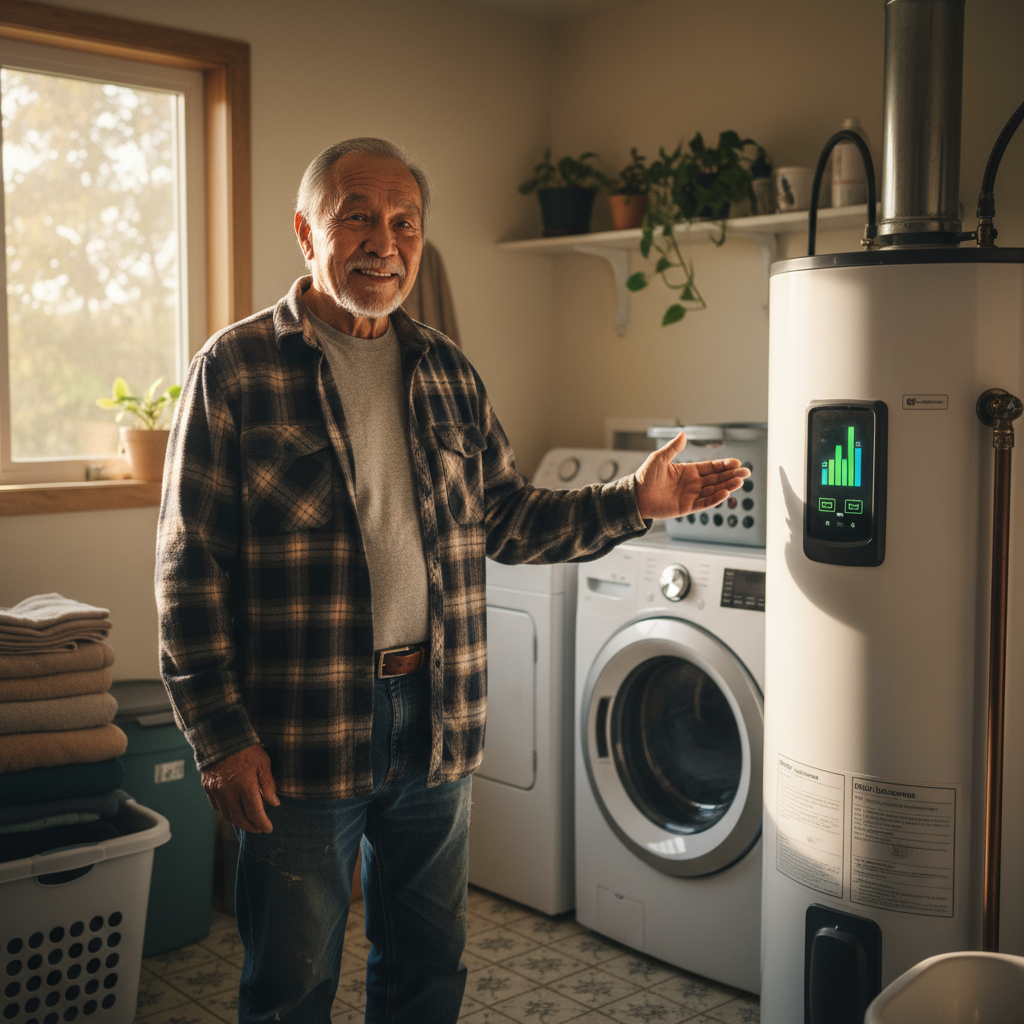
For aging in place, energy efficiency isn't just about cutting costs—it's about maintaining comfort, dignity, and health independence.
Taking the Next Step
If you're considering energy efficiency investment:
-
Get Energy Audit — Contact local utility or hire certified energy auditor ($200-$400). Identifies your home's specific inefficiencies and prioritizes upgrades.
-
Get Contractor Quotes — Solicit 2-3 bids for recommended upgrades. Costs vary; get specific quotes.
-
Research Rebates — Check federal (Canada Greener Homes), provincial (Ontario Retrofits), and utility-specific incentives. Reduce your out-of-pocket cost.
-
Assess Reverse Mortgage Capacity — Meet with reverse mortgage specialist. Determine available equity and borrowing amount.
-
Create Phased Plan — Decide: upfront investment or phased approach? Which upgrades are priority?
-
Execute and Track — Complete upgrades. Monitor actual utility bills to confirm projected savings.
Energy efficiency is one of the few reverse mortgage investments where the asset itself generates returns. You're not just spending down equity; you're investing it in something that pays dividends through reduced utility costs.
For aging in place, it's an outstanding use of home equity: improving comfort while reducing the fixed-income burden that grows more painful each year.
Ready to Learn More?
Get the free Ontario Reverse Mortgage Guide and find out exactly how much you could unlock from your home.
Get My Free Guide →Related Articles
Reverse Mortgage for Workplace Injury Recovery: Supporting Adult Child's Career Transition
Help your adult child rebuild their career after workplace injury. Learn how reverse mortgages fund recovery, retraining, and financial stability during career transition.
Read →Reverse Mortgage When Adult Child Faces Student Loan Default: Creditor Protection Strategy
Protect your home when adult child has severe student debt. Learn how reverse mortgage planning shields your assets from student loan creditors in Ontario.
Read →Reverse Mortgage to Fund Adult Child's Real Estate License and Business Launch
Help your adult child launch a real estate career. Reverse mortgage covers licensing, training, first-year operating costs, and marketing to build a sustainable income.
Read →