Reverse Mortgage and FHSA: Help Your Kids Buy Their First Home
Learn how Ontario parents and grandparents can use a reverse mortgage to fund a First Home Savings Account contribution and help the next generation buy a home.
"I want to help my daughter buy her first home — but I don't have the cash sitting around." If you are a homeowner aged 55 or older in Ontario, you may have more capacity to help than you realize. Your home equity, unlocked through a reverse mortgage, can fund a contribution to your child's or grandchild's First Home Savings Account (FHSA) — a powerful registered account the federal government introduced to help Canadians save for their first home.
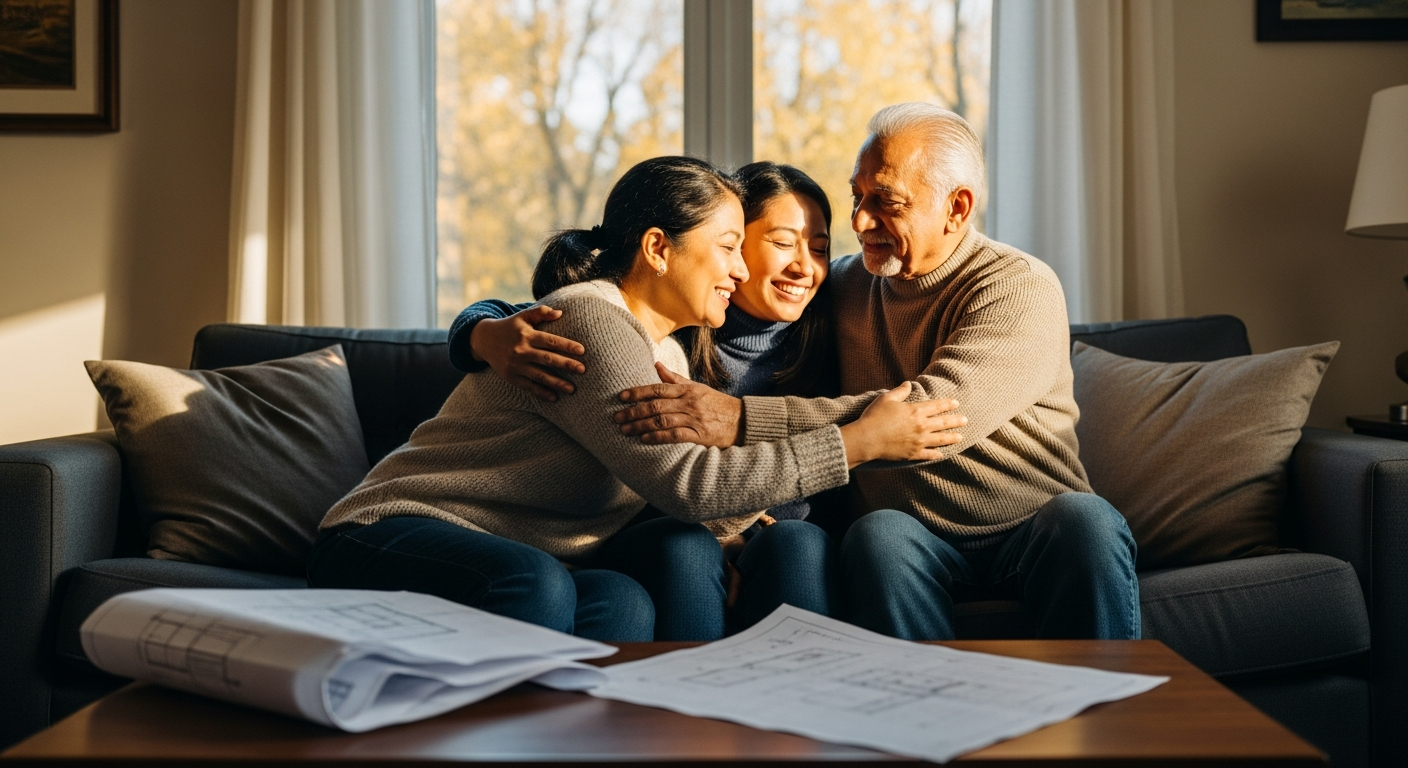
This guide explains how the FHSA works, how reverse mortgage proceeds can be used to fund it, and how Ontario parents and grandparents can turn decades of home equity into a lasting gift for the next generation.
This article is for educational purposes only and does not constitute financial advice.
What Is the First Home Savings Account?
The First Home Savings Account (FHSA) is a registered savings account introduced by the federal government in 2023. It combines elements of a Tax-Free Savings Account (TFSA) and a Registered Retirement Savings Plan (RRSP) in one product designed specifically for first-time homebuyers.
| FHSA Feature | Detail |
|---|---|
| Who can open one | Canadian residents who are first-time homebuyers, 18 or older |
| Annual contribution limit | $8,000 per year |
| Lifetime contribution limit | $40,000 |
| Tax treatment of contributions | Tax-deductible (like RRSP contributions) |
| Tax treatment of growth | Tax-free (like TFSA growth) |
| Tax treatment of withdrawals for home purchase | Tax-free |
| Account lifespan | Up to 15 years, or until age 71 |
| Unused annual room | Carries forward one year (up to $16,000 maximum in any year) |
The result is exceptional: a first-time buyer who uses an FHSA correctly can contribute up to $40,000 over time, deduct those contributions from their taxable income, grow the funds tax-free, and withdraw them tax-free when purchasing a qualifying first home.
According to the Canada Revenue Agency (CRA), an FHSA withdrawal is tax-free only when used to purchase a qualifying home — and the account holder must not have owned a home in the current year or any of the preceding four calendar years to remain eligible as a first-time buyer.
Can Parents or Grandparents Contribute to an FHSA?
This is one of the most common questions families ask. The answer is nuanced:
You cannot contribute to someone else's FHSA directly. Unlike an RESP, you cannot name a beneficiary and make deposits on their behalf. The FHSA belongs to the account holder — the first-time buyer — and only that person can make contributions that count against the annual limit.
However — you can gift cash, and the account holder can then contribute it. A gift of money from a parent or grandparent is not taxable to the recipient in Canada. If you provide your adult child or grandchild with funds (through a gift, a loan, or any other means), they can use those funds to contribute to their own FHSA.
This is where a reverse mortgage becomes a practical bridge.
How a Reverse Mortgage Funds an FHSA Gift
Here is how the strategy works in practice:
Step 1: A qualifying Ontario homeowner aged 55+ — a parent or grandparent — applies for a reverse mortgage on their primary residence.
Step 2: The reverse mortgage provides a lump sum or scheduled advances from the home's equity. These funds are tax-free to the homeowner, because they are classified as loan advances, not income.
Step 3: The homeowner gifts some or all of the funds to their adult child or grandchild. A monetary gift between family members is not subject to Canadian income tax.
Step 4: The adult child or grandchild deposits the gifted funds into their FHSA, up to the annual contribution limit ($8,000) and lifetime limit ($40,000). They receive the tax deduction for the contribution.
Step 5: When the first-time buyer is ready to purchase, they withdraw the FHSA funds (including all investment growth) tax-free to put toward their down payment.
| Scenario | Detail |
|---|---|
| Grandparent's home value | $900,000 |
| Estimated reverse mortgage available | Up to approximately $400,000–$495,000 (varies by age and lender) |
| FHSA annual gift per grandchild | $8,000 |
| FHSA lifetime gift per grandchild | $40,000 |
| Tax savings to the grandchild on $40,000 (at 33% marginal rate) | ~$13,200 |
| Tax-free FHSA growth over 5 years (illustrative) | Additional compounding benefit |
This approach allows the homeowner to retain full ownership of their home, maintain no monthly mortgage payments, and still transfer meaningful wealth to the next generation during their lifetime.
Combining FHSA with the Home Buyers' Plan (HBP)
First-time buyers in Canada have an additional tool: the Home Buyers' Plan (HBP), which allows a first-time buyer to withdraw up to $35,000 from their RRSP for a qualifying home purchase. In 2024, the federal government increased this limit to $60,000.
A first-time buyer can use both an FHSA and the HBP simultaneously for the same home purchase — a significant combined advantage:
| Registered Account Strategy | Maximum Tax-Free Funds |
|---|---|
| FHSA withdrawal | Up to $40,000 (lifetime) |
| HBP withdrawal from RRSP | Up to $60,000 |
| Combined maximum | Up to $100,000 |
If parents or grandparents have used a reverse mortgage to fund FHSA contributions and previously contributed to the first-time buyer's RRSP (perhaps through a spousal RRSP or direct gifts), the total tax-sheltered down payment support can be substantial.
Speak with a qualified tax advisor to confirm the specific combination strategy that works for your family's situation. The interaction between FHSA, HBP, and gifted funds involves a number of eligibility conditions that vary by individual circumstance.
Consult a qualified tax advisor for guidance specific to your situation.
Is a Living Legacy the Right Goal?
A living legacy refers to the practice of transferring wealth or assets to family members while you are alive to witness and participate in their benefit — rather than leaving it as an inheritance after death.
For many Ontario seniors, using home equity to help adult children get into the housing market is the most meaningful use of their wealth. The housing affordability crisis in Ontario has left many younger Canadians unable to save a down payment through earned income alone, even with stable employment.

A reverse mortgage provides the mechanism to act on this intention without selling the family home, moving to a smaller property, or depleting liquid savings.
For a broader overview of this approach, see our guide to using home equity to gift family while living.
Important Considerations and Drawbacks
Before using a reverse mortgage to fund an FHSA gift strategy, understand the full picture:
Interest accrues on the reverse mortgage. Because no monthly payments are required, the outstanding balance grows over time as interest compounds. The equity available to heirs — including any children who benefit from FHSA gifts today — will be reduced accordingly.
The first-time buyer's eligibility matters. The recipient of the gifted funds must be a qualifying first-time buyer to open and use an FHSA. If your child or grandchild has previously owned a home, they may not be eligible.
Annual limits mean this is a multi-year strategy. You cannot gift $40,000 in one year and have it all sheltered inside the FHSA — the $8,000 annual limit means gifts must be planned over five or more years for maximum benefit.
FHSA contributions are the account holder's decision. Once you gift the cash, you cannot control how it is invested or when it is used. Trust and clear communication are essential.
Coordination with other estate plans is important. If you have multiple children or grandchildren, consider how an FHSA gift strategy interacts with your overall estate plan. For guidance, see our checklist for estate planning for Ontario homeowners with a reverse mortgage.
Frequently Asked Questions
Can I contribute to my grandchild's FHSA if they live in another province?
Yes. The FHSA is a federal registered account available to all Canadian residents. Your grandchild does not need to live in Ontario to benefit from a gift funded by your Ontario reverse mortgage.
What happens to the FHSA if my grandchild never buys a home?
If the account holder does not purchase a qualifying home within the 15-year lifespan of the FHSA (or by age 71), the funds can be transferred to an RRSP without triggering tax at that time. The RRSP withdrawal will eventually be taxable as income. The tax deduction taken when contributing to the FHSA will have been preserved regardless of how the funds are ultimately used.
Does the gift from my reverse mortgage count as income for my child?
No. A monetary gift from a parent or grandparent to an adult child is not considered income under the Income Tax Act. The recipient pays no tax on the gift itself. However, any investment income earned inside the FHSA is tax-sheltered, and any income earned outside of a registered account from gifted funds could be subject to income attribution rules. A tax advisor can clarify.
Will a reverse mortgage affect my own TFSA contribution room?
No. Accessing home equity through a reverse mortgage does not create or reduce TFSA contribution room. The funds are a loan advance and are not counted as income in any registered account context.
Can I use this strategy to help more than one child or grandchild?
Yes, within the limits of how much equity you access. Each recipient who is a qualifying first-time buyer can open their own FHSA and receive separate gifts. The reverse mortgage lender does not restrict how you spend the proceeds, and there are no limits on the number of family members you can gift.
Homeownership changed the financial trajectory of your life. With the right planning, your home equity can do the same for the next generation. A reverse mortgage combined with an FHSA gifting strategy is one of the most tax-efficient ways to help your children or grandchildren achieve that milestone.
Speak to a licensed mortgage professional. Independent legal advice is required before closing a reverse mortgage in Ontario.
Get your free Ontario Reverse Mortgage Guide →
This content is for illustrative purposes only. Rates may vary. Call Rick Sekhon for the best rates and more information.
Ready to Learn More?
Get the free Ontario Reverse Mortgage Guide and find out exactly how much you could unlock from your home.
Get My Free Guide →Related Articles
Using a Reverse Mortgage to Help Your Child Buy Their First Home
Use a reverse mortgage to help your child buy their first home in Ontario. Learn down payment gifting rules, FHSA compatibility, and Toronto price scenarios.
Read →Reverse Mortgage for an Early Inheritance: Gifting Equity to Children
Use a reverse mortgage for an early inheritance gift to children. Learn Canada's tax-free gifting rules, attribution risks, and estate planning considerations.
Read →Gift Home Equity to Family with a Reverse Mortgage in Canada
How Canadian seniors use a reverse mortgage to gift home equity to children and grandchildren as a living legacy — the financial, tax, and family planning details.
Read →