
Reverse Mortgage for Buying Back Family Home: Inheritance Negotiation Strategy
Your siblings inherited the family home but you want it. Use a reverse mortgage to buy their shares—keep the legacy home without forcing a family auction.
Your parents have passed. The family home—where you grew up, where memories live—is now part of the estate. But you have siblings, and the will divides the estate equally among all children. Your siblings want their inheritance dispersed in cash or assets. One wants to sell the home and divide proceeds. You want to keep it.
You have a few options: buy them out, force a sale and rebuy (if it's even possible), or let the home pass to siblings. A reverse mortgage can fund the buyout—letting you keep the family legacy without forcing a fire sale and without personal debt.
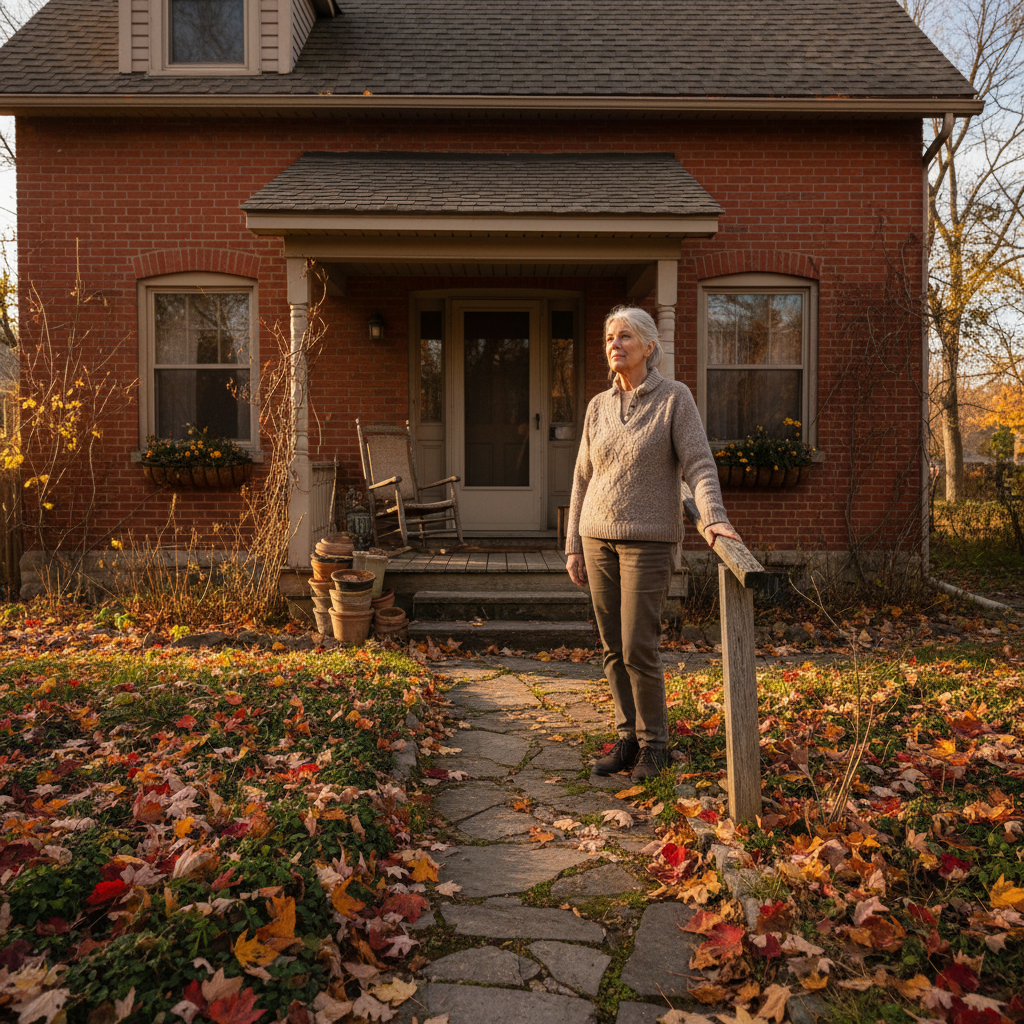
The "Family Home Divided Among Siblings" Dilemma
This is increasingly common. Parents own a family home worth $800,000+. They leave it equally to three or four adult children. What was one asset is now four fractional interests, and suddenly the siblings must decide:
Option A: Sell the home, divide proceeds
- Clean from a legal perspective
- Maximizes liquidity for siblings
- But: Family home is lost; sentimental asset gone; transaction costs (~5–6% = $40,000–$50,000)
Option B: One sibling buys out the others
- Keeps the home in the family
- Preserves legacy and memories
- But: Requires buyout funds; complex estate negotiations
Option C: Siblings share ownership
- Everyone retains part of home equity
- But: Nightmare from a legal/practical perspective (maintenance, capital gains, eventual disposition)
Most families default to Option A (sale) simply because it's cleanest. But many adult children later regret selling a beloved family home.
A reverse mortgage enables Option B, allowing one child to keep the home while fairly compensating siblings.
The Estate Law Framework: What You're Actually Buying
When a parent dies and leaves a home to multiple children, the estate law is clear:
Each child owns an equal, fractional interest in the home. If there are three children, each owns 1/3. If the home is worth $900,000, each child's interest is worth $300,000.
If you want to keep the home, you must:
- Buy out each sibling's interest (pay them their fractional value)
- Assume any existing mortgage or liens on the home
- Cover estate administration costs (lawyer, executor fees, etc.)
Scenario: The Thompson Family Home
The Thompson home in Toronto is worth $1,200,000. Parents die, leaving it equally to three adult children: Sarah (age 48, employed), Michael (age 45, self-employed), and Jennifer (age 41, employed).
Each sibling owns 1/3 interest = $400,000 each.
Sarah wants to keep the home. Michael and Jennifer want their inheritance. Sarah must pay:
- Michael's buyout: $400,000
- Jennifer's buyout: $400,000
- Estate costs (executor, lawyer, capital gains tax on home [if applicable]): ~$50,000
- Total cash needed: $850,000
If Sarah can't raise $850,000 (mortgage + personal funds), the home must be sold.
Using a Reverse Mortgage to Fund the Buyout
Sarah's situation:
- Age: 48 (young for reverse mortgage, but eligible)
- Home value: $1,200,000
- Existing mortgage: $200,000 (on the home)
- Available for RM: ~$1,000,000 in home equity
- Needed: $850,000 (to buy out siblings)
Reverse mortgage solution: Sarah accesses a reverse mortgage for $600,000 (conservative LTV). She uses it to:
- Pay Michael: $400,000
- Pay Jennifer: $400,000
- Cover estate costs: $50,000
- Total outlay: $850,000 (but she only draws $600,000 in RM; uses other sources for remainder)
Now the home is in Sarah's sole name. She owns it outright (no shared siblings). The reverse mortgage is a loan against her home—manageable, no monthly payments, no income verification required.
Over time (15–20 years), Sarah pays down the RM through a combination of:
- Home appreciation (historically 3–4%/year = ~$36,000–$48,000/year growth)
- Retirement income (CPP, OAS, pension)
- RM line of credit structure (she can choose when/how to repay)
By the time Sarah reaches 65–70, the RM balance is manageable. She may refinance into a traditional mortgage if rates are favorable, or simply leave the RM as-is, knowing it'll be repaid from home sale or estate when she eventually passes.

The Estate Negotiation: How to Handle Siblings
Buying out siblings can create family tension. Here's how to navigate it:
Transparency & Fairness
- Get an independent home appraisal (agreed-upon appraiser, fair market value)
- Don't lowball siblings; it breeds resentment
- Pay them their equitable share, not a discount
- Document the transaction formally (lawyer-drafted buyout agreement)
Timing Flexibility
- If you can't raise all funds immediately, negotiate a phased buyout
- Example: Pay Michael now ($400,000); pay Jennifer in 6 months ($400,000)
- A reverse mortgage line of credit makes phased payments manageable
Clear Communication
- Tell siblings early: "I want to keep the home. Here's how I'm funding it."
- Share the buyout amount, source of funds (RM + personal), timeline
- Address concerns: "You're getting fair market value. I'm taking on the debt."
Handling Difficult Siblings
- Some siblings may feel you're "winning" by keeping the emotional asset
- One solution: Offer other items of sentimental value (parents' jewelry, artwork, etc.) in addition to cash buyout
- Or: Commit to hosting family gatherings in the home (siblings get to continue enjoying the space)
Executor Coordination
- The estate executor (often a neutral third party, sometimes a sibling) facilitates the transaction
- Executor ensures all parties' interests are protected
- Reverse mortgage is disclosed upfront; no surprises
According to The Law Society of Ontario, estate transactions involving buyouts of fractional interests are standard. A lawyer experienced in estate law should draft the buyout agreement to protect all parties.
Tax Considerations: Capital Gains, Principal Residence Exemption
Critical point: When a parent dies, their home's value "steps up" to fair market value as of the date of death. There's no capital gains tax on this step-up.
Example:
- Parents bought home in 1995 for $200,000
- Home worth $1,200,000 when they die in 2026
- Capital gain (on paper): $1,000,000
- Tax owing: $0 (principal residence exemption)
When you buy out your siblings, you're buying at fair market value as of death date ($1,200,000 in the example). You're not triggering additional capital gains tax; you're simply taking sole ownership.
Later, if you sell the home:
- You sell at market value
- Your adjusted cost base (ACB) is the date-of-death value ($1,200,000)
- Any growth from death to sale is a capital gain
- Half is taxable (inclusion rate)
- Example: You sell in 2035 for $1,500,000; capital gain = $300,000; taxable inclusion = $150,000 at ~43% marginal rate = ~$65,000 tax
This is standard capital gains tax, not a penalty for using a reverse mortgage.
When a Reverse Mortgage Makes Sense for Home Buyouts
✓ Use RM if:
- You want the home but lack immediate funds
- Reverse mortgage allows you to buy out siblings without personal debt or fire sale
- Your income is strong enough to sustain RM interest (~5.5% on balance)
- Home value is substantial ($600,000+) to justify RM costs
- Timeline: You have 15+ years before you'd need to sell/downsize
✗ Don't use RM if:
- Your home value is small (<$300,000) and RM costs would eat into equity
- You can't afford RM interest rates (~5.5%)
- You're nearing end-of-life and may need to sell in 5 years (RM repayment would be rushed)
- Siblings are predatory (negotiating unfairly); better to sell and be done

Real-World Example: The Okafor Family
The Okafor family home in Mississauga was purchased by parents in 1998 for $320,000. In 2026, when parents die, it's appraised at $1,100,000.
Three adult children:
- Chisom (age 50, very emotional about family home): Wants to keep it
- Ifeanyi (age 48, lives in Vancouver): Wants cash inheritance
- Amara (age 45, has mortgage): Wants cash inheritance
Each child's 1/3 share: $366,000 (approximately)
Chisom's situation:
- Income: $75,000/year (employment)
- Savings: $150,000
- No significant mortgage/debt
- Age: 50 (reverse mortgage eligible)
Plan:
- Chisom takes out a reverse mortgage for $550,000
- Pays Ifeanyi: $366,000
- Pays Amara: $366,000
- Covers estate costs: $50,000 (legal, executor fees, property transfer tax)
- Keeps: $218,000 (unused RM capacity)
RM balance: $732,000 (after repaying the parts from her $150,000 savings + $550,000 RM draw) Wait, let me recalculate:
- Needs to pay out: $732,000 (Ifeanyi + Amara + costs)
- Has: $150,000 savings
- RM draws: $582,000
- Total RM outstanding: $582,000
RM interest (~5.5%): ~$32,000/year initially
But over 10 years:
- Home appreciates at 3.5%/year = $1,100,000 → $1,530,000
- RM balance grows with interest
- Net equity growth still substantial
By age 60, Chisom has owned the home fully for 10 years, paid RM interest, and preserved the family legacy. The home's appreciation has easily offset RM costs.
"My siblings got their inheritance fairly," Chisom said. "I got something equally valuable: the home where my kids grew up, where we made memories. That's worth the reverse mortgage to me."
Frequently Asked Questions
What if my siblings disagree with the home's appraised value?
Get a second appraisal. Use the average of two independent appraisals. If there's still disagreement, the estate executor can request a third appraisal (average of three). The law requires appraisals to be fair and professional. Disagreement is rare once proper appraisals are done.
Can I force my siblings to sell if they don't want to buy me out?
No. Estate law protects all beneficiaries. If you can't reach agreement, the home is typically sold and proceeds divided. However, most siblings prefer a negotiated buyout over a forced sale (faster, cleaner, avoids realtor fees).
What if one sibling can't afford their share of the buyout and wants an installment plan?
You could negotiate that. Example: Pay sibling $400,000 now, $100,000 in 2 years. Document it formally (promissory note). Your RM funds the first payment; later payments come from your cash flow.
Does the reverse mortgage appear on my siblings' inheritance documents?
Yes. The RM is a registered lien against the home. When the executor transfers the home to you, the RM is disclosed. Siblings are aware you're using it to fund their buyout. This is standard and expected.
What if I die while still owing the RM balance?
The RM is repaid from your estate (home sale proceeds or other assets). The remaining estate (after RM repayment) is distributed per your will. Plan for this in your estate: make clear whether your children inherit the home with RM already repaid, or whether they'll inherit the home and assume the RM debt (unusual).
The Bottom Line
Keeping the family home in the family is a legitimate goal. A reverse mortgage makes it financially possible without personal debt or pressure on your siblings.
By using an RM to buy out siblings, you're:
- ✓ Honoring the family legacy
- ✓ Fairly compensating siblings (no low-ball buyouts)
- ✓ Avoiding forced sales and realtor fees
- ✓ Preserving a place for family memories and gatherings
- ✓ Building equity over time as home appreciates
This is the Living Legacy persona at its finest: you're securing the family home for the next generation while respecting your siblings' need for fair inheritance.
Ready to Learn More?
Get the free Ontario Reverse Mortgage Guide and find out exactly how much you could unlock from your home.
Get My Free Guide →Related Articles
Keeping the Family Cottage: Reverse Mortgage Transfer Strategies
Reverse mortgage family cottage transfer strategies for Ontario families. Fund capital gains tax, avoid forced sale, and keep the cottage in the family.
Read →Reverse Mortgage for Spousal Buyout: Keeping Your Family Home
Use a reverse mortgage to buy out a spouse or co-owner and keep your Ontario family home. Estate planning and financial solution guide.
Read →Reverse Mortgage for Workplace Injury Recovery: Supporting Adult Child's Career Transition
Help your adult child rebuild their career after workplace injury. Learn how reverse mortgages fund recovery, retraining, and financial stability during career transition.
Read →