
Reverse Mortgage When Adult Child Needs Workplace Accessibility Accommodations
Adult child with disability needs workplace accommodations? Reverse mortgage funds accessibility tech and legal costs. Support career success.
Your adult child has a disability—visible or invisible—and is pursuing a career. Their employer is resisting accommodation requests, or accommodation equipment is expensive. You want to support their right to work with dignity, but can't afford to fund legal battles and expensive accommodations solo. A reverse mortgage can cover accessibility equipment, legal services, and interim income during accommodation disputes.
Workplace accessibility rights are legal entitlements in Canada. Yet many employers delay or refuse accommodations, forcing disabled workers into difficult choices: abandon the job, fund accommodations personally, or fight legal battles alone. Your reverse mortgage can enable your child to hold employers accountable while maintaining financial stability.
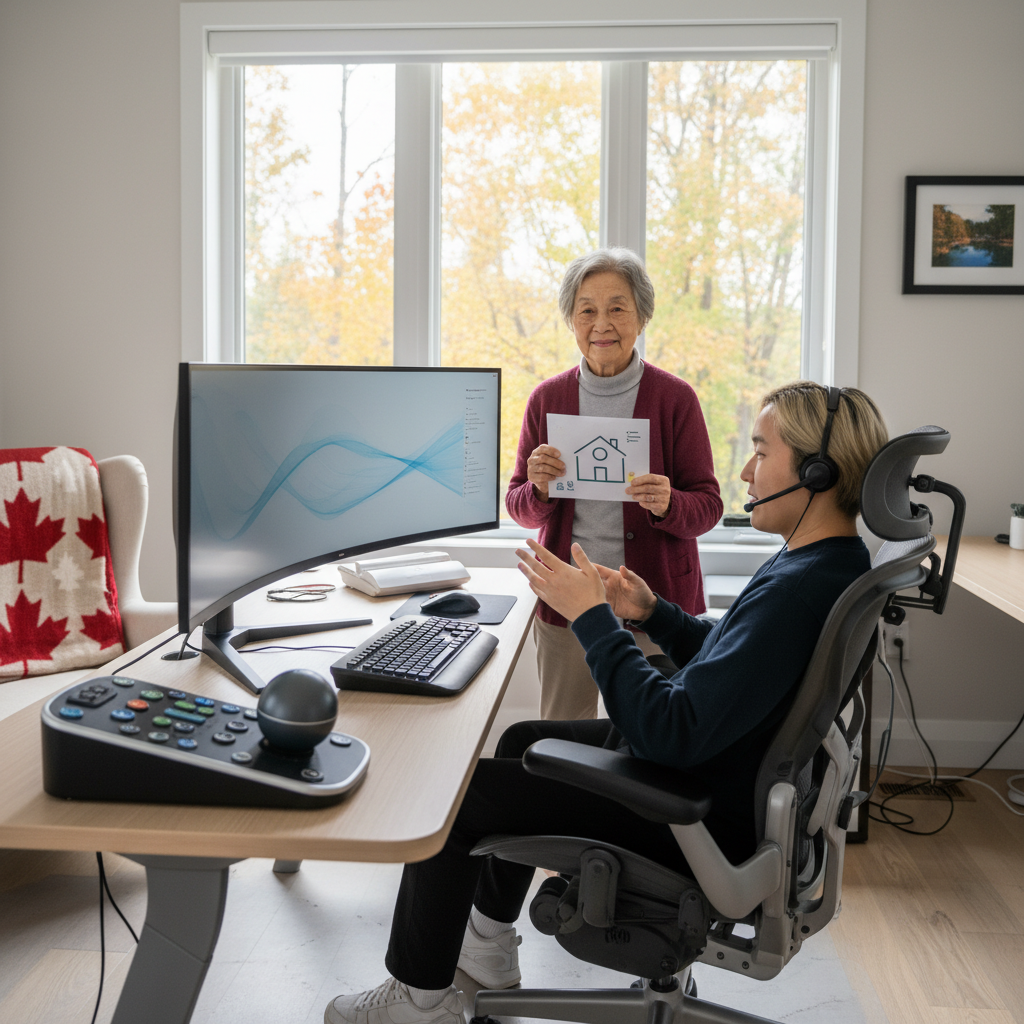
Workplace Accessibility Rights in Ontario
Under the Accessibility for Ontarians with Disabilities Act (AODA) and the Canadian Human Rights Act (CHRA), employers are legally required to:
- Accommodate to the point of undue hardship — Employers must provide reasonable accommodations unless doing so creates financial/operational hardship
- Consult with the employee — Employers must engage the worker in accommodation planning
- Provide necessary equipment — Employers must fund accessibility technology and modifications (within reason)
- Protect from discrimination — Employers cannot penalize workers for requesting accommodations
Common workplace accommodations:
| Accommodation Type | Cost | Legal Entitlement |
|---|---|---|
| Ergonomic desk/chair | $2,000–$5,000 | Standard for most disabilities |
| Screen readers/magnification software | $500–$3,000 | Standard for blind/low-vision |
| Hearing loops/captioning devices | $1,000–$5,000 | Standard for deaf/hard of hearing |
| Speech-to-text/voice software | $300–$2,000 | Standard for mobility/motor impairment |
| Adjustable standing desk | $1,500–$3,500 | Standard for mobility/chronic pain |
| Modified workspace (ramp, elevator access) | $5,000–$50,000+ | Standard if employer can afford |
| Flexible scheduling/remote work | $0–$5,000 (IT setup) | Standard for many disabilities |
Employers should cover these costs. Many do. But non-compliance is common.
When Employers Resist Accommodations
Despite legal requirements, many employers:
- Delay provision — "We'll get to it in Q3" (never happens)
- Provide inadequate accommodations — Cheap alternatives that don't actually work
- Retaliate covertly — Reduce hours, cut shifts, deny promotions
- Challenge necessity — "We don't think you need this"
- Claim undue hardship — "It's too expensive" (often falsely)
Your adult child faces a dilemma:
Option 1: Accept inadequate accommodation. Continue working in an inaccessible environment; health/wellbeing suffer; career stalls.
Option 2: Escalate the conflict. File complaints with human rights authorities; employer becomes hostile; job security threatened.
Option 3: Afford accommodations personally. Buy equipment out of pocket; employer contributes nothing; resentment builds; financial burden is yours.
Option 4: Fund legal action. Hire employment lawyer to fight for accommodations; legal costs $10,000–$40,000; income lost during dispute; career disrupted.
Your reverse mortgage enables a 5th option: Fund accommodations while pursuing legal protection.

Real-World Scenario: The Software Developer with Chronic Pain
Marcus, 32, is a software developer with chronic pain (fibromyalgia). He works for a Toronto tech firm. His accommodation request:
Requested accommodation:
- Ergonomic desk and chair: $3,500
- Sit/stand desk converter: $800
- Lumbar support cushion: $400
- Flexible scheduling (work 9am–2pm, rest period, then 4pm–7pm): $0 (just rescheduling)
- Total cost to employer: $4,700
Employer response: "We don't have budget for this. Everyone sits at standard desks. If you can't handle it, consider a different role."
Translation: Employer is refusing legally required accommodations.
Marcus's situation:
- Salary: $95,000
- Career trajectory: Strong; he's valuable to the team
- Health impact of non-accommodation: Chronic pain worsens; productivity declines; risk of stress leave
- Legal options: File complaint with Ontario Human Rights Commission (OHRC); hire employment lawyer
The legal path:
- File OHRC complaint: $0 (government-funded)
- Employer investigation: 6–12 months
- If unresolved, hire employment lawyer: $10,000–$25,000
- Potential settlement or tribunal hearing: Months of disruption
Marcus's financial reality:
- Current savings: $12,000 (modest)
- Income during dispute: At risk (employer may retaliate through reduced hours, "elimination of role," etc.)
- Legal costs: Can't afford $10,000+ himself
- Parents' capacity: Limited; retired, on fixed income
Enter the reverse mortgage:
Marcus's parent (you) own a home worth $650,000. You establish a reverse mortgage:
- Reverse mortgage capacity: ~$200,000 (35–40% of home value)
- Accessed amount: $30,000 line of credit (conservative)
- Use of funds:
- $4,700 for accommodations equipment (cover what employer refuses)
- $8,000 for employment lawyer retainer
- $10,000 as emergency income bridge (if Marcus's hours are cut during dispute)
- $7,300 remaining as buffer
Outcome:
- Marcus gets accommodations immediately (using your reverse mortgage funds)
- Marcus can afford competent legal representation (strong position in OHRC complaint)
- Marcus has income security if employer retaliates
- Employer faces credible legal threat; likely to settle or provide accommodations
- OHRC complaint resolved within 12 months; Marcus's accommodation rights protected
Cost to you: ~$2,000–$2,500 in interest on the $30,000 draw over 2–3 years (while dispute resolves). Marcus may later repay part of the principal, or you absorb it as parental support.
Value created: Your child's career is protected; legal rights are enforced; health is preserved. The investment in your reverse mortgage funds this justice.
Common Accommodation Disputes
| Dispute Type | Employer Claim | Legal Reality | Reverse Mortgage Solution |
|---|---|---|---|
| Cost objection | "Too expensive" | Employer must accommodate unless genuine undue hardship | Fund accommodation yourself; file OHRC complaint |
| Essential duties conflict | "Accommodation prevents job performance" | Employer must prove; burden is on employer | Hire lawyer to challenge; prove accommodation enables performance |
| Productivity concern | "We don't see productivity improvement" | Irrelevant; legal accommodation is requirement, not performance contingent | Fund productivity data/assessment; document impact |
| Coworker resentment | "Other staff object to accommodation" | Not legal grounds; employer must manage culture | Hire lawyer; document discrimination |
| Timeline pressure | "We'll do it, but next quarter" | Employer must act promptly; unjustified delays breach AODA | Fund legal action to force compliance |
In each case, a reverse mortgage line of credit enables your child to:
- Hire competent legal counsel
- Document the accommodation need professionally
- Fund interim accommodations while disputes resolve
- Maintain income security during conflict
The Emotional and Career Impact
Supporting your adult child's workplace accessibility rights is profound:
| Impact | Significance |
|---|---|
| Career continuation | Your child stays in a career they chose; doesn't "settle" |
| Health protection | Accommodations prevent disability from worsening |
| Dignity and agency | Your child fights for legal rights, not charity |
| Family modeling | You teach other family members to assert rights |
| Long-term security | Accommodated workplace enables 30+ year career growth |
Reverse mortgage funding of this fight is not handout; it's investment in justice and independence.
Employer Retaliation Risks
Critical: Once your child files an OHRC complaint or hires a lawyer, some employers retaliate:
- Reduced hours or shifts
- Negative performance reviews
- Exclusion from projects or meetings
- Hostile work environment
- Constructive dismissal (making workplace so hostile the employee quits)
Employer retaliation is illegal under the CHRA and AODA. However, it happens. Your reverse mortgage income bridge protects your child if:
- Employer cuts hours during dispute
- Your child needs to take stress leave during legal proceedings
- Your child chooses to leave and find a more accessible employer
The reverse mortgage line of credit becomes income security during this vulnerable period.

Legal Resources Your Child Should Know
Ontario Human Rights Commission (OHRC): Free complaint process; government-funded; no lawyer required (though representation is available)
Labour Lawyers in Ontario: Employment law specialists; fee varies; some offer contingency (no win, no fee) or reduced-fee options
Canadian Human Rights Commission (CHRC): Federal jurisdiction; similar process to OHRC
Accessibility for Ontarians with Disabilities Act (AODA): Legal framework; requires accommodation to undue hardship
Your reverse mortgage funds can access these resources without bankrupting your child or forcing them to choose between accommodation and financial stability.
Quick Reference
| Question | Answer |
|---|---|
| How much should I access? | $20,000–$40,000 line of credit covers accommodations + legal action |
| What if the dispute takes 2+ years? | Reverse mortgage interest compounds; manageable over long timeline |
| Can I charge my child interest on this? | Your choice; many parents treat as gift (parental support) |
| Will employer retaliation happen? | Possible but illegal; legal protection exists; your funds enable lawyer |
| What if accommodation is resolved quickly? | Remaining line of credit available for other family needs |
Frequently Asked Questions
Can my adult child file the OHRC complaint themselves without a lawyer?
Yes. The OHRC complaint process is government-funded and doesn't require a lawyer. However, employer resistance often escalates disputes; lawyer involvement strengthens your child's position.
What if the employer claims the accommodation is genuinely unaffordable?
The employer must prove "undue hardship." For a large corporation, $5,000 in accommodations rarely qualifies. If a small employer claims genuine hardship, the accommodation must be funded another way—potentially by you (reverse mortgage).
Can my child be fired for requesting accommodations?
No. Dismissal or retaliation for accommodation requests is illegal under Canadian human rights law. But it happens; document everything and get legal counsel immediately.
What if the disability is "invisible" (mental illness, chronic pain, learning disability)?
Same rights apply. Invisible disabilities are sometimes harder to prove, but legal framework is identical. Employer cannot deny accommodation based on disability visibility.
Should I discuss the reverse mortgage with my child's employer?
Absolutely not. This is between you and your child. Employers don't need to know the funding source. If your child mentions it, simply explain it's family support while legal matters resolve.
Key Takeaways
| Point | Details |
|---|---|
| Workplace accessibility is a legal right | Employers must accommodate; burden is on them to prove hardship |
| Many employers illegally resist accommodations | Your child may need legal support to enforce rights |
| Reverse mortgage funds legal action | Enables your child to hire counsel and fight for rights |
| Accommodations have long-term career impact | Early intervention protects 30+ year earning potential |
| This is about dignity, not charity | You're enabling your child to assert legal rights |
Your adult child's right to work with full accessibility is not negotiable. When employers resist, your reverse mortgage can fund the legal protection they deserve.
Contact Rick Sekhon Reverse Mortgages to discuss how much line of credit you can establish to support your child's workplace rights.
Ready to Learn More?
Get the free Ontario Reverse Mortgage Guide and find out exactly how much you could unlock from your home.
Get My Free Guide →Related Articles
Reverse Mortgage for Home Modifications for Invisible Disabilities: Beyond Visible Accessibility
How Ontario seniors with invisible disabilities like fibromyalgia, ME/CFS, and autoimmune conditions can use a reverse mortgage to fund home modifications that support daily living beyond typical accessibility features.
Read →Reverse Mortgage to Support Adult Child's Career Recovery After Burnout: Financial and Emotional Healing
Help your adult child recover from workplace burnout with a reverse mortgage. Finance their healing timeline, time off, and career redirection in Ontario.
Read →Reverse Mortgage When Your Adult Child Can't Work: Supporting Mental Health Recovery
Discover how a reverse mortgage can help you support an adult child facing mental health crises, burnout, or disability without jeopardizing your retirement.
Read →