
Reverse Mortgage for Adult Child's Postgraduate Education: Master's & Certifications
Help your adult child earn a master's degree or professional certification with a reverse mortgage. Fund education without cosigning debt—Ontario strategy for parents of adult learners.
Can you afford to fund your adult child's master's degree? Many Ontario parents face this question in their 60s and 70s. Your child is 30, 35, or 40—ready for a career pivot that requires a master's degree, professional certification, or diploma upgrade. Without your help, they're facing $30,000–$100,000 in student debt, years of debt repayment, and delayed life goals. A reverse mortgage lets you fund this education without cosigning loans or forcing your adult child into debt.

Why Adult Children Return to Education (And Why It Matters)
Career pivots are increasingly common. An adult child might:
- Escape a dead-end job: Career change from retail to nursing, marketing to software development, or office work to trades
- Advance in their field: Teacher seeking a Master's in Education; engineer pursuing an MBA
- Respond to life changes: Return to school after caregiving years, job loss, or family disruption
- Pursue passion later: Finally go back to complete a degree, earn a professional certification, or specialize
According to Statistics Canada, over 40% of Canadian adults aged 25–54 engage in continuing education or skills training. Many are parents themselves, juggling families, mortgages, and returning to school. Without parental financial support, they often:
- Take on substantial student debt ($30,000–$80,000)
- Work part-time while studying (extending program timelines)
- Delay starting their new career (losing years of compound income growth)
- Ask parents to cosign loans (entangling family finances)
A reverse mortgage offers a third path: You fund the education directly. Your adult child graduates debt-free. They start their new career with full earning power, not hobbled by monthly student loan payments.
The True Cost of Adult Education in Canada
When calculating the real cost of an adult child's return to education, most families underestimate:
| Cost Component | Master's Degree | Professional Certification | Diploma Upgrade |
|---|---|---|---|
| Tuition (2–3 years) | $15,000–$50,000 | $8,000–$25,000 | $6,000–$18,000 |
| Books, materials, software | $2,000–$5,000 | $1,000–$3,000 | $500–$2,000 |
| Reduced work income (part-time while studying) | $20,000–$40,000/year × 2–3 years | $10,000–$20,000/year × 1–2 years | $5,000–$15,000/year × 1 year |
| Professional exams, licensing fees | $3,000–$8,000 | $2,000–$5,000 | $500–$2,000 |
| Lost childcare income (if parent provides care) | $8,000–$15,000/year | $5,000–$10,000 | N/A |
| Total Realistic Cost | $50,000–$125,000 | $30,000–$65,000 | $15,000–$40,000 |
Note: These are opportunity costs, not just direct tuition. An adult returning to full-time study often works part-time, forgoing significant household income.
If your adult child needs to borrow, they're looking at $50,000–$125,000 in student debt at current interest rates (~5–7%). Over 10 years, that's $590,000–$810,000 in total payments (principal + interest).
According to Statistics Canada, the average Canadian adult education borrower graduates with $28,000 in debt. Those pursuing master's degrees or professional certifications often owe $50,000–$75,000, delaying home purchases, marriage, and children by 5–8 years.
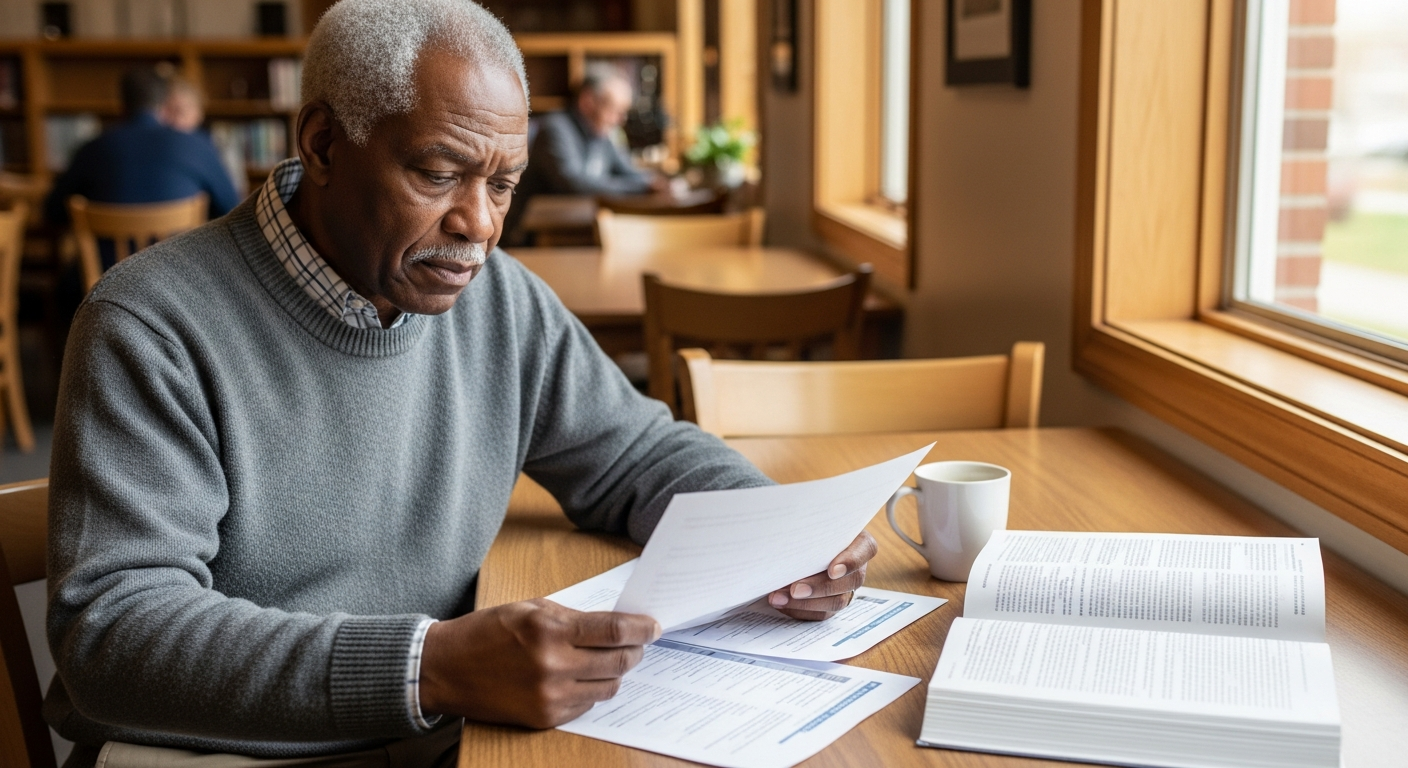
How a Reverse Mortgage Funds Adult Child Education
Strategy: The Phased Draw
You don't access all the funds at once. Instead, you draw as tuition is due:
Year 1: Draw $20,000 for first-year tuition Year 2: Draw $22,000 for second-year tuition + living expenses Year 3: Draw $18,000 for final exams, licensing, professional development Total access: $60,000 Remaining RM capacity: Untouched (for emergencies or your own retirement needs)
This approach:
- ✓ Minimizes interest accrual (you only pay interest on funds actually drawn)
- ✓ Keeps your line of credit available for your own healthcare or emergencies
- ✓ Allows your adult child to complete education without rushed debt decisions
- ✓ Gives you options if your child's studies are delayed (extended completion timelines)
Scenario: Marcus and His MBA
Marcus, 38, is a high school teacher in Hamilton. He wants to transition to educational administration—a master's in Educational Leadership ($40,000 tuition) is required. The program is 2 years, part-time (eveni and weekend classes while he teaches full-time).
His parents, both 68, own a home worth $620,000 (paid off). They have adequate CPP and OAS, but limited liquid assets.
Without a reverse mortgage: Marcus takes out a student loan for $40,000 + an additional $20,000 for lost summer income (he's not teaching summer school because of evening classes). Total debt: $60,000. 10-year repayment: ~$650/month. His salary increase (moving to administration) would be ~$8,000/year—but half of that is eaten by student loan payments for the decade.
With a reverse mortgage: His parents access a $50,000 line of credit. They draw $20,000 in Year 1, $20,000 in Year 2, and hold $10,000 in reserve. Marcus graduates debt-free. His salary bump goes entirely into his family's future—building savings, funding his kids' education, investing in a home renovation. His parents' RM balance grows at ~5.5% interest, but their home value appreciation (historically 3–4%/year in Hamilton) and their continued CPP income mean the loan is sustainable. Eventually (10–15 years), when Marcus or his siblings inherit the home, the RM is simply repaid from the estate.
Living Legacy in Action: Funding the Next Generation's Skills
This is the Living Legacy persona in action. You're not just gifting money—you're investing in your adult child's capacity to earn, contribute, and thrive. A master's degree or professional certification often unlocks:
- Income mobility: $8,000–$20,000/year salary increase
- Career security: Specialized credentials make workers harder to replace
- Mental health: Escaping burnout through meaningful career change
- Family stability: Debt-free, your adult child can focus on their family and goals
Example: The Nguyen Family
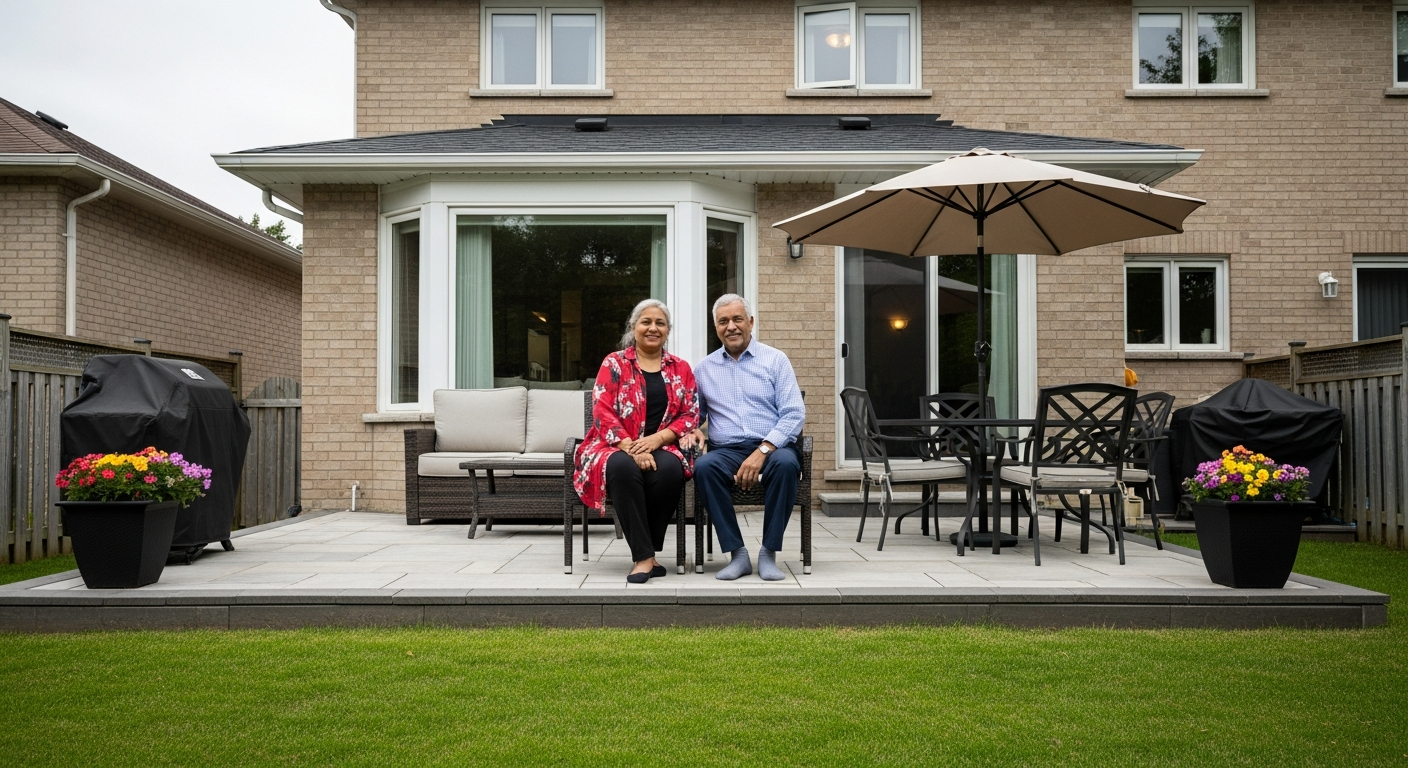
Linh and Duc, both 70, have two adult children. Their eldest, Thanh, 34, wants to earn a nurse practitioner certification (2-year program, $35,000 tuition + living expenses). She currently works as an RN but is exhausted by shift work and wants flexibility.
Their home in Toronto is worth $850,000 (mortgage-free). CPP income: $45,000/year combined. They're financially stable.
Linh and Duc access a $45,000 reverse mortgage. Thanh pursues her NP certification. Upon graduation, she earns $20,000–$25,000 more annually, with more control over her schedule. She can afford to help with household expenses, supporting her aging parents while they age in place.
"Without the reverse mortgage, Thanh would have debt for years," Linh said. "Instead, she's able to help us, and her kids see a mom who pursued her dreams. That's the legacy we wanted."
Financial Scenarios: Reverse Mortgage vs. Alternatives
| Strategy | Adult Child Gets | You Get | 10-Year Outcome |
|---|---|---|---|
| You gift savings | Debt-free education | Retirement savings depleted; reliant on CPP | Child earns freely; you have no emergency fund |
| Child takes student loan | $40K–$80K debt | Nothing | Child pays $400–$800/month for 10 years; delayed home purchase |
| You cosign loan | Child educated; you liable | Risk of debt on your credit | If child defaults, your credit damaged; potential collections |
| You use reverse mortgage | Debt-free education | Loan against home; interest accrual | Child earns freely; you maintain investments; RM repaid from estate or future downsizing |
The reverse mortgage stands out because:
- Adult child graduates debt-free (maximum earnings potential from day 1)
- You preserve retirement savings (CPP, OAS, and investments remain intact)
- Your liquidity stays available (RM line of credit can be drawn for emergencies)
- No credit risk (you're not cosigning a personal loan with collections risk)
- Tax-smart (RM proceeds aren't taxable income; education funding has no tax consequence)
Who Qualifies, and What Are the Constraints?
To use a reverse mortgage for adult child education funding:
✓ You must be 55+ and live in Ontario (both spouses, if married) ✓ Your home must be worth at least $200,000–$300,000 (varies by lender) ✓ You must own the home free and clear, or have very little mortgage remaining (most lenders allow up to 20% LTV existing debt) ✓ Your adult child doesn't need to qualify—you're the borrower; they're the beneficiary
✗ You cannot borrow if: You're younger than 55, you don't own the home, or the home value is too low ✗ Your adult child won't be a co-borrower—this keeps their credit clean and finances separate
Structuring the Education Loan: Formality or Informal?
Many parents ask: "Should I charge my adult child interest on this? Should we have a formal loan agreement?"
The short answer: It's entirely up to you.
Some parents structure this as:
- A gift (no repayment expected)
- A formal family loan (written agreement, interest charged, repayment schedule)
- A hybrid (no interest, but expectation of eventual repayment once child is earning well)
Tax implications: If you charge interest below CRA's prescribed rate (~2% in 2026), there's no tax consequence. If you charge above the prescribed rate, you're earning investment income (taxable). If you gift the funds outright, there's no tax consequence to you or your child.
Estate implications: If you document the loan formally, it's clear whether it reduces your child's eventual inheritance or is forgiven. If you keep it informal, clarify your intent with an estate lawyer—your will should specify whether the outstanding RM balance was meant to be covered by the estate equally or offset against that child's inheritance.
Frequently Asked Questions
Can my adult child attend school outside Ontario while I'm in Ontario?
Yes. The reverse mortgage is secured against your Ontario home. Your adult child can attend school anywhere in Canada or internationally. You simply draw funds and transfer them to the Canadian or international institution as tuition comes due.
What if my adult child drops out or changes programs?
The reverse mortgage is in your name against your home. Your child's educational choices don't obligate you to draw funds. If they drop out, you simply stop drawing and maintain the remaining line of credit for future needs or emergency. If they change programs, you can adjust drawing to match actual tuition costs.
Does education funded by reverse mortgage count as income for my child's student aid applications?
No. In Canada, parental gifts (including RM-funded education) don't count as "parental income" for student aid calculations. Your child may still qualify for subsidized government student loans or grants—the fact that you funded part of education doesn't disqualify them.
What if my adult child has existing student debt? Should I pay it off?
This depends on interest rates. If their student debt is at low rates (< 4%), your reverse mortgage interest (~5–5.5%) might not be worth paying it off. If their debt is at high rates (> 6%), using RM funds to clear it could be worthwhile. Consult a financial advisor and tax specialist before deciding.
Can both my spouse and I be co-borrowers on the reverse mortgage?
Yes. In Ontario, both spouses can be joint borrowers. This is common and actually beneficial—it ensures both of you understand the terms and both your homes are protected (since the RM is typically registered against the jointly-owned home).
The Bottom Line
Your adult child's education shouldn't come at the cost of your retirement. A reverse mortgage lets you fund their master's degree, professional certification, or skills upgrade without:
- Depleting your life savings
- Forcing them into debt
- Risking your family finances through cosigned loans
You stay in your home, maintain your investments, and watch your adult child launch into a new career debt-free. That's the living legacy many Ontario parents envision.
Ready to Learn More?
Get the free Ontario Reverse Mortgage Guide and find out exactly how much you could unlock from your home.
Get My Free Guide →Related Articles
Using a Reverse Mortgage to Help an Adult Child Through a Medical Emergency
How Canadian parents use a reverse mortgage to fund an adult child's medical emergency — cancer treatment, accident recovery, and costs not covered by OHIP.
Read →When Your Adult Child Has Financial Trouble: Should You Help With a Reverse Mortgage?
Learn when a reverse mortgage makes sense for helping an adult child facing financial hardship, and how to protect both your retirement and their future.
Read →Reverse Mortgage for Workplace Injury Recovery: Supporting Adult Child's Career Transition
Help your adult child rebuild their career after workplace injury. Learn how reverse mortgages fund recovery, retraining, and financial stability during career transition.
Read →