
Reverse Mortgage for Adult Child's Career Transition to Skilled Trades
Help your adult child pivot to a skilled trade (electrician, plumber, HVAC). Fund apprenticeship costs and living expenses with a reverse mortgage—no debt, no cosigning.
Your adult child is burned out. They're 32, stuck in an office job they hate, earning $50,000/year with no advancement. They've realized they want to be a licensed electrician, plumber, or HVAC technician—trades that pay $70,000–$110,000/year once licensed. But the apprenticeship costs money, requires 2–5 years of reduced income, and they can't qualify for a traditional student loan because trades apprenticeships work differently than university. A reverse mortgage lets you fund this pivot without your adult child taking on debt or you cosigning risky loans.
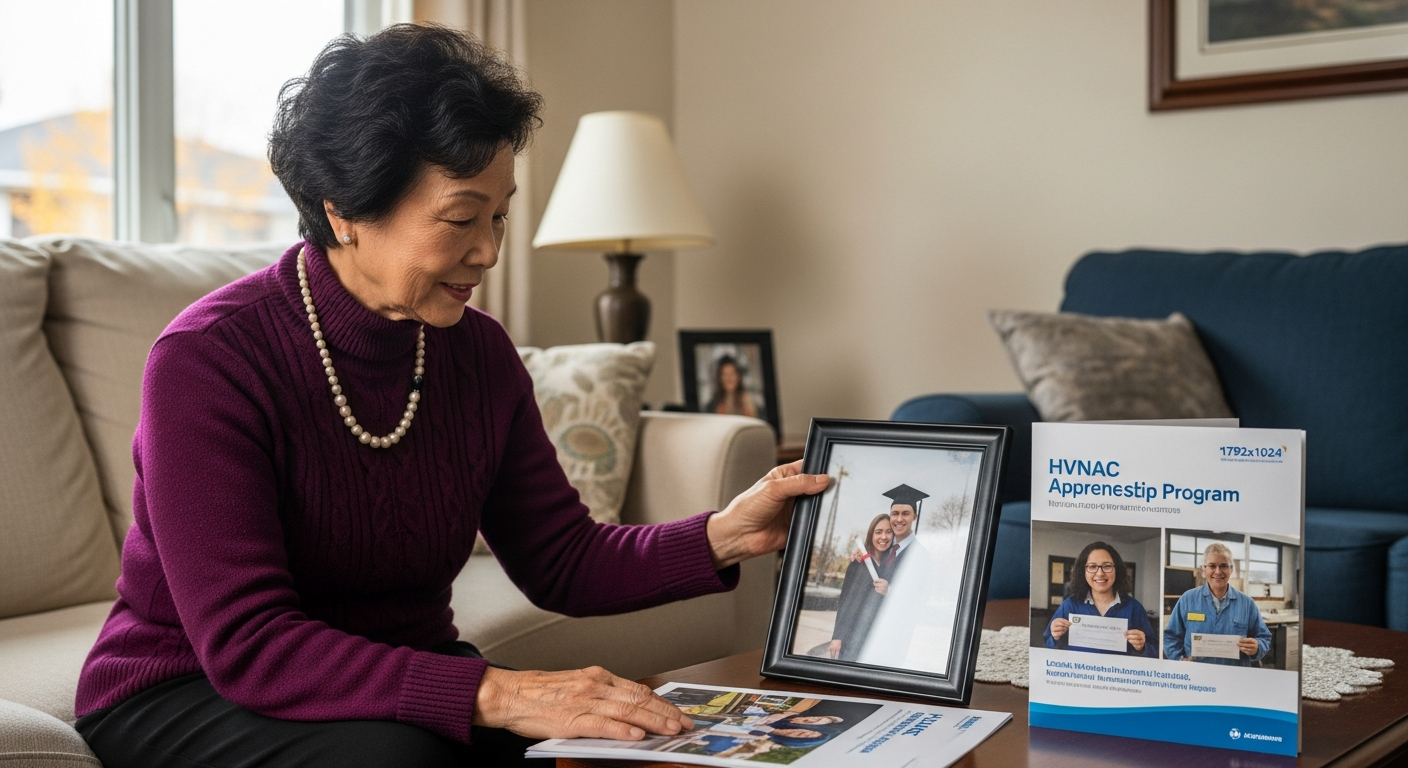
Why Adult Children Are Choosing Skilled Trades
The skilled trades are experiencing a renaissance in Canada, especially in Ontario. According to Skills Ontario and Colleges Ontario, over 150,000 tradespeople will retire in the next decade, creating unprecedented demand for new apprentices. Meanwhile, university graduates face saturated job markets and student debt—while skilled trades offer:
- Higher earnings: $70,000–$120,000/year (journeylevel electricians in Ontario average $85,000–$95,000)
- Job security: Construction, utilities, and maintenance demand is constant
- Entrepreneurship: Many trades lead to self-employment and business ownership (earning $150,000+/year)
- Respect and practical impact: Building, fixing, maintaining infrastructure
- No formal university debt: Apprenticeships pay you to learn (wages increase annually)
Career Pivot Triggers
Your adult child might pursue trades because:
- Corporate burnout: Desk job monotony, office politics, meaningless work
- Health issues: Physical or mental health challenges with current career
- Economic shifts: Job loss or industry consolidation
- Age/life reassessment: At 30–40, realizing they want meaningful, practical work
- Family needs: Desire for a trade-friendly schedule (union hours, benefits, pension)
Career counselors now report that skilled trades are attracting university graduates—people who spent 4 years in bachelor's programs, discovered they hated the career path, and are pivoting to apprenticeships at age 25–30.
The Apprenticeship Path: Cost and Timeline
In Ontario, apprenticeships for most trades follow a similar pattern:
| Stage | Duration | Wages | Out-of-Pocket Costs |
|---|---|---|---|
| Pre-apprenticeship (optional) | 6 months | $0 (classroom) | $0–$5,000 tuition |
| Level 1 apprenticeship | 1 year | $18–$25/hour = $36,000–$50,000/year | $2,000–$3,000 (tools, books) |
| Levels 2–3 (on-the-job + classroom) | 3–4 years | $25–$50/hour = $50,000–$100,000/year | $1,000–$2,000/year (tools, certifications) |
| Journeyperson (certified) | Ongoing | $45–$60/hour = $90,000–$120,000/year | Ongoing professional development |
Real Cost Analysis: Jake's Electrician Apprenticeship
Jake, 31, is a marketing manager earning $58,000/year. He's decided to pursue a licensed electrician apprenticeship. Timeline: 5 years. Projected income:
| Year | Apprenticeship Status | Wages/Year | Lost Income vs. Current Job | Tools & Costs | Total Cost |
|---|---|---|---|---|---|
| 1 | Level 1 apprentice | $42,000 | $16,000 loss | $3,500 | $19,500 |
| 2 | Level 2 apprentice | $55,000 | $3,000 loss | $2,000 | $5,000 |
| 3 | Level 2 apprentice | $62,000 | +$4,000 gain | $1,500 | ($2,500) |
| 4 | Level 3 apprentice | $72,000 | +$14,000 gain | $1,500 | ($12,500) |
| 5 | Level 3 → Journeyperson | $85,000 | +$27,000 gain | $2,000 | ($25,000) |
| Total 5-year cost/benefit | Net benefit after Year 3 | ($10,500 net gain) |
Interesting insight: The true cost is front-loaded. Jake needs support for Years 1–2 (~$24,500 in reduced income + costs). By Year 3, he's earning more than his former marketing job. By Year 5, he's a licensed electrician earning $85,000 with a multi-decade career ahead.
According to Statistics Canada, median household income for licensed tradespersons in Ontario is $92,000 (vs. $65,000 for office workers). Career earnings differential: $2.3 million over 30 years.
How a Reverse Mortgage Funds Career Transitions
Instead of your adult child taking out a personal loan (at 5–7% interest with monthly payments) or you cosigning risky debt, a reverse mortgage provides capital at a reasonable rate, with structured repayment flexibility.
Structure: The Phased Draw
Year 1: Draw $15,000 (cover income gap + apprenticeship costs) Year 2: Draw $8,000 (cover remaining income gap; apprenticeship income is now higher) Year 3+: No draw (apprentice earnings exceed former job; can begin repaying)
Total RM draw: $23,000 Interest accrual: ~$1,200/year on outstanding balance Repayment: Can start Year 3 once earning more, or defer to retirement

Who Supports the Career Transition? The Living Legacy Angle
This is where the Living Legacy persona emerges. You're not just gifting money—you're investing in your adult child's earning capacity, career satisfaction, and long-term wellbeing.
Scenario: The Patel Family
Sandeep, 68, and Meera, 66, own a home in Mississauga worth $780,000 (paid off). Their son Arjun, 33, works in accounting but hates it. He's always been good with his hands, enjoyed building and fixing. He wants to become an HVAC technician.
Sandeep and Meera access a $30,000 reverse mortgage line of credit. Arjun begins his HVAC apprenticeship. Years 1–2 are tight (his apprentice wages are lower), so they draw $15,000 in Year 1 and $10,000 in Year 2. By Year 3, Arjun is earning well and stops needing support.
Five years later, Arjun is a licensed HVAC technician earning $92,000/year. He's much happier. He buys his own home. His parents' reverse mortgage balance ($32,000 + accrued interest) remains manageable against their $800,000+ home equity.
"Supporting Arjun's career change was the best investment we made," Sandeep said. "He was miserable in accounting. Now he's building a real trade, earning well, and content. That's worth more than money to us."
Financial Aid for Apprenticeships: What's Available
Many Ontario apprentices qualify for grants and subsidies that can reduce the net cost:
| Program | Award | Eligibility | Application |
|---|---|---|---|
| Ontario Apprenticeship Grant | Up to $8,000 | Apprentices in specific trades, completing certification | Apply through apprenticeship provider |
| Apprenticeship Completion Grant | Up to $2,000 | Completing Level 3 or Journeyperson exam | Apply upon certification |
| OSAP (Ontario Student Assistance Program) | Loans + grants | Low-income apprentices | Apply through OSAP.ca |
| Employer tuition reimbursement | Varies | Some union/large employers reimburse apprenticeship costs | Check union contract or employer policy |
| EI apprenticeship support | Up to $250/week | Qualifying apprentices on EI | Apply through EI |
These grants reduce the net cost your child faces. A reverse mortgage can still bridge remaining gaps.
Apprenticeship Challenges & How Parents Help
| Challenge | Impact | Reverse Mortgage Solution |
|---|---|---|
| Reduced income (Years 1–2) | Can't afford rent, food, transportation | RM covers living expense gap |
| Tool costs ($3,000–$5,000 initially) | Expensive startup requirement | RM covers initial tool investment |
| Geographic relocation | May need to move for apprenticeship program | RM funds relocation costs |
| Family support obligations | Adult child supporting family; can't afford training | RM allows temporary pause in family financial contribution |
| Spouse's income uncertainty | If married, spouse's job may be unstable | RM bridges family income volatility |
Many adult children resist asking parents for help with career transitions. Clarify: You're not cosigning debt or controlling their career. You're investing in their future earning capacity because you believe in them and want to remove financial barriers.

Tax and Financial Implications
For You (the Parent)
- ✓ Reverse mortgage proceeds are not taxable to you
- ✓ No income tax consequence
- ✓ Doesn't affect CPP, OAS, or GIS eligibility
- ✓ Interest on RM accrues but is manageable against home appreciation
For Your Adult Child
- ✓ RM funds are not income to them
- ✓ Trades apprenticeship wages are regular income (taxable)
- ✓ If you're gifting (not loaning) funds, no tax consequence
- ✓ If you're loaning with repayment expected, no tax unless you charge interest above CRA prescribed rate (~2%)
Family Loan Considerations
Some parents structure this as a family loan with written terms. Others gift outright. Either approach is valid:
- Gift: No repayment expected; clear communication avoids misunderstanding
- Loan: Written agreement specifies repayment timeline and interest (if any); clearer for estate planning
Consult a family lawyer if you want formal loan documentation.
Frequently Asked Questions
Will my adult child be able to repay the reverse mortgage funds once they're earning well?
Many do, but it's not required. The RM is your debt against your home, not their obligation. However, some adult children choose to repay parents once earning well (as a gesture of gratitude or to reduce parental RM balance). This is optional and often handled informally.
What if my adult child fails the apprenticeship exam or decides to quit?
The RM is still your debt. If they quit, you stop drawing funds. If they fail exams and retry, you can continue supporting (or not, per your comfort level). The reverse mortgage gives you flexibility—you don't have committed to any specific outcomes for your child.
Can my adult child apply for the reverse mortgage themselves?
No. They'd need to be 55+. Since most adult children pursuing apprenticeships are 25–40, they can't directly access a reverse mortgage. That's why it's typically parents (55+) funding this opportunity.
What if my adult child needs more money than I expected?
Structure as a line of credit, not a lump sum. You can access additional funds if needed. Most lenders offer RM lines of credit of $50,000–$200,000+, so you have flexibility.
Does supporting my adult child's apprenticeship affect my estate?
Only if you want it to. You can:
- Gift the funds (clear; child doesn't owe you repayment)
- Document a family loan in your will (specifying whether it reduces their inheritance or is forgiven)
- Forgive informally (your will specifies no offset)
Consult an estate lawyer to clarify your intent.
The Bottom Line
Skilled trades are a legitimate, high-earning career path that many adult children pursue during career transitions. Supporting this shift with a reverse mortgage is pragmatic and loving—you remove financial barriers without forcing your child into debt or risking your family's finances through cosigned loans.
By Year 3–5, your adult child is earning substantially more, happier, and independent. Your reverse mortgage balance is manageable against home equity. Everyone wins.
Ready to Learn More?
Get the free Ontario Reverse Mortgage Guide and find out exactly how much you could unlock from your home.
Get My Free Guide →Related Articles
Reverse Mortgage for Adult Child's Postgraduate Education: Master's & Certifications
Help your adult child earn a master's degree or professional certification with a reverse mortgage. Fund education without cosigning debt—Ontario strategy for parents of adult learners.
Read →Reverse Mortgage for Adult Child Job Loss Recovery and Career Transition
Help your adult child bounce back from job loss using reverse mortgage funds. Financial stability guide for Ontario parents supporting career transitions.
Read →When Your Adult Child Has Financial Trouble: Should You Help With a Reverse Mortgage?
Learn when a reverse mortgage makes sense for helping an adult child facing financial hardship, and how to protect both your retirement and their future.
Read →