
The Sandwich Generation: Reverse Mortgages for Multi-Parent Care in Ontario
Caring for aging parents from different homes? Learn how reverse mortgages help sandwich generation adults fund in-home care, assisted living, or supporting multiple parents simultaneously.
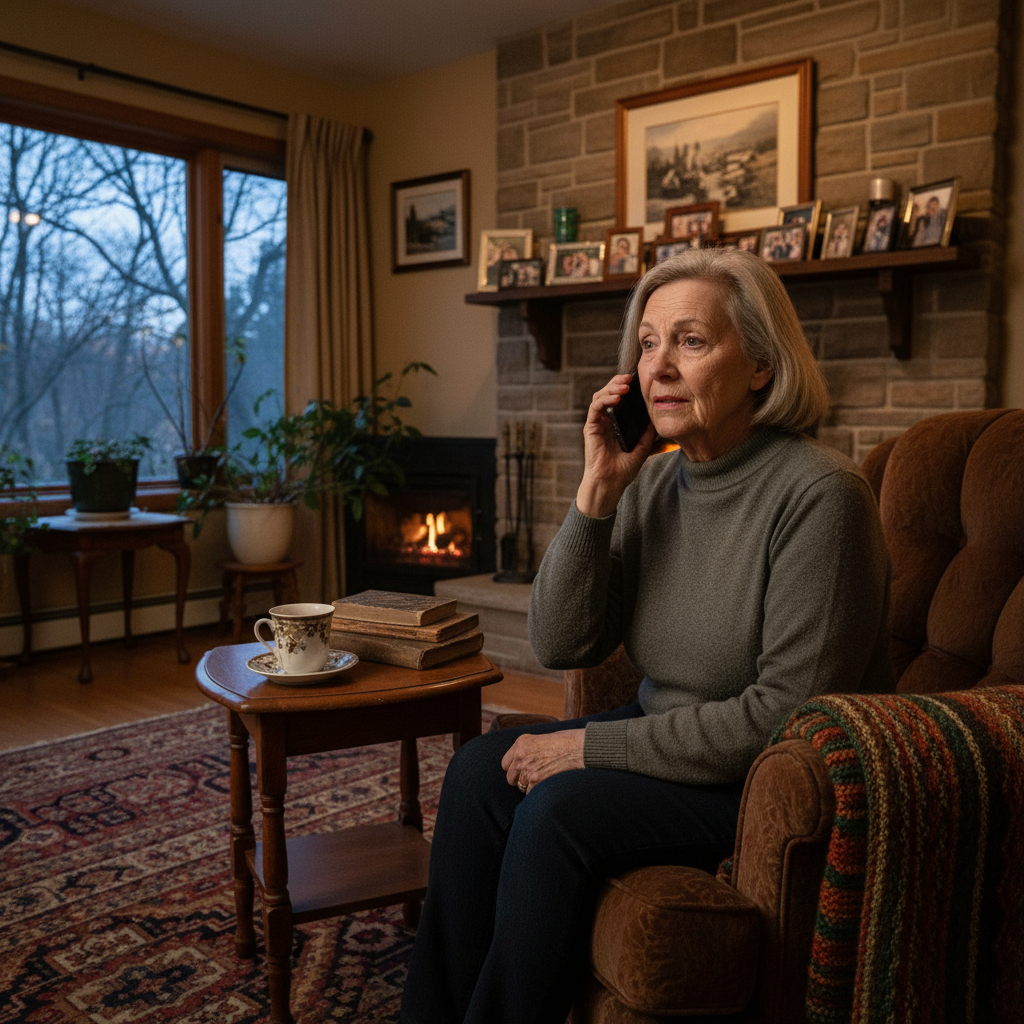
You're 55. Your mother (78) lives in Mississauga with moderate dementia. Your father (80) lives in a separate home 30 minutes away, post-stroke, requiring mobility assistance. Neither can afford private care. Both expect you to help, but their pensions don't stretch far enough. You're supporting them, your spouse, and potentially grandchildren—this is the modern sandwich generation.
This article is for educational purposes only and does not constitute financial advice.
The Sandwich Generation Crisis in Ontario
The Numbers
| Statistic | Impact |
|---|---|
| Canadians supporting 2+ aging relatives | 8.8% of workforce (nearly 1 in 11) |
| Average annual cost of supporting aging parents | $5,500–$12,000/year in direct costs |
| Sandwich generation average annual personal spending | $150,000–$200,000 (including own family) |
| Employed sandwich generation reporting caregiver stress | 67% report job performance impact |
| Ontario long-term care wait times | 4–7 years for subsidized beds |
The harsh reality: Government support (OAS, GIS, CPP) is often insufficient for aging parents with multiple health issues. Private care solutions (home support workers, assisted living) cost $3,000–$6,000+/month per parent.
For the sandwich generation adult, reverse mortgages become a critical financial tool—not for themselves, but to support aging parents without derailing their own retirement.
The Multi-Parent Challenge: Two Homes, Two Health Trajectories
Typical Scenario: Adult Child With Two Aging Parents
Parent 1 (Mother, 78): Widow, lives alone in small Mississauga bungalow ($650K). Has mild cognitive decline, osteoporosis. Pension: $24,000/year + CPP $18,000 = $42,000 total. Home maintenance and care costs: $2,000/month = $24,000/year. Shortfall: $18,000/year.
Parent 2 (Father, 80): Remarried (father & stepmother, 75). Lives in larger Oakville home ($900K). Post-stroke, needs physiotherapy, medication management. Pension: $28,000/year + CPP $22,000 = $50,000 total. Care costs: $2,500/month = $30,000/year. Shortfall: $20,000/year.
Total care shortfall: $38,000/year
Adult child's dilemma: Pay $38,000/year in taxes from own retirement savings? Take second job in late career? Or help one parent and let the other struggle?
The Emotional & Legal Dimensions
Unlike a regular financial decision, multi-parent care involves:
| Dimension | Reality |
|---|---|
| Guilt | "If I help Dad more, is Mom feeling abandoned?" |
| Fairness | Unequal parent situations create tension—"Why does she get more help?" |
| Sibling conflict | If there are multiple adult children, care/cost-sharing rarely splits evenly |
| Care quality | Insufficient funding = poor care outcomes (medication errors, isolation, complications) |
| Burnout | Sandwich generation adults often sacrifice their own health |
Reverse mortgages don't resolve these emotional/relational issues—but they can ease the financial strain that exacerbates them.
How Reverse Mortgages Help Multi-Parent Care
Strategy 1: Parent Uses Own Reverse Mortgage on Their Home
If your mother or father qualifies (age 55+, owns a paid-off or mortgaged home), they can take their own reverse mortgage to fund care costs and maintain independence.
Mother's Mississauga home example:
- Home value: $650,000
- Reverse mortgage available (age 78): ~55% of value = $357,500
- Funds drawn: $200,000 (conservative borrowing)
- Monthly draw: $3,200/month = covers most care costs
- Remaining equity: $450,000 (preserved for estate)
Advantage: Mother maintains autonomy. Her reverse mortgage is her responsibility. She funds her own care. No burden on adult child.
Disadvantage: Requires parents to understand reverse mortgages and take action independently. Many aging parents resist—they view home as untouchable asset or don't understand the product.
Reality: Many sandwich generation adults must convince aging parents to take a reverse mortgage. This requires:
- Explaining the product clearly (no income verification, no monthly payments)
- Addressing fear ("Will I lose my home?" — No, no-negative-equity guarantee protects you)
- Discussing longevity ("Mom, you might live to 95—we need funds if you do")
- Framing it positively ("This lets you stay in your home with in-home care, rather than move to long-term care")
Strategy 2: Adult Child Borrows Against Own Home to Support Multiple Parents
If the adult child owns a home with equity, they can take a reverse mortgage or HELOC to fund multi-parent care.
Example: Adult child (55) in own paid-off Toronto home ($850K):
| Option | Cost | Mechanism |
|---|---|---|
| Help both parents from savings | $38,000/year × 10 years = $380,000 from own retirement | Depletes personal retirement fund by 50% |
| HELOC at prime + 1% (8.25%) | $300,000 borrowed = $24,750/year interest-only = $300,000 eventually repaid | Requires monthly payments; manageable if adult child still working; risky in retirement |
| Reverse mortgage at 6.5% | $300,000 borrowed = $19,500/year interest cost, no monthly payments = flexibility in retirement | Interest compounds, but preserves retirement income |
For sandwich generation still in workforce: HELOC often better (lower rate, forced repayment creates discipline)
For sandwich generation transitioning to retirement: Reverse mortgage better (no monthly payments, preserves cash flow)
Multi-Parent Care Funding Scenarios
Scenario 1: High-Income Sandwich Generation (Still Working)
Profile: 55-year-old earning $120,000/year, spouse earning $95,000. Home equity $600,000. Supporting two parents ($38,000/year shortfall).
Strategy:
- Take HELOC against home equity ($250,000–$300,000)
- Make interest-only payments ($1,750–$2,000/month) from employment income
- Plan to repay HELOC after retirement (using pension + CPP)
- OR convert HELOC to reverse mortgage at retirement (no payment requirement)
Outcome: Parents receive consistent care support. Family finances remain sustainable. When adult child retires, HELOC converts to reverse mortgage.
Scenario 2: Moderate-Income Sandwich Generation (Approaching Retirement)
Profile: 60-year-old earning $75,000/year. Approaching forced early retirement due to health. Home equity $500,000. Supporting two parents ($35,000/year shortfall).
Strategy:
- Take reverse mortgage against home ($200,000–$250,000)
- Use monthly draws (instead of monthly payments) to fund parental care
- Preserve retirement savings for own living expenses
- No payment pressure if employment income drops
Outcome: Parental care is funded without liquidating retirement savings. Adult child's income uncertainty is managed—no minimum payment on reverse mortgage.
Scenario 3: Low-Income/Fixed-Income Sandwich Generation
Profile: 62-year-old on CPP ($18,000/year) + small pension ($15,000/year) = $33,000 total. Supporting widowed mother ($20,000/year care shortfall).
Strategy:
- Encourage mother to take her own reverse mortgage (if she owns home with equity)
- If mother refuses or qualifies, adult child considers reverse mortgage against own home
- Monthly reverse mortgage draws fund mother's care without impacting adult child's basic living expenses
Outcome: Minimal income household can still support aging parent without choosing between caring and surviving.
The Emotional Benefit (Beyond Money)
Financial stress is one piece. The psychological relief is another.
Many sandwich generation adults experience anxiety about:
- "Will I have to put Mom in a home because I can't afford care?"
- "What if Dad's health deteriorates suddenly—can I pay for extra help?"
- "Am I making my own kids suffer because I'm supporting my parents?"
A reverse mortgage line of credit (not fully drawn) provides psychological security. It's there if needed. This reduces stress and improves decision-making.
Research finding: Caregivers with financial security (accessible funds, reverse mortgages, clear funding) report:
- 35% better mental health outcomes
- 40% improved sleep quality
- 28% better relationships with aging parents
Risks & Drawbacks to Consider
Risk 1: Moral Hazard—Overspending on Parental Care
A reverse mortgage line of credit makes it easy to fund unlimited care spending. This can lead to unsustainable levels of support.
Example: With access to $300,000, adult child funds parent's 24-hour private care ($5,000/month = $60,000/year). After 5 years, reverse mortgage balance is $400,000+. Reality check: Is this sustainable? Should parent consider assisted living ($3,500/month) instead?
Best practice: Set a monthly budget for parental care before taking a reverse mortgage. Stick to it. A reverse mortgage enables flexibility, not unlimited spending.
Risk 2: Delaying Difficult Decisions
With reverse mortgage funds available, adult children may delay necessary transitions:
- Parent could move to assisted living, but instead remains in home with expensive 24-hour care
- Sibling could contribute, but instead parent's reverse mortgage funds everything
- Parent could downsize home, but instead borrows against it
Example: Mother lives alone in $800,000 home needing $3,500/month care. A reverse mortgage lets her stay indefinitely. But at 88, she's isolated, home is too large, and costs are escalating. A move to assisted living ($3,000/month) would improve quality of life—but reverse mortgage financing enabled indefinite staying put.
Mitigation: Reverse mortgage should be a time-limited bridge, not a permanent solution. Set expectations: "We'll use this mortgage for 5 years. By then, we reassess Mom's situation (health, finances, preferences)."
Risk 3: Reduced Inheritance
When aging parents use reverse mortgages against their homes, the inheritance for adult children shrinks.
Example:
- Mother's home value: $650,000
- Reverse mortgage borrowed: $250,000 (growing to $350,000 with compounding)
- Upon death: Adult child inherits home but owes $350,000 mortgage
- Net inheritance: $300,000 instead of $650,000
This is not a disaster (the no-negative-equity guarantee ensures you don't owe more than home value), but it's a real financial consequence.
Family conversation needed: Adult children should ask parents: "Are you comfortable using your home equity for care now, knowing it reduces what you leave us?" Some parents are—others prefer to preserve the inheritance.
Multi-Parent Care Coordination With Reverse Mortgages
Who Funds What?
| Care Component | Best Funded By |
|---|---|
| Parent's own home care | Parent's own reverse mortgage |
| Supplemental support (when parent can't fund fully) | Adult child's reverse mortgage (if adult child owns home) |
| Emergency costs (hospital equipment, urgent care) | Parent's reverse mortgage line of credit (flexible draw) |
| Long-term institutionalization | Government funding (LTC facility) + parent/adult child contributions |
Reverse Mortgage Line of Credit vs. Lump Sum
For multi-parent care scenarios, a line of credit is preferable to a lump sum.
| Factor | Lump Sum | Line of Credit |
|---|---|---|
| Access flexibility | No—all borrowed upfront | Yes—draw as needed |
| Unused funds interest cost | Yes—all borrowing costs immediately | No—only pay interest on drawn funds |
| Overspending temptation | High—lump sum feels "available" | Lower—draw discipline is required |
| Best use case | One-time expense (renovations, debt payoff) | Ongoing costs (continuing care, medical bills) |
For multi-parent care: A $250,000 line of credit is better than a $250,000 lump sum. Draw $2,000/month as needed. If only $1,500/month is used, you save $500/month in interest costs.
Frequently Asked Questions
If my parents take reverse mortgages on their homes, do I have any legal obligation to repay them?
No. A reverse mortgage is the borrower's personal debt. When your parent passes away, the lender repays themselves from the home sale proceeds. You inherit whatever's left. You're not liable for the debt—only the estate is.
Can I take a reverse mortgage to fund my parent's care without telling my parent?
No. A reverse mortgage is taken against your home (not your parent's). You're borrowing against your equity. It's your responsibility and your family's decision—not your parent's. You should discuss it with your parent so they understand the situation, but you don't need their permission if it's your home.
What if my parent's reverse mortgage exceeds the home value—am I responsible?
No. The no-negative-equity guarantee protects borrowers. If a reverse mortgage grows to $400,000 but the home sells for $350,000, the lender absorbs the loss—not you. You inherit the home with no additional debt.
How do I balance support for two parents with different financial situations?
This is an equity question (fairness) more than a financial one. A family meeting with a financial advisor (or therapist) can help clarify:
- What can each parent fund independently?
- Where are genuine shortfalls?
- What is adult child's capacity to contribute?
- Are there other siblings who can share the burden?
A reverse mortgage is a tool—it doesn't solve the fairness question.
Key Takeaways
| Key Point | Multi-Parent Reality |
|---|---|
| $38,000/year+ in parental care costs is common | Reverse mortgage enables sustainable funding |
| Parents should take their own reverse mortgages if they own homes | Preserves adult child's retirement savings |
| Adult child can take reverse mortgage as backup if parents don't qualify | Provides additional funding source |
| Line of credit is better than lump sum for ongoing care | Pay interest only on funds actually drawn |
| Set a budget and timeline for using reverse mortgage | Prevents overspending and indefinite dependency |
| Inheritance will be reduced (equity used for care) | Family should discuss and accept this trade-off |
The Bottom Line
The sandwich generation is real, and Ontario families are funding multi-parent care from inadequate resources. A reverse mortgage—whether taken by aging parents or by adult children—provides crucial financial flexibility. It's not a perfect solution, but it beats depleting retirement savings, taking additional employment, or leaving parents' care needs unmet.
The key is using it strategically: set budgets, encourage parents to fund their own care when possible, and accept that home equity will be used for its intended purpose—supporting the family that built it.
Speak to a licensed mortgage professional. Independent legal advice is required before closing a reverse mortgage in Ontario.
Consult a family therapist or financial advisor for guidance on fairness and multi-sibling coordination.
This content is for illustrative purposes only. Rates may vary. Call Rick Sekhon for the best rates and more information.
Ready to Learn More?
Get the free Ontario Reverse Mortgage Guide and find out exactly how much you could unlock from your home.
Get My Free Guide →Related Articles
Reverse Mortgage for Caregivers: Fund In-Home Care in Ontario
Ontario seniors caring for a spouse or partner at home can use a reverse mortgage to fund professional in-home care, home modifications, and medical costs without selling.
Read →Using a Reverse Mortgage to Care for Your Aging Parent: Adult Child's Guide
How to help aging parents stay in their home using a reverse mortgage. Guide for adult children navigating care costs, home modifications, and financial planning.
Read →Long-Term Care Planning with a Reverse Mortgage in Ontario
What happens to your reverse mortgage if you move to a nursing home or long-term care facility? Understand the timeline, repayment triggers, and family planning strategies.
Read →