
Basement ADU Conversion: Using Reverse Mortgage to Create Secondary Income
Fund a basement apartment or ADU with a reverse mortgage to generate monthly rental income in retirement. Learn costs, zoning, and income potential in Ontario.
Many Ontario seniors have a valuable asset hiding beneath their feet: an unfinished basement. Converting that space into an Accessory Dwelling Unit (ADU) or rental apartment can generate $1,000–$2,000 per month in retirement income. But renovations cost $30,000–$80,000. A reverse mortgage lets you access that capital without monthly payments, and the rental income helps cover carrying costs.
This article is for educational purposes only and does not constitute financial advice.
What Is a Basement ADU?
An Accessory Dwelling Unit (ADU) or secondary suite is a self-contained living space within your home:
Typical features:
- Separate entrance (or access through main home)
- Bedroom (1-2)
- Bathroom
- Kitchen (full or kitchenette)
- Living area
- Utilities (separate or shared)
Rental income potential:
- 1-bedroom basement ADU: $1,200–$1,800/month
- 2-bedroom basement ADU: $1,600–$2,400/month
- Location matters (downtown Toronto higher; rural Ontario lower)
Payback timeline:
- Conversion cost: $40,000 (typical)
- Monthly rental income: $1,400 (1-bed, conservative)
- Gross income per year: $16,800
- Simple payback: ~2.4 years (before expenses)
This isn't a get-rich-quick scheme, but it's solid, passive income that can substantially improve retirement cash flow.
Ontario Zoning and Legal Requirements
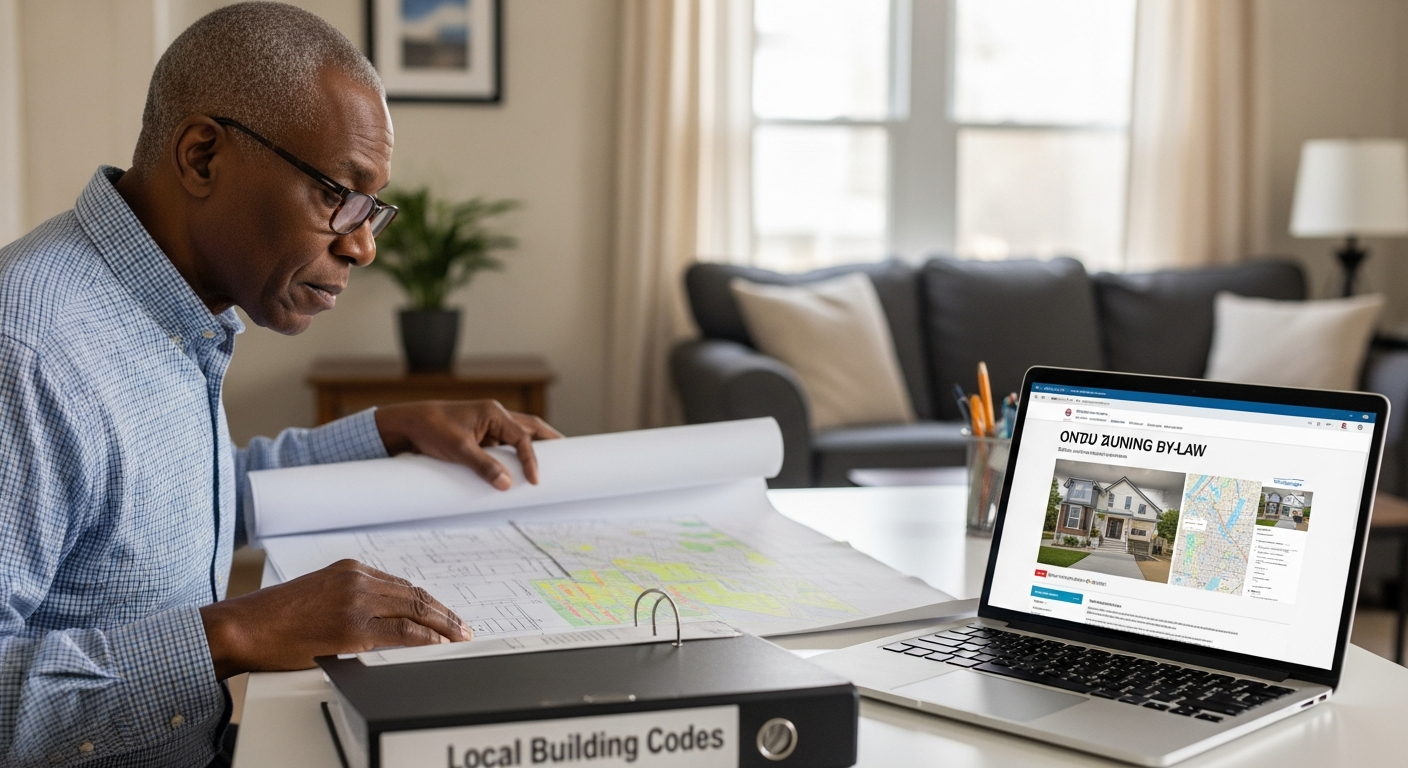
Critical first step: Check if your municipality allows secondary suites. Zoning laws vary significantly:
Cities That Encourage ADUs
- Toronto — Now permits up to 2 secondary suites (main floor + basement or laneway house)
- Ottawa — Permits one accessory dwelling
- London — Recently allowed secondary suites
- Waterloo — Permits accessory apartments
- Barrie — Permits secondary suites
Cities With Restrictions
- Some municipalities limit to 1 secondary suite
- Others prohibit basement suites (requiring separate entrance can be impossible)
- Rural areas may require larger lot sizes
- Check with your local bylaw department
Before spending any money: Get written confirmation from your municipality that a basement ADU is permitted on your property.
Basement ADU Conversion Costs (Ontario)
Budget Breakdown
| Item | Cost |
|---|---|
| Egress window (legal requirement) | $2,000–$4,000 |
| Drywall, framing, insulation | $5,000–$8,000 |
| Flooring | $3,000–$6,000 |
| Bathroom renovation | $6,000–$12,000 |
| Kitchen (kitchenette or full) | $4,000–$10,000 |
| Electrical & HVAC upgrade | $4,000–$8,000 |
| Plumbing (separate if possible) | $3,000–$8,000 |
| Paint, fixtures, finishing | $2,000–$4,000 |
| Permits & inspections | $1,000–$2,000 |
| TOTAL: Modest ADU | $30,000–$45,000 |
| TOTAL: Full renovation | $50,000–$80,000 |
Key cost drivers:
- Egress window: Required by law (bedroom must have safe exit)
- Bathroom: Most expensive single item
- Separate utilities: Metering adds $2,000–$5,000 but ensures legal compliance
- Permits: Vary by municipality; budget accordingly
Cost-Reduction Strategies
- Phased renovation: Build out basement over time, minimizing upfront cost
- Standard finishes: Stick to durable, neutral finishes; avoid luxury upgrades
- DIY where possible: Painting, basic finishing can reduce labor costs
- Shared utilities initially: Later separate if desired (though separate is legally cleaner)
How a Reverse Mortgage Funds Your ADU
The Strategy
Step 1: Get reverse mortgage
- Borrow $40,000–$50,000
- No monthly payments required
- Lump sum or draws as reno progresses
Step 2: Complete basement ADU renovation
- Licensed contractor or DIY + contractor mix
- Permits, inspections, compliance
Step 3: Start renting
- Market rent: $1,200–$2,000/month (depending on area, size)
- Gross annual income: $14,400–$24,000
Step 4: Use rental income to offset reverse mortgage
- Monthly rental income: $1,400 (example)
- Reverse mortgage balance growth: ~$150–$200/month (interest)
- Rental income essentially covers the interest cost of the reverse mortgage
Step 5: Wealth builds
- Your home appreciates
- Reverse mortgage balance grows slowly (offset by rental income)
- Tenant equity comes out of your home
- You keep the appreciating property
Financial Model
Assumptions:
- Home value: $500,000
- Reverse mortgage: $45,000 at 5.5% fixed
- Monthly interest: $206
- Rental income: $1,400/month
- Vacancy rate: 5% (one month per year vacant)
| Year | Mortgage Balance | Rental Income (Annual) | Net Position |
|---|---|---|---|
| 1 | $47,400 | $16,100 | Income covers 78% of interest |
| 3 | $50,900 | $16,100 | Same ratio, balance grows slowly |
| 5 | $54,500 | $16,100 | Slowly increasing gap |
| 10 | $64,600 | $16,100 | Balance growing due to interest |
Key insight: Rental income significantly offsets mortgage interest, making the reverse mortgage more sustainable.

Operating Costs: What Renters Don't Cover
Even with rental income, you'll have expenses:
Your responsibilities (landlord):
- Property tax (entire home)
- Home insurance (higher with tenant)
- Maintenance & repairs
- Utilities (if shared)
- Property management (if hiring)
Typical Ontario landlord costs:
- Property tax: varies (Toronto: $200–$400/month; rural: $100–$200/month)
- Insurance increase: +$20–$50/month
- Maintenance reserve: 10% of rental income (~$140/month)
- Property management: 8–10% of rent (~$112–$140/month) or DIY (free but time-intensive)
Total monthly expenses: ~$400–$700/month (depending on location and whether you self-manage)
Net income after expenses:
- Gross rental: $1,400
- Less expenses: -$550
- Net: $850/month to help offset reverse mortgage
Even after expenses, rental income materially helps.
Risks and Considerations
1. Tenant Risk
Worst case: Problem tenant, non-payment, eviction
- Tenant doesn't pay rent → you cover mortgage interest
- Eviction process takes 3–6 months in Ontario
- Property damage liability
Mitigation:
- Thorough tenant screening
- Credit checks
- References
- Signed lease with clear terms
- Landlord insurance
2. Vacancy Risk
If tenant moves: 2–4 weeks typically to find replacement
- One month per year vacant = 8% revenue loss
- Budget for this in financial projections
3. Property Management
DIY: Time-intensive (screening, maintenance, rent collection) Hire PM company: 8–10% of rent, but hands-off
4. Zoning Enforcement
Risk: Municipality enforces zoning change, forces closure of illegal suite
- Mitigation: Ensure full municipal compliance BEFORE renting
- Get legal secondary suite declaration from municipality
- This is why step 1 (zoning confirmation) is critical
5. Reverse Mortgage Implications
Question: Does rental income affect reverse mortgage repayment?
- No. Repayment is triggered by: (1) you move, (2) home sells, (3) you pass away
- Rental income doesn't change repayment terms
- However, it's smart to disclose rental income to lender upfront
Tax Implications
Important: Rental income is taxable. You must:
- Report rental income to CRA
- Deduct eligible expenses (mortgage interest, property tax, insurance, maintenance, utilities, property management, etc.)
- Usually, net rental income is modest after expenses
- Keep records of all expenses
Example tax calculation:
- Gross rental income: $16,800/year
- Less mortgage interest: -$2,472 (initial year)
- Less property tax, insurance, maintenance: -$6,600
- Less vacancy, other costs: -$1,000
- Taxable net income: ~$5,700
Taxes owing: Depends on your marginal tax rate (Ontario 53.53% at top bracket, but likely much lower)
Consult a tax accountant to optimize deductions and structure.
FAQs: Basement ADU and Reverse Mortgages
Will my reverse mortgage lender allow a rental suite?
Generally yes, with disclosure. Most lenders don't prohibit rental suites. However, disclose it upfront. Some lenders may adjust terms slightly if they perceive additional use/wear on property.
What happens to the suite if I move or pass away?
Tenant must be given notice. If you move to long-term care or pass away:
- Executor must manage tenant situation
- Usually 60–90 days' notice to vacate
- Tenant may be entitled to relocation assistance (check Ontario law)
- Home would typically be sold, with tenant vacating beforehand
Can I charge more than market rent?
Legally, no (in Ontario). Rent control guideline typically limits increases to inflation rate. However, for new tenancies formed after November 2018, you can charge market rent. After that, increases are capped.
What if my tenant stops paying rent?
Eviction process:
- Non-payment notice (14 days to pay)
- Landlord-Tenant Board application (if not paid)
- Hearing (30–45 days)
- Eviction order (if upheld)
- Enforcement (if tenant doesn't leave voluntarily)
Total timeline: 2–4 months
Protection: Strong tenant screening, deposits, references minimize this risk.
The Bottom Line
A basement ADU funded by a reverse mortgage can generate $850–$1,400/month net income in retirement, materially improving cash flow. The reverse mortgage provides capital without monthly payments, and rental income offsets much of the mortgage's interest cost.
Key requirements:
- Zoning approval (must come first)
- Budget $40,000–$60,000 for renovation
- Strong tenant screening
- Clear lease and landlord insurance
- Tax planning with accountant
For Ontario seniors seeking additional retirement income without depleting savings, basement ADU + reverse mortgage is a smart strategy.
Speak to a licensed mortgage professional and a tax accountant. Independent legal advice is required before closing a reverse mortgage in Ontario.
Quick ADU Viability Checklist
- ✓ Municipality allows secondary suites (written confirmation obtained)
- ✓ Basement can meet egress/safety requirements
- ✓ Budget available ($40,000–$60,000)
- ✓ Home value supports reverse mortgage
- ✓ Comfortable with tenant responsibilities
- ✓ Willing to keep detailed tax records
- ✓ Can handle occasional vacancies/repairs
If you check all boxes, basement ADU is a realistic retirement income strategy.
This content is for illustrative purposes only. Rates and terms may vary. Call Rick Sekhon for the best rates and more information.
Ready to Learn More?
Get the free Ontario Reverse Mortgage Guide and find out exactly how much you could unlock from your home.
Get My Free Guide →Related Articles
Fund a Secondary Suite in Ontario with a Reverse Mortgage
Ontario seniors can use a reverse mortgage to fund a basement apartment or in-law suite—generating rental income, supporting aging in place, and boosting home value.
Read →Can I Rent Out Part of My Home with a Reverse Mortgage in Canada?
Can you rent out a room or basement suite if you have a reverse mortgage in Canada? Learn the rules, tax implications, and what lenders allow in Ontario.
Read →Reverse Mortgage for Workplace Injury Recovery: Supporting Adult Child's Career Transition
Help your adult child rebuild their career after workplace injury. Learn how reverse mortgages fund recovery, retraining, and financial stability during career transition.
Read →