
Reverse Mortgage for Adult Child Escaping Domestic Violence: Creating Safe, Stable Housing for Recovery
Help your adult child escape domestic violence safely. A reverse mortgage can fund emergency housing, legal costs, and recovery support in Ontario.
Your adult child calls you at night—scared, hurt, and ready to leave. Their intimate partner is violent, controlling, or both. They need to get out now, but they have no money, few options, and they're terrified. This is the moment when your home and your resources become a literal lifeline.
Escaping intimate partner violence isn't simply leaving. It requires safe housing, legal support, restraining orders, and sometimes relocation to maintain safety. A reverse mortgage can provide the immediate resources your adult child needs to escape safely and rebuild their life.
The Reality of Intimate Partner Violence
Intimate partner violence affects roughly 1 in 4 Canadian women and 1 in 8 men during their lifetime. In Ontario, two women die from intimate partner violence every week.
Why Leaving Is Dangerous
Leaving a violent relationship is paradoxically the most dangerous time:
- Abusers escalate violence when they lose control
- Threats become lethal as the relationship ends
- Stalking and harassment continue after separation
- Economic control often intensifies during the escape attempt
The Financial Trap
Abusers typically use financial control as a primary abuse tactic:
- Controlling all income and financial decisions
- Preventing partner from working or limiting employment
- Creating debt in partner's name
- Hiding assets and property
- Threatening financial destruction during separation
Your adult child likely has:
- No savings or ability to afford first/last rent
- No access to emergency funds
- Limited credit (if abuser controlled finances)
- Potential debt created without their knowledge
- No ability to access hidden marital assets during crisis
This financial trap keeps many abuse survivors stuck. Your reverse mortgage breaks that trap.
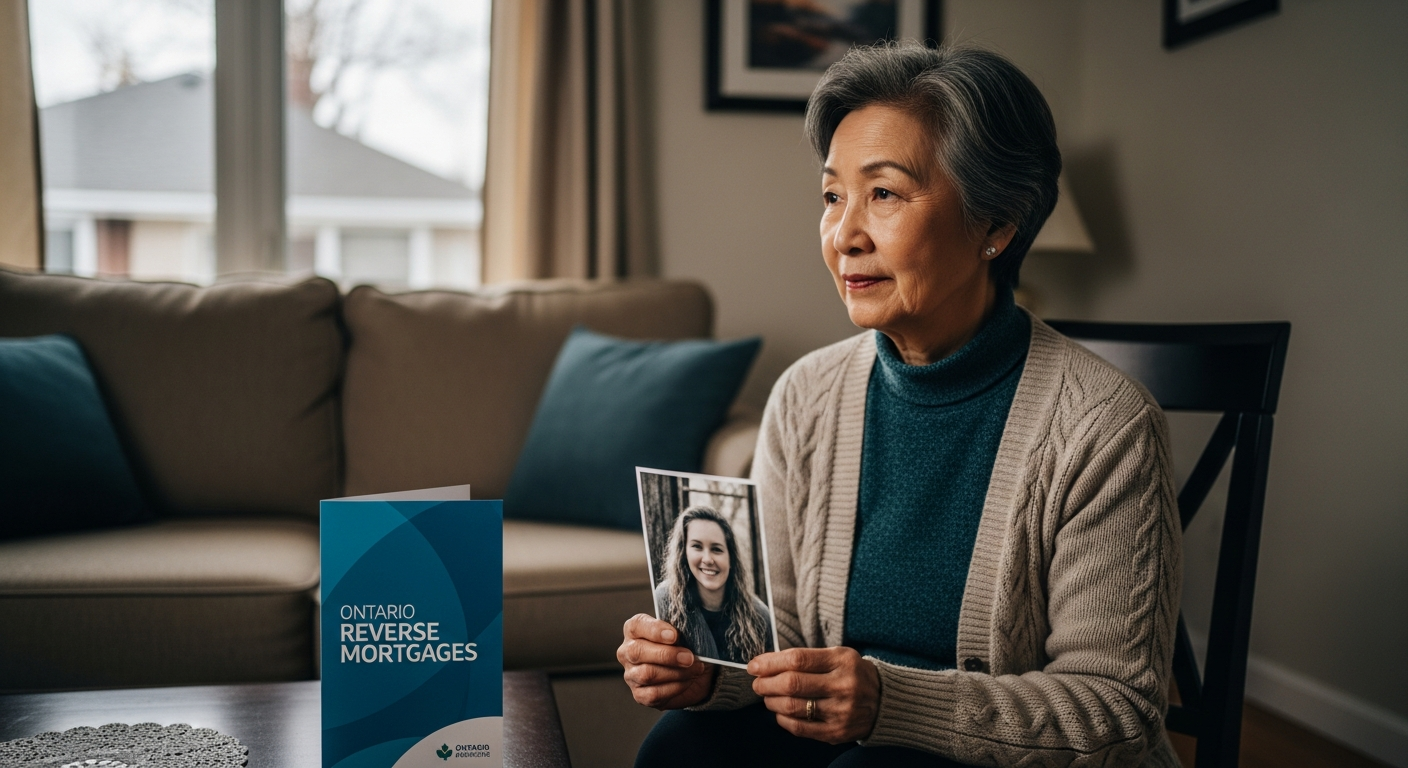
Creating Safe Housing for Your Adult Child
Emergency Housing Needs (First 30 days)
When your adult child arrives at your door, they need:
- A safe place free from abuser surveillance
- Bedroom space with privacy and security
- Access to phone, computer, and documentation
- Non-threatening emotional environment
- Separation from their children if custody is contested (for legal clarity)
Your home can provide this immediate safety. A reverse mortgage funds:
- Home security improvements (alarm systems, secure locks, motion-sensor lighting)
- Private bedroom and ensuite
- Emotional support services (therapy, counseling)
- Food and basic living expenses
Cost: $5,000-$15,000 initial emergency housing setup
Transition Housing (Months 2-6)
Once immediate danger passes, your adult child needs:
- Stable housing while legal separation is processed
- Space to rebuild emotionally and psychologically
- Time to assess options (stay in area? relocate? recover before independence?)
- Access to legal representation without fear
Some adult children stay 3-6 months during the legal separation and divorce process. Others transition sooner. A reverse mortgage covers:
- Housing modifications to create livable space
- Food and basic living expenses
- Childcare if they're single parents
- Mental health counseling and trauma support
Cost: $500-$1,500/month for 4-6 months = $2,000-$9,000 total
Long-Term Recovery Housing (Months 6-24)
As your adult child rebuilds, they may still not be ready for complete independence:
- Rebuilding employment after abuse-interrupted career
- Recovering from financial trauma and debt
- Processing PTSD and trauma from abuse
- Building confidence and decision-making capacity
- Securing stabilized custody if children are involved
Some adult children transition to independence quickly; others need 18-24 months. A reverse mortgage funds:
- Extended stable housing
- Education or skills training to rebuild employment
- Trauma therapy and healing services
- Childcare (if single parent with custody)
- Legal support for custody disputes or divorce finalization
Cost: $800-$1,500/month for extended recovery = $10,000-$36,000 total
Total Realistic Cost to Help Adult Child Escape Domestic Violence Safely: $20,000-$60,000
This covers immediate emergency housing, legal support, and sustained recovery housing. It's a substantial investment—and it saves your adult child's life.
Legal and Safety Expenses
Beyond housing, escaping violence safely requires legal support:
Lawyer and Legal Fees
- Restraining/protection orders: $500-$2,000
- Separation agreement: $2,000-$5,000
- Divorce proceedings: $5,000-$20,000+
- Custody disputes: $10,000-$50,000+ (if contested)
- Name change (sometimes necessary for safety): $500-$1,500
Total realistic legal costs: $10,000-$30,000+
Safety Measures
- Lawyer consultations for safety planning
- Therapy for PTSD and trauma (often $150-$250/session, needed ongoing)
- Safety planning with domestic violence advocates
- Identity protection services
- Potentially relocation costs (if safety requires leaving area)
A Reverse Mortgage Covers All These Costs
Unlike traditional borrowing, a reverse mortgage for helping your adult child escape domestic violence:
- Requires no monthly payments (escape survivors often have disrupted employment)
- Provides lump-sum or flexible draw access (perfect for unpredictable legal/safety needs)
- Doesn't require your adult child to qualify (you're borrowing on your home)
- Allows you to support them without personal debt
This is when a reverse mortgage's flexibility is truly lifesaving.

Supporting Your Adult Child's Recovery
Beyond housing and legal costs, supporting someone escaping abuse means understanding trauma:
What Recovery Looks Like
Escaping intimate partner violence doesn't end with leaving. Your adult child needs:
- Trauma therapy addressing PTSD and complex trauma
- Rebuilding trust in relationships (including with you)
- Processing shame, self-blame, and guilt
- Rebuilding self-esteem and decision-making confidence
- Addressing any substance abuse that may have developed (common trauma response)
- Physical healing if there was violence
- Financial literacy and rebuilding (if abuser controlled finances)
- Employment rebuilding (often interrupted by abuse)
- Parenting support (if they have children)
Your Role as Supporter
- Provide judgment-free housing and support
- Don't pressure them to "move on" quickly (recovery takes 2-5 years)
- Avoid blame ("Why did you stay?" "I told you so")
- Support therapy and professional help
- Help with concrete needs (transportation, childcare, employment support)
- Respect their autonomy and decision-making (abuse robs autonomy—restore it)
- Connect them with domestic violence advocates and resources
Protecting Yourself
Supporting someone escaping abuse can be emotionally intense:
- You may witness trauma responses (flashbacks, panic, hypervigilance)
- Your adult child may make decisions you disagree with
- Recovery is nonlinear—they may return to abuser, then leave again
- You may feel frustrated or angry
Protect yourself by:
- Having boundaries about your own limits
- Getting support (counseling, support groups for families of abuse survivors)
- Understanding trauma responses (not personal rejection)
- Maintaining your own retirement security (don't sacrifice your future)
- Setting realistic timeline expectations
Ontario Resources for Abuse Survivors
Ontario has substantial domestic violence support infrastructure:
Crisis Support
- Ontario Domestic Violence Hotline: 1-800-363-9010 (24/7)
- Transition houses: Emergency shelter across Ontario
- Family law legal clinics: Free/subsidized legal aid for abuse survivors
- Court-ordered protection orders: Free court process to establish restraining orders
Ongoing Support
- Counseling services: Many domestic violence organizations offer free/subsidized therapy
- Women's shelters: Many provide aftercare programs and support groups
- Legal aid Ontario: Free legal representation for low-income abuse survivors
- Employment programs: Transition houses often have job training and employment support
Safety Planning
- Domestic violence advocates: Help create comprehensive safety plans
- Police: Can escort during move-out and provide no-contact enforcement
- Social services: Help with housing subsidies and government benefits
Your reverse mortgage allows you to supplement public services and accelerate recovery beyond what government programs alone can provide.
Protecting Your Home and Privacy
When your adult child escapes abuse and moves in, safety for them means potential risk for you:
Safety Precautions
- Install security system with monitored alarms
- Update locks (abuser may know how to access)
- Consider security cameras (but respect your adult child's privacy)
- Plan for emergency egress (safe exit routes if abuser appears)
- Inform police that violent individual may attempt to locate resident
- Document harassment, threats, or trespassing immediately
- Never tell abuser your address or provide information
Legal Protections
- Ensure restraining order names your address as "no-go zone"
- Work with domestic violence advocate on protection orders
- Get legal advice about liability (what if abuser harms you?)
- Clarify your insurance coverage for increased liability
Privacy and Anonymity
- Keep your adult child's location confidential (tell few people)
- Use anonymous email/phone for correspondence
- Be cautious about social media (abusers stalk through digital footprints)
- Update voter registration and other public records with caution
A reverse mortgage provides the resources to make your home genuinely safe—not just physically, but legally and practically.
Impact on Your Estate and Inheritance
Supporting an adult child escaping abuse affects your estate:
Documentation Matters
- Document in your will whether the support is a gift or a loan
- Clarify whether your other adult children understand your support
- Discuss with your estate lawyer how this affects inheritance equity
- Consider whether the support should reduce their inheritance (it shouldn't, but document your intent)
Family Communication
- Be transparent with other adult children about why you're helping
- Explain the reverse mortgage and its impact on their inheritance
- Address any judgment about your support
- Help siblings understand domestic violence and why they matter
Long-Term Perspective
Supporting an adult child's escape from domestic violence is one of the most meaningful uses of home equity. It literally saves their life. It's legacy work—showing your children that family protects each other in crisis.
Difficult Scenarios: When Supporting Feels Endless
Some situations complicate this picture:
Repeated Cycles
If your adult child leaves the abuser, then returns, then leaves again, how long do you support them? Set boundaries:
- "I can support you through one separation cycle—to stable housing and employment. If you return to the abuser, I cannot support another cycle."
- This isn't heartless—it's protecting your retirement and not enabling return to abuse
Mental Health Complications
If your adult child struggles with untreated mental illness alongside abuse escape:
- Professional support becomes even more critical
- Recovery timeline may be longer
- Set clearer boundaries about what you can sustainably provide
- Insist on professional mental health treatment as condition of support
Children Involved
If your adult child has children they're taking from their abuser:
- Custody battles can be complex and expensive
- Children may have trauma themselves (requiring support)
- Safety for children becomes paramount
- Be prepared for extended housing and support period
Substance Abuse
Abuse survivors sometimes self-medicate with drugs or alcohol. Support recovery, but:
- Set boundaries about active substance use in your home
- Require treatment participation as condition of housing
- Don't enable addiction while trying to support recovery
- Connect them with addiction resources
These complex scenarios still benefit from reverse mortgage support—but they require professional help beyond what you alone can provide.
The Conversation With Your Adult Child
When your child arrives in crisis, your first conversation is about safety and options:
- Assure safety: "You're safe here. We'll figure out the practical details later."
- Validate their courage: "Leaving took incredible strength. I'm proud of you."
- Don't judge: Avoid "Why did you stay?" or "I never liked them anyway." They're experiencing shame; they don't need judgment.
- Connect to resources: "Let's contact a domestic violence advocate to create a safety plan."
- Discuss timeline: "You can stay as long as you need. Let's plan for your next steps—therapy, legal help, employment."
- Preserve dignity: "You're going to rebuild. This is temporary. I'm here to support that."
The Reality: This Matters
One in four adult women will experience intimate partner violence. Some are your daughters, nieces, friends' children. Many will reach out for help. When they do, a reverse mortgage can mean the difference between safe escape and remaining trapped in violence.
Supporting someone's escape from domestic violence isn't a luxury or extra spending. It's essential family care. It's the difference between life and death.
The Bottom Line: When your adult child escapes domestic violence, a reverse mortgage can fund the safe housing, legal support, and recovery time they need to rebuild their life safely. It's not enabling—it's protecting. It's one of the most meaningful ways you can use your home equity: to save your child's life and restore their future.
Ready to Learn More?
Get the free Ontario Reverse Mortgage Guide and find out exactly how much you could unlock from your home.
Get My Free Guide →Related Articles
Reverse Mortgage on a Condo in Ontario: Complete 2026 Guide
Learn about reverse mortgages on condos in Ontario, including eligibility requirements, special considerations, and fees involved.
Read →Working with an Accountant: When Reverse Mortgage Tax Planning Is Worth It
Understand when to hire a CPA for reverse mortgage tax planning. Strategies that save money in retirement income and government benefits.
Read →Protecting Your Home During Separation: Reverse Mortgage Strategy for Spouses
Navigate reverse mortgage implications during spousal separation or divorce in Ontario. Protect equity and understand family law considerations.
Read →