
Vacant Land Development in Retirement: Using a Reverse Mortgage to Build on Your Property
Learn how Ontario homeowners with vacant land can use a reverse mortgage to fund development—building a secondary residence, accessory dwelling, or multigenerational suite.
Develop Your Vacant Land in Retirement: Using a Reverse Mortgage for Property Expansion
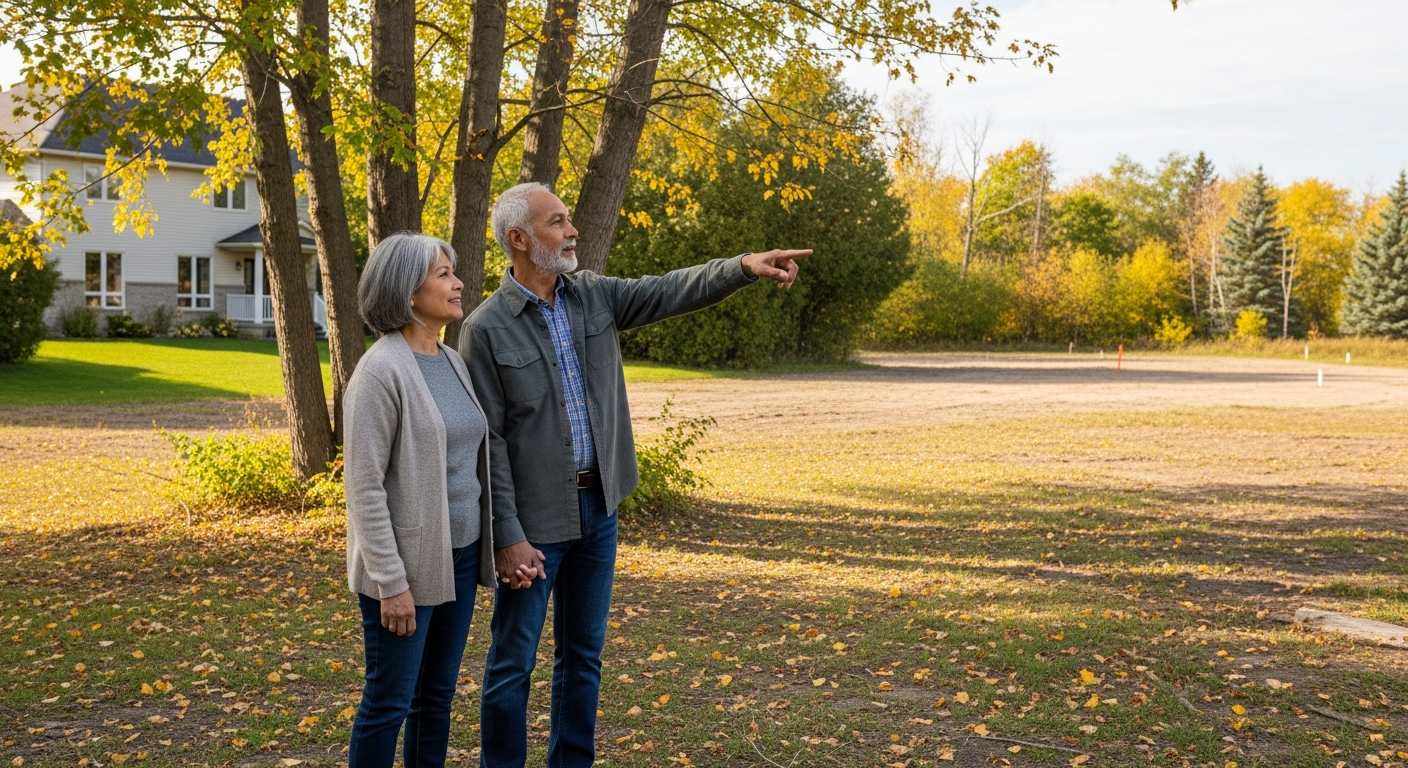
If you own Ontario property with vacant land—whether a large lot, multi-acre rural property, or land behind your primary residence—a reverse mortgage can fund development in retirement. Building a secondary residence, an accessory dwelling unit (ADU), or a multigenerational suite transforms unused land equity into usable space, income, or family housing.
This guide explores how to finance vacant land development with a reverse mortgage and the unique considerations for construction projects in retirement.

The Vacant Land Opportunity
Many Ontario homeowners own more land than they realize:
- Large suburban lots (0.5+ acres) with space behind the primary home
- Rural properties with 2-5+ acres of developable land
- Cottage/country properties with undeveloped portions
- Legacy land inherited from parents with family development plans
- Multi-property owners with land held for future use
Currently, this land sits idle. A reverse mortgage can unlock its potential.
Development Options for Vacant Land
Option 1: Accessory Dwelling Unit (ADU)
Build a small secondary unit on your property:
- Laneway house (behind primary residence)
- Garden suite (small detached home)
- Secondary suite (apartment addition to primary home)
- Mother-in-law suite (adjoining unit for multigenerational living)
Cost: $150,000-$350,000 depending on size and finishes Timeline: 6-12 months planning and construction Purpose: House family members, create rental income, or prepare for multi-generational aging in place
Option 2: Residential Rental Property
Develop a small residential building on your land:
- Duplex or triplex on rural property
- Small apartment building (3-4 units) on larger lots
- Short-term rental property (cottage-style rentals)
Cost: $300,000-$750,000+ Timeline: 12-18 months with municipal approvals Purpose: Generate ongoing rental income in retirement or fund legacy goals
Option 3: Multigenerational Expansion
Add space to your primary home for aging parents or adult children:
- Granny flat (separate entrance apartment)
- Second kitchen enabling semi-independent living
- Accessible suite for aging parent care with privacy
- Family compound enabling multi-household living on one property
Cost: $100,000-$300,000 Timeline: 4-8 months Purpose: Keep family together while maintaining independence; fund care for aging parents
Option 4: Income-Generating Development
Build commercial or mixed-use space:
- Office space for professional tenants
- Retail/commercial unit frontage
- Agritourism facilities (bed & breakfast, farm stand)
- Creative space (art studio rentals, workshop space)
Cost: $200,000-$500,000+ Timeline: 12-24 months with zoning approvals Purpose: Develop ongoing business income or enhance your own business operations
Financing Your Development with a Reverse Mortgage
How Reverse Mortgage Draws Work for Development Projects
Unlike traditional mortgages that fund construction with staged draws, most reverse mortgages provide:
- Lump sum or line of credit access to your available equity
- You manage the draws to contractors as needed
- Interest accrues only on amounts drawn, not the total available
- Flexible timing—you can draw funds gradually or quickly as construction progresses
Example: You have $300,000 available from your reverse mortgage. You draw $50,000 in month 1 for permits and site prep, $100,000 in month 3 for foundation and framing, $100,000 in month 6 for finishing work. Only the amounts drawn accrue interest.
The Reverse Mortgage vs. Construction Loan Comparison
| Aspect | Reverse Mortgage | Construction Loan |
|---|---|---|
| Approval Speed | 4-6 weeks | 6-8 weeks |
| Ongoing Payments | None (during lending phase) | Monthly interest + principal |
| Interest Rate | 6.2-7.1% (2026) | 7.5-8.5% (2026) |
| Appraisal Required | Yes (of current property) | Yes (of completed property value) |
| Credit Requirements | Minimal | Strong credit required |
| Age Requirements | 55+ | Any age (no restriction) |
For retirees, the reverse mortgage has significant advantages: no monthly payment requirements, simpler approval, and lower interest rates.
Municipal Approvals and Planning Considerations
Before developing vacant land, secure:
-
Zoning confirmation from municipal planning department
- Is ADU development allowed in your zone?
- Are there setback requirements (distance from property lines)?
- What's the density limit (how many units per acre)?
-
Severance or boundary adjustment (if needed)
- Can your property be legally divided?
- Do you need formal severance approval?
-
Building permits for your construction project
-
Septic or water approvals (for rural properties not on municipal systems)
-
Parking and accessibility requirements
These approvals can take 2-6 months and cost $2,000-$10,000. Factor this into your timeline and reverse mortgage draw.
Construction Project Management in Retirement
Managing a construction project while retired presents unique challenges:
Challenge 1: Time and Attention
Retirement offers flexibility—but construction projects demand constant attention. You'll need to:
- Attend progress meetings
- Inspect work quality
- Manage contractor schedules
- Handle change orders and decisions
Solution: Hire a project manager or construction administrator ($3,000-$8,000) to oversee the project while you maintain oversight.
Challenge 2: Construction Cost Overruns
Most projects exceed budget by 10-20%. Your reverse mortgage draw must account for this.
Solution: Establish a 15-20% contingency reserve within your reverse mortgage budget. If a project costs $200,000, plan to borrow $230,000-$240,000.
Challenge 3: Contractor Reliability
Construction in Ontario requires due diligence:
- Verify licensing and insurance
- Check references and past projects
- Get multiple bids
- Establish clear contracts with completion dates
Solution: Hire a licensed general contractor (not cash-paid workers). Higher cost but protects your investment.
Challenge 4: Lender-Specific Construction Constraints
Some reverse mortgage lenders restrict construction projects:
- Maximum loan-to-value during construction
- Restrictions on rental income properties
- Requirements for licensed contractors
- Insurance requirements during building
Check with your lender before beginning. Some lenders are more construction-friendly than others.
Rental Income and Reverse Mortgage Impact
If you develop your land for rental income:
Good news: Rental income does NOT count as income for government benefits (OAS/GIS) purposes. You can generate $15,000-$30,000+ annually in rental income without affecting your benefits.
Consideration: Rental income from developed properties is taxable. Budget for:
- Annual tax on rental income
- Accounting/bookkeeping support
- Property management costs (if you hire managers)
- Maintenance and vacancy reserves
Build these costs into your revenue projections before developing for rental income.
The Multigenerational Development Angle
For aging in place or family togetherness, developing an ADU or secondary suite enables:
- Aging parent care: Your parent lives in the secondary suite; you can monitor their safety and coordinate care
- Adult child housing: Provide affordable housing for your adult children
- Cost sharing: Family members contribute to household expenses, reducing your burden
- Inheritance planning: Develop the property as a living legacy—your family already has roots in the expanded property
This transforms a reverse mortgage into a family wealth-building tool.
Structuring Your Development Project with a Reverse Mortgage
Step 1: Assess Your Vacant Land
- Get a current surveyed lot plan
- Confirm municipal zoning and development allowances
- Estimate available developable square footage
Step 2: Determine Your Development Goals
Is this for:
- Personal use (aging parent, adult child housing)?
- Rental income generation?
- Legacy property expansion?
- Combination of the above?
Your goal determines the project scope and financing needs.
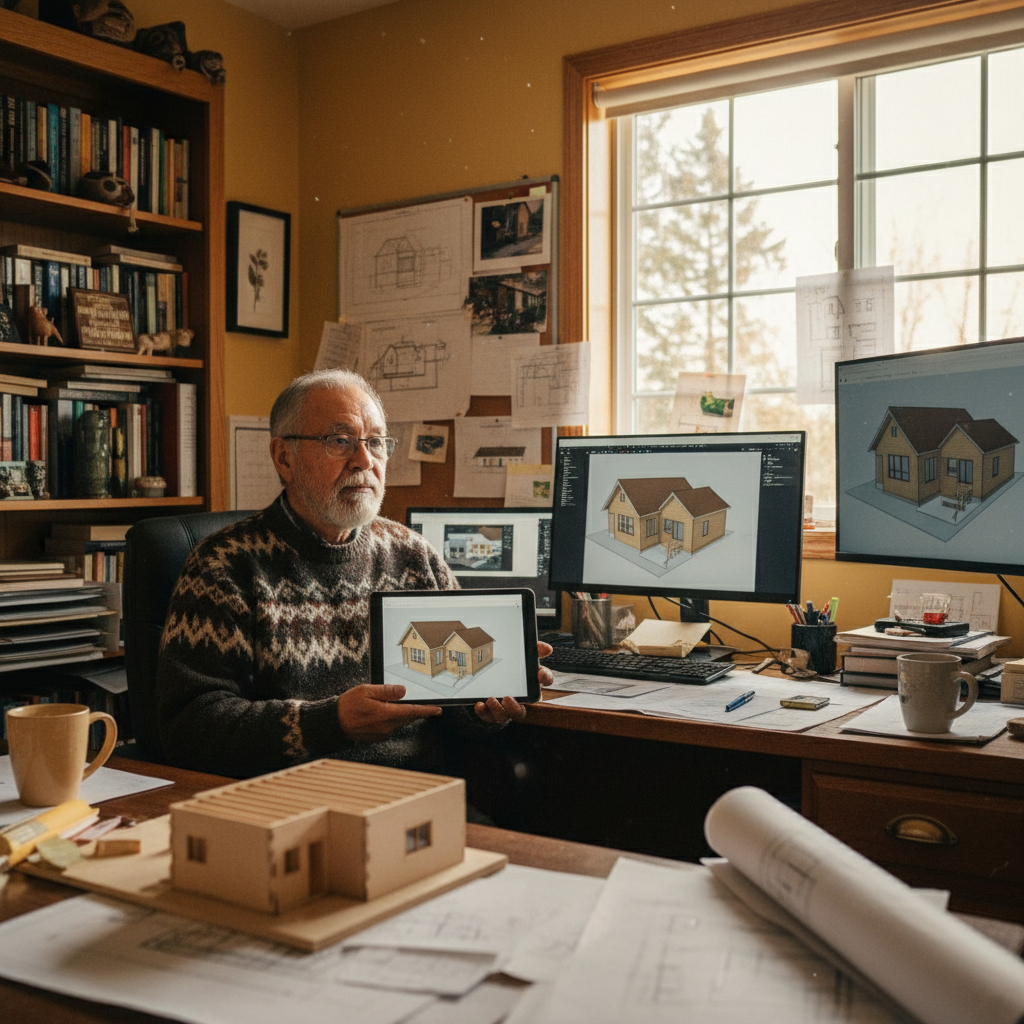
Step 3: Get Architectural and Cost Estimates
Hire an architect or contractor to provide:
- Preliminary design
- Cost estimate
- Timeline
- Municipal approval requirements
Cost: $1,500-$5,000 for preliminary design and estimate.
Step 4: Secure Reverse Mortgage Pre-Qualification
Present your plans to a reverse mortgage lender. Ask:
- Can I borrow enough to fund this project?
- Are there construction project restrictions?
- Can I draw funds gradually as construction progresses?
- What happens if the project extends past my expected timeline?
Step 5: Plan Your Financing Structure
Determine:
- How much reverse mortgage funding do you need?
- Can you fund it from your home equity alone, or do you need to add construction financing?
- When will the developed property generate income (if applicable)?
- What's your strategy for repaying the reverse mortgage once construction is complete?
Step 6: Execute the Project
Work with your contractor and project manager to complete the development on time and on budget.
Long-Term Reverse Mortgage Considerations
Once your development is complete:
- Your home's value increases (appraised value of property + new development)
- Your available reverse mortgage equity increases (based on new appraisal)
- If rental income generated, you can repay the reverse mortgage gradually from the income
This creates a self-funding cycle: develop land → increase home value → generate income → repay debt → preserve equity for future needs.
Next Steps to Develop Your Vacant Land
- Assess your property (size, zoning, development potential)
- Confirm municipal development allowances (call your local planning department)
- Get architectural/contractor estimates for your desired project
- Request reverse mortgage pre-qualification highlighting your development plans
- Consult with a construction lawyer if your project involves rental income or complex family arrangements
Conclusion
Vacant land is wasted home equity. A reverse mortgage transforms that land into usable space, income-generating property, or multigenerational family housing.
If you're an Ontario homeowner 55+ with developable land and retirement flexibility, exploring a reverse mortgage-funded development project could unlock significant value—for your family's future, your retirement income, or both.
Contact a reverse mortgage specialist and architect to begin assessing your property's development potential.
Ready to Learn More?
Get the free Ontario Reverse Mortgage Guide and find out exactly how much you could unlock from your home.
Get My Free Guide →Related Articles
Multigenerational Home Expansion: Reverse Mortgage for Renovations to House Multiple Adult Children's Families
When multiple adult children and their families need to live with you, home renovations create separate spaces and reduce conflict. Learn how Ontario seniors fund multi-generational housing through reverse mortgages.
Read →Training Your Family Caregiver: Reverse Mortgage for Certification Courses and Professional Care Skills
If an unpaid family member is your primary caregiver, professional training improves their skills and your safety. Learn how Ontario seniors use reverse mortgages to fund caregiver certification and ongoing education.
Read →Caregiver Burnout and Trauma: Reverse Mortgage for Your Own Mental Health Recovery
Caring for aging parents or ill spouses is emotionally traumatic. Learn how Ontario caregivers use reverse mortgages to fund their own therapy, counseling, and mental health recovery from caregiver burnout and PTSD.
Read →