Reverse Mortgage for Shared Custody Grandchildren's Healthcare Costs
You have shared custody of grandchildren with health needs—orthodontics, therapy, allergies, special equipment. Fund their healthcare with a reverse mortgage while staying in your home.
You have shared custody of your grandchildren. They live with you part-time, sometimes full-time. And they have health needs: one child needs braces, another requires speech therapy, the youngest has food allergies requiring specialized nutrition. The costs add up—$300/month for orthodontist, $150/week for therapy, $100/month in allergen-free groceries.
That's $2,000–$3,000 monthly on top of your retirement budget. You love these kids and want them healthy, but the expense strains your retirement. A reverse mortgage can ease that burden, allowing you to provide for their healthcare without cutting your own retirement lifestyle.
This article is for educational purposes and does not constitute medical or financial advice.
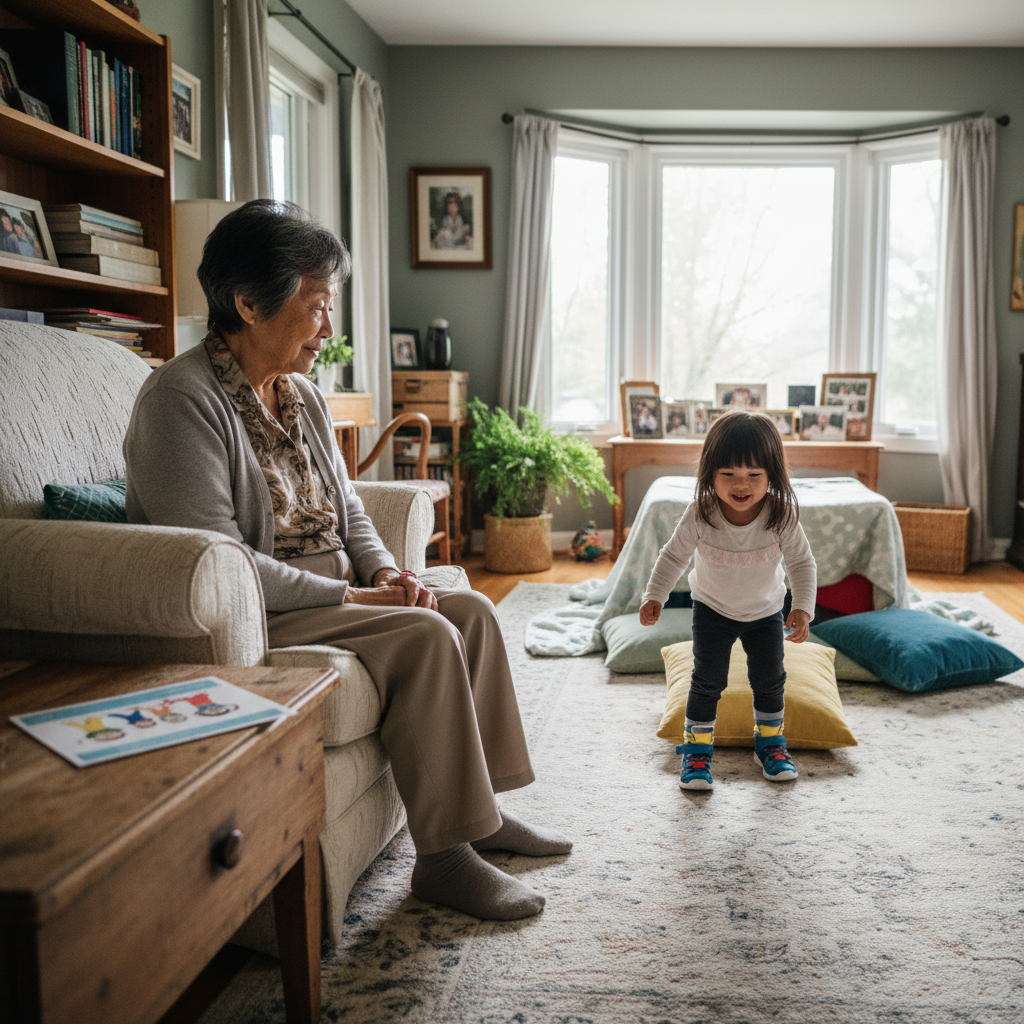
The Shared Custody Healthcare Reality in Ontario
Shared custody arrangements are increasingly common:
- Divorce/separation: Parent needs childcare support
- Parental illness: Parent unable to care for children; grandparents step in
- Addiction/crisis: Grandparents become primary caregiver
- Preference: Grandparents provide after-school care or school breaks
Ontario has over 55,000 grandparent-headed households. Many provide financial support for grandchildren's healthcare—medications, dental work, therapy, specialized equipment.
Common Healthcare Costs for Shared Custody Grandchildren
| Service | Typical Monthly Cost |
|---|---|
| Orthodontist (braces, 3-year treatment) | $250–$350 |
| Speech/language therapy (1x weekly) | $100–$200 |
| Behavioral/mental health therapy (1x weekly) | $120–$200 |
| ADHD medication (monthly) | $80–$150 |
| Food allergies (specialized groceries) | $150–$300 |
| Pediatric physical therapy | $100–$150 |
| Asthma medications and inhalers | $50–$100 |
| Eye care and glasses (annual) | $300–$600 |
| Hearing aids (if needed) | $2,000–$6,000 |
| Total estimated annual | $15,000–$40,000 |
Many of these costs are not covered by Ontario Health (OHIP) or private insurance. Grandparents cover the gap out of pocket.
Why a Reverse Mortgage Makes Sense for Grandchild Healthcare
Reason 1: Healthcare Costs Are Predictable (But Long-Term)
Orthodontia takes 3 years. Speech therapy might take 2–3 years. Once you start, you commit to the course.
A reverse mortgage provides long-term, stable access to capital for this predictable expense stream. You don't have to deplete investment portfolios or cut retirement spending month-to-month.
Reason 2: Caring for Grandchildren Is an Act of Love You Can Afford
Guilt is a real factor: "I want to help, but I can't afford it." A reverse mortgage reframes this: "I have home equity. I can use it to provide healthcare for grandchildren I love."
This isn't irresponsible spending; it's intentional grandparent investment in your grandchild's health and development.
Reason 3: Grandchild Healthcare Improves Their Long-Term Outcomes
Research shows:
- Orthodontia: Better dental health, reduced decay and extraction risk, improved confidence
- Speech therapy: Better school outcomes, social development, communication skills
- Mental health therapy: Reduced anxiety/depression, better coping skills, improved school performance
- ADHD medication: Better focus, academic success, impulse control
Paying for these services isn't luxury spending; it's investing in your grandchild's future. A reverse mortgage makes this investment affordable.
Reason 4: No Monthly Payments During Tight Months
When grandchildren are in your care and healthcare expenses spike, you might face tight months (back-to-school costs, Christmas gifts, etc.). A reverse mortgage doesn't require monthly payments, so you're not forced to choose between healthcare for grandchildren and your own essentials.
Planning Your Reverse Mortgage for Grandchild Healthcare
Step 1: Calculate Total Healthcare Need (Month 1)
List all healthcare services for your grandchildren:
| Service | Provider | Monthly Cost | Annual Cost | Expected Duration | Total Cost |
|---|---|---|---|---|---|
| Orthodontia | Dr. Smith Orthodontics | $300 | $3,600 | 3 years | $10,800 |
| Speech therapy | Sunrise Speech Clinic | $200 | $2,400 | 2 years | $4,800 |
| Behavioral therapy (grandchild A) | Dr. Jones Psychology | $150 | $1,800 | 2 years | $3,600 |
| Subtotal | $650/month | $7,800/year | $19,200 (2–3 years) |
Add:
- Medication costs: $100–$200/month
- Medical equipment (inhalers, EpiPens, etc.): $50–$100/month
- Groceries for allergies/special diet: $100–$200/month
- Unexpected medical: $50/month buffer
Total monthly: $900–$1,150 Total annual: $10,800–$13,800 3-year need: $32,400–$41,400
Request an RM of $50,000 (provides buffer for unexpected costs and inflation).
Step 2: Verify Your Retirement Income Covers Your Own Needs (Month 1)
Critical step: You cannot afford grandchild healthcare at the expense of your own retirement.
Calculate:
- Your pension or CPP/OAS: $X/month
- Your housing costs (property tax, insurance, utilities, maintenance): $Y/month
- Your healthcare (medications, doctors, dental): $Z/month
- Your basic living (food, transportation, phone): $W/month
- Total: $X + Y + Z + W must leave a comfortable cushion
If your own retirement is already tight, don't use an RM for grandchild healthcare. Focus on your own security first.
Step 3: Determine RM Amount and Structure (Month 2)
Option A: Lump Sum
- Request $50,000 lump sum at closing
- Deposit into a separate account: "Grandchild Healthcare Fund"
- Disburse monthly for documented services
- Estimated timeline: 4–5 years of healthcare funding
- Pro: Simple, predictable
- Con: Interest accrues on full amount immediately
Option B: Line of Credit
- Request $50,000 reverse mortgage as a LOC
- Draw $900/month for 55 months of care
- Interest accrues only on amounts drawn
- Pro: Interest-efficient
- Con: Requires lender flexibility; not all RMs offer LOC
Option C: Hybrid
- Request $20,000 lump sum (covers Year 1 healthcare)
- Request $30,000 LOC (covers Years 2–3)
- Draw as needed; flexibility + efficiency
- Pro: Balanced
- Con: More complex to manage
Step 4: Set Up Accountability and Documentation (Month 2–3)
Create a simple tracking system:
Monthly Healthcare Fund Log:
| Date | Service | Provider | Cost | Purpose (which grandchild, which service) | Cumulative |
|---|---|---|---|---|---|
| April 1 | Orthodontia | Dr. Smith | $300 | Emma, braces | $300 |
| April 15 | Speech therapy | Sunrise | $200 | Lucas, speech development | $500 |
| April 30 | Medications | Pharmacy | $120 | Grandchild allergy meds | $620 |
Why track?
- Proves to yourself and your family that funds are used appropriately
- Shows legal guardianship obligations are being met
- Simplifies tax records (if you claim childcare credits or dependent benefits)
- Provides documentation if family disputes arise ("Where did the money go?")
Step 5: Communicate with Family (Month 3)
Depending on your situation, notify:
If you have legal custody/guardianship:
- The children's parents (if involved): "I'm accessing a reverse mortgage to provide better healthcare for the kids. Here's the plan."
- Inform your children (the adult children): "I'm using home equity to fund healthcare for the grandchildren. This doesn't change their inheritance; equity covers the RM debt at my death."
If shared custody (children split between parents and grandparents):
- The parent: "When the kids are with me, I cover X healthcare services. Here's the cost and my plan to manage it."
- Be clear about boundaries: "I'm covering orthodontia. You're covering school supplies. Parent covers medication."
Clarity reduces misunderstandings and resentment.

Real Example: Shared Custody Healthcare Funding
Your situation:
- Age 64, retired teacher with $35,000/year pension
- Widowed; living alone in $500,000 home
- Grandchildren (ages 8, 11, 14) in your care 50% of the time (alternating weeks with parent)
- Healthcare costs: Braces ($300/month), therapy ($150/month), allergies ($120/month) = $570/month = $6,840/year
- Current retirement budget: $50,000/year (pension + CPP/OAS combination)
- After personal expenses: $30,000/year available
Problem: $6,840/year healthcare for grandchildren leaves only $23,160 for your own needs, savings, and emergency buffer. It's tight.
RM Solution:
- Request $40,000 reverse mortgage
- Structure: $20,000 lump sum + $20,000 LOC
- Lump sum covers Year 1 braces and therapy
- LOC covers Years 2–3 as needed
- RM rate: 6.8%
Results (Year 1):
- Your pension/CPP/OAS: $50,000
- RM lump sum draw: $20,000
- Total income: $70,000
- Healthcare for grandchildren: $6,840 (covered)
- Your needs + savings: $63,160 (healthy cushion)
- RM balance: $20,000 (no additional LOC draw yet)
Year 2:
- Braces nearly complete (down to $150/month)
- New grandchild needs hearing evaluation ($2,500 if hearing aids needed)
- Draw $2,500 from LOC for hearing aids
- RM balance: $22,671 (6.8% interest on $20,000 + $2,500 new draw)
Year 3:
- Braces done; child now only needs retainer maintenance ($50/month)
- Therapy complete
- Only ongoing cost is allergy groceries ($120/month) and retainer
- Stop additional LOC draws
- RM balance: ~$24,500
At your death (age 85, 21 years later):
- Home value (appreciated): $750,000
- RM balance (21 years of 6.8% compounding): ~$95,000
- Estate after RM payoff: $655,000
- Grandchildren still inherit substantial equity; your healthcare support didn't consume the estate
This is sustainable and fair: you funded grandchild healthcare without destroying inheritance.
Tax and Benefit Implications
ODSP or GIS Impact
If you (or the grandchildren's parent, if you claim them as dependents) receive ODSP or GIS, a reverse mortgage has minimal impact because RM proceeds are not counted as income. This is an advantage over other borrowing methods.
Claim the Grandchildren as Dependents?
If you have legal custody and the grandchildren live primarily with you, you may claim:
- Canada Child Benefit (CCB): Up to $6,000/year per child (age-dependent)
- Dependent amount on taxes: Deduction for supporting children
Consult a tax advisor; these benefits help offset healthcare costs.
Documentation for Deductibility
Healthcare costs for dependents can reduce your taxable income in some cases. Keep receipts and invoices for:
- Doctor visits
- Therapy sessions
- Medications (with prescription copies)
- Medical equipment
Provide these to your accountant annually.
Risk Management and Safeguards
Risk 1: Healthcare Costs Escalate Beyond Your Plan
Grandchild needs more therapy than anticipated; medications are more expensive than budgeted.
Safeguard:
- Build a 20% buffer into your RM request ($40,000 request covers $33,000 actual need + $7,000 buffer)
- Prioritize essential healthcare (medications, therapy) over elective (orthodontia can wait a year if necessary)
- Revisit plan annually and adjust
Risk 2: Relationship Changes (Custody Changes, Parent Takes Over)
If the parent regains custody or moves away, your healthcare funding obligation ends, but you still owe the RM.
Safeguard:
- Include a "reassessment trigger" in your planning: "If custody changes, I stop drawing from the RM and redirect funds to my own needs or investment growth."
- Don't over-commit; maintain flexibility
Risk 3: You Need Long-Term Care Before RM Is Paid
If you enter a nursing home at age 80, the RM becomes due. Your estate might need to sell the home.
Safeguard:
- Don't borrow more than 50% of available RM amount
- If you can access $150,000, borrow only $75,000
- This buffer protects you if long-term care happens sooner than expected
Risk 4: Home Depreciates; RM Balance Grows
If your home value declines 20% and RM balance grows due to compounding, you could have negative equity.
Safeguard:
- Start with a conservative RM amount ($40,000–$50,000) on a $500,000 home
- Leave substantial equity cushion (50%+ of home value)
- Monitor RM balance annually
Alternatives and Comparisons
| Option | Cost | Cash Access | Flexibility | Risks |
|---|---|---|---|---|
| Personal loan | 8–10% interest + monthly payments | Lump sum | Limited | Monthly payments strain retirement |
| HELOC | Prime + 0.5% + monthly interest | Flexible LOC | Very flexible | Monthly payments mandatory |
| Cut retirement spending | Emotional cost | N/A | Limited | Reduces your quality of life |
| Ask adult child (parent) to help | Relationship risk | Conditional | Unpredictable | Dependency and resentment |
| Reverse mortgage | 6.5–7.3%, no payments | LOC or lump sum | Moderately flexible | Interest accrues; reduces inheritance |
For sustained, predictable healthcare costs for shared custody grandchildren, a reverse mortgage often wins because it combines affordable interest rates with flexible access and no monthly payment burden.
Final Thoughts
Shared custody of grandchildren is a gift and a responsibility. When you can provide healthcare—braces, therapy, medication, specialized nutrition—you're investing in their health and future. Using home equity to do so, rather than cutting your own retirement, is a reasonable choice.
A reverse mortgage makes this financially sustainable. You provide care without sacrificing your retirement security, and your grandchildren grow up knowing their grandparent prioritized their wellbeing.
If you have shared custody grandchildren with healthcare needs and home equity, exploring a reverse mortgage is worth a conversation with a financial advisor and lender.
Ready to Learn More?
Get the free Ontario Reverse Mortgage Guide and find out exactly how much you could unlock from your home.
Get My Free Guide →Related Articles
Reverse Mortgage for Grandparent Adoption: Legal Guardianship Costs in Ontario
Learn how Ontario grandparents can use reverse mortgages to fund legal adoption, guardianship procedures, and associated costs when raising grandchildren.
Read →Reverse Mortgage for Grandparents Raising Grandchildren in Ontario
Ontario grandparents raising grandchildren can use a reverse mortgage to fund kinship care costs, maintain stability, and stay in the family home without monthly payments.
Read →Reverse Mortgage for Grandchildren's Education Fund in Canada
Fund grandchildren's education with a reverse mortgage in Canada. Learn RESP contribution strategies, CESG grants, tuition projections, and tax-free benefits.
Read →