
Reverse Mortgage for Net-Zero and Sustainable Retirement Goals: Green Home Upgrades
Fund your sustainable retirement vision with a reverse mortgage. Upgrade to net-zero, install renewable energy, and achieve environmental goals while reducing energy costs.
Sustainability and Retirement: Your Values Don't Have to Pause
For decades, you've cared about environmental impact. You've made conscious choices about consumption, energy use, and lifestyle. Now, in retirement, you don't want to compromise those values—you want to deepen them.
Yet many Ontario seniors face a barrier: the cost of truly sustainable home upgrades. Solar panels, heat pump systems, geothermal heating, advanced insulation, and net-zero building components are expensive upfront. A reverse mortgage can unlock these sustainability goals, allowing you to align your retirement lifestyle with your environmental values while reducing long-term energy costs.
Why Sustainable Retirement Matters
Environmental Impact
- Residential properties account for ~13% of Canada's carbon emissions
- Aging in place sustainably means reducing your lifetime carbon footprint
- Home upgrades ripple outward: they influence family, neighbors, and community values
Financial Benefit
- Lower energy costs offset sustainability investments over time
- Provincial and federal rebates reduce net upgrade costs
- Rising energy prices mean efficiency investments pay increasing returns
Health and Comfort
- Modern sustainable homes improve air quality, temperature regulation, and overall comfort
- Better insulation, ventilation, and lighting enhance aging-in-place living
- Reduced environmental toxins support long-term health
Intergenerational Legacy
- Leaving heirs a sustainable, efficient home is a gift
- Reduced property operating costs preserve more estate value for inheritors
- Modeling environmental stewardship influences future generations
Reverse Mortgage Funding for Sustainability Goals
A reverse mortgage on your Ontario home can fund comprehensive sustainability upgrades:
Heat Pump and Heating Systems ($10,000-20,000)
- Modern air-source or ground-source heat pumps replace fossil fuel heating
- 3-5x more efficient than traditional heating systems
- Significant annual savings on heating costs
Solar Panel Installation ($15,000-30,000 after rebates)
- Generates clean electricity throughout retirement
- Federal/provincial rebates cover 30-50% of costs
- 15-20 year payback period with rising electricity prices
- Battery storage systems increase self-sufficiency
Insulation and Air Sealing ($8,000-15,000)
- Attic, wall, and basement insulation upgrade
- Air sealing reduces drafts and heating/cooling loss
- Combined with other upgrades, generates 20-40% energy reductions
Window and Door Replacement ($8,000-15,000)
- High-performance triple-glazed windows
- Improved thermal performance and comfort
- Enhanced security and noise reduction
Water Heating and Conservation ($5,000-12,000)
- Heat pump water heaters (highly efficient)
- Solar thermal water heating systems
- Low-flow fixtures and water-saving systems
Smart Home Automation ($3,000-8,000)
- Programmable thermostats and smart controls
- Energy monitoring systems to optimize usage
- Remote management capabilities
EV Charging Infrastructure ($2,000-5,000)
- Install Level 2 EV charger for electric vehicle
- Supports sustainable transportation in retirement
The Net-Zero Retrofit: A Comprehensive Example
Toronto Homeowner's Journey to Net-Zero:
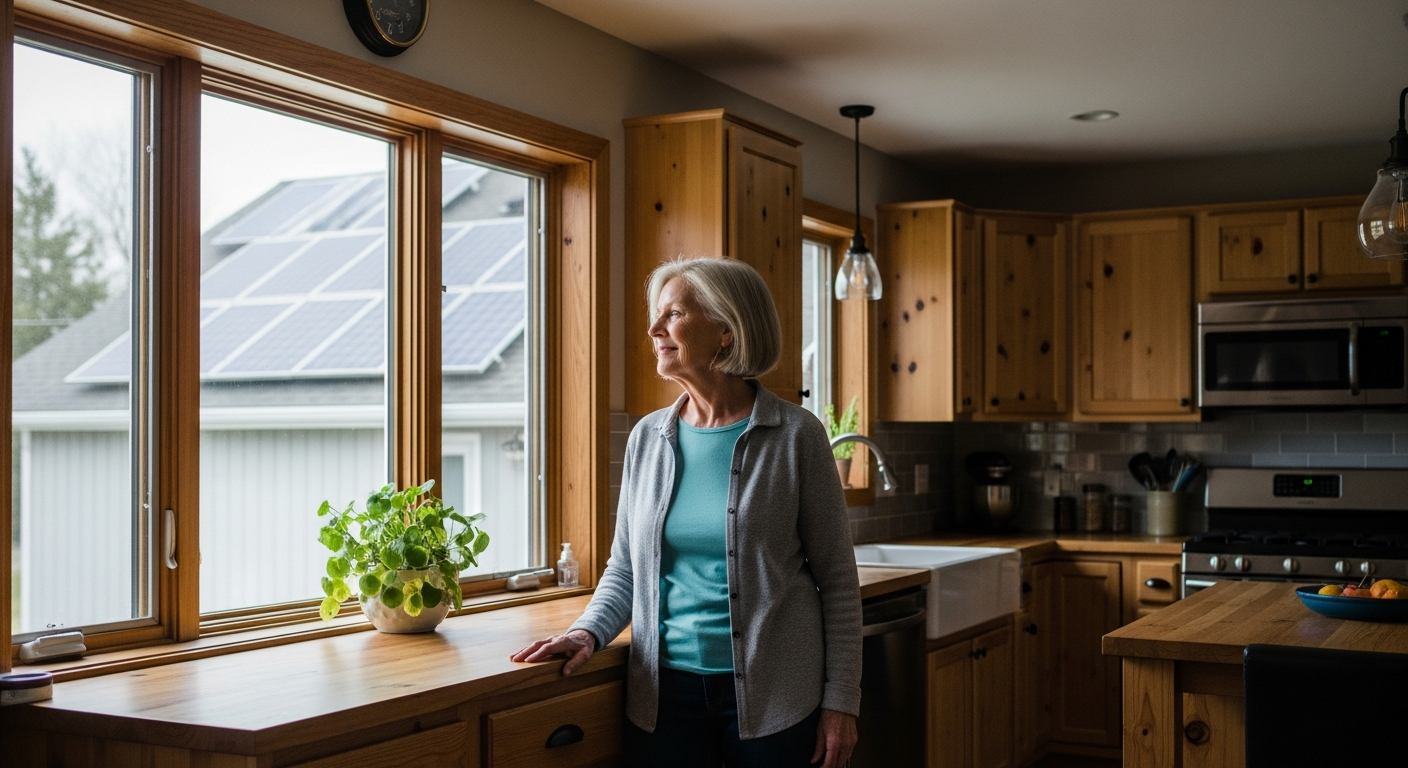
Jennifer, age 66, owns a 1970s bungalow in North York valued at $520,000. She wants to retrofit her home to net-zero before age 75, reducing her environmental impact and creating a legacy home.
Initial Assessment:
- Current heating: Natural gas furnace (40% efficient)
- Insulation: Below modern standards
- Hot water: Gas water heater
- Windows: Single and double-glazed, drafty
- Current energy cost: $2,200/year
Net-Zero Retrofit Plan ($65,000 total investment):
- Heat pump system with smart controls: $18,000
- Solar panel installation (8kW): $22,000 (after $8,000 rebate)
- Insulation and air sealing: $12,000
- Window replacements: $10,000
- Battery storage and smart systems: $3,000
Financing: Jennifer accesses $65,000 via reverse mortgage on her primary residence. She retains full ownership while accessing capital for sustainability goals.
Outcome:
- Energy consumption drops 70-80%
- Projected annual energy cost: $300-400 (mostly grid connection fees)
- Solar generation covers 90-95% of annual needs
- Annual savings: $1,800-1,900
- Reverse mortgage balance grows ~$3,200/year at current rates
- Payback timeline: 34-36 years (exceeds expected lifespan at age 66)
- But: Leaves heirs a dramatically more valuable, efficient home; aligns with environmental values; reduces dependency on energy price volatility
Federal and Provincial Incentive Programs
Ontario and federal programs reduce net-zero retrofit costs significantly:
Canada Greener Homes Grant
- Up to $5,000 rebate for comprehensive retrofits
- $600-2,000 for individual upgrades (insulation, HVAC, windows)
- Income-tested; most seniors qualify
Inflation Reduction Act (IRA) Benefits
- Some cross-border benefits apply to Ontario residents
- Heat pump rebates up to $8,000 USD equivalent
- Electric vehicle charging station assistance
Ontario Energy Rebate
- Energy audit rebates
- HVAC system upgrades
- Water heating efficiency
Utility Company Rebates
- Enbridge and Hydro One offer rebates for efficiency upgrades
- Heat pump, insulation, and smart thermostat incentives
- Varies by utility and region
Municipal Programs
- Many Ontario municipalities offer additional local rebates
- Toronto, Ottawa, and other major cities have dedicated green retrofits programs
- Available funding ranges $2,000-10,000 depending on municipality
Net-Zero Energy Ready Program
- Ontario government initiative supporting deeper retrofits
- Covers up to $40,000 of eligible retrofit costs
- Income-tested eligibility
Strategy: Combine reverse mortgage funding with available rebates. A $65,000 project might net $15,000-25,000 in rebates, reducing net reverse mortgage withdrawal to $40,000-50,000.
Long-Term Financial Planning for Sustainable Upgrades
Payback Analysis
- Traditional payback on sustainable upgrades is 20-35 years
- For retirees age 60+, "payback" isn't about recovering initial investment during lifetime
- Instead, focus on: annual energy savings, reduced utility volatility, environmental alignment, and estate value
Energy Stability and Inflation Hedge
- Energy prices historically increase 2-3% annually
- Sustainable homes insulate you from price volatility
- $1,500/year savings today becomes $2,200+/year in 20 years as energy costs rise
Home Value Enhancement
- Net-zero or near-zero homes command 5-15% price premiums
- Reduced operating costs increase property appeal to future buyers
- Environmental certifications (LEED, EnerGuide ratings) enhance marketability
Reverse Mortgage Impact on Estate Value
- While reverse mortgage balance grows, home appreciation often exceeds growth rate
- Net-zero upgraded home appreciates faster than non-upgraded homes
- Heirs inherit a more valuable property even after reverse mortgage is repaid
Case Study: The Generational Sustainability Model
Robert and Margaret, ages 70 and 68, own a cottage in Muskoka valued at $380,000 and a primary residence in Bracebridge valued at $420,000.
Their adult children and grandchildren share their environmental values but live in smaller urban apartments. Robert and Margaret want to model what sustainable retirement living looks like—creating a cottage that demonstrates net-zero principles and becomes a gathering place for three generations.
Investment: $55,000 reverse mortgage withdrawal for cottage upgrades
- Solar panels and battery storage
- Heat pump heating
- Insulation and window upgrades
- Rainwater harvesting and greywater systems
Outcome:
- Cottage becomes carbon-negative (generates more energy than it uses over the year)
- Dramatically reduced operating costs ($800/year for heating, electricity, water)
- Becomes a family gathering place showcasing sustainability
- Younger family members see practical net-zero living in action
- Cottage value increases; sustainability features attract future eco-conscious buyers
Addressing Common Sustainability Concerns
"Is It Too Late to Retrofit?" No. Every ton of CO2 not emitted matters. A retrofit at 70 still prevents 10-20 years of fossil fuel emissions. Environmental impact per dollar invested is significant even for shorter timeframes.
"Will My Reverse Mortgage Balance Outpace the Benefit?" Possibly. But think beyond simple payback. You're aligning your home with your values, reducing energy vulnerability, improving comfort, and leaving a more efficient home to heirs.
"What If I Move or Pass Away Before Payback?" The home is more valuable and efficient for the next owner. The reverse mortgage is repaid from sale proceeds. You've created lasting environmental benefit.
"Are Retrofits Reliable?" Modern sustainable technology is proven and widely deployed. Heat pumps, solar panels, and insulation have 20-30+ year lifespans. Quality installation matters; choose certified contractors.
"Can I Still Retrofit at Advanced Age?" Yes. Retrofits are safer than new construction—minimal disruption to your living space. Plan for temporary inconvenience (3-6 months) during major renovation.
Creating Your Sustainable Retrofit Plan
Step 1: Energy Audit
- Hire a professional for whole-home energy audit (available through many utilities and municipalities)
- Identifies where energy is lost: insulation, air sealing, heating/cooling, water heating
- Cost: $300-500; often rebated by government programs
- Output: Prioritized list of upgrades by impact and cost-effectiveness
Step 2: Priority Ranking
- High priority: Insulation, air sealing, heating systems (biggest impact per dollar)
- Medium priority: Windows, water heating, appliances
- Lower priority: Solar (should be considered after efficiency upgrades)
- Sequence matters: Improve building envelope before adding solar
Step 3: Rebate and Incentive Mapping
- Research federal Canada Greener Homes Grant
- Check Ontario provincial programs
- Contact your municipality for local incentives
- Consult utility (Enbridge, Hydro One, municipal electric) for rebates
- Total potential rebates: $10,000-25,000 for comprehensive retrofit
Step 4: Contractor Selection
- Hire certified, licensed contractors (electricians, HVAC specialists, builders)
- Request references and verify credentials
- Obtain multiple quotes; compare scope and warranty
- Ensure contractors understand sustainability standards
Step 5: Reverse Mortgage Assessment
- Get pre-approval showing available equity
- Determine draw amount needed (total project cost minus rebates)
- Decide on structure: lump sum or line of credit
Step 6: Project Management
- Create timeline: planning (1-2 months), rebate applications (1-2 months), construction (3-6 months)
- Budget for contingencies; older homes often reveal hidden issues
- Plan for lifestyle disruption during construction
Long-Term Vision: Sustainable Legacy
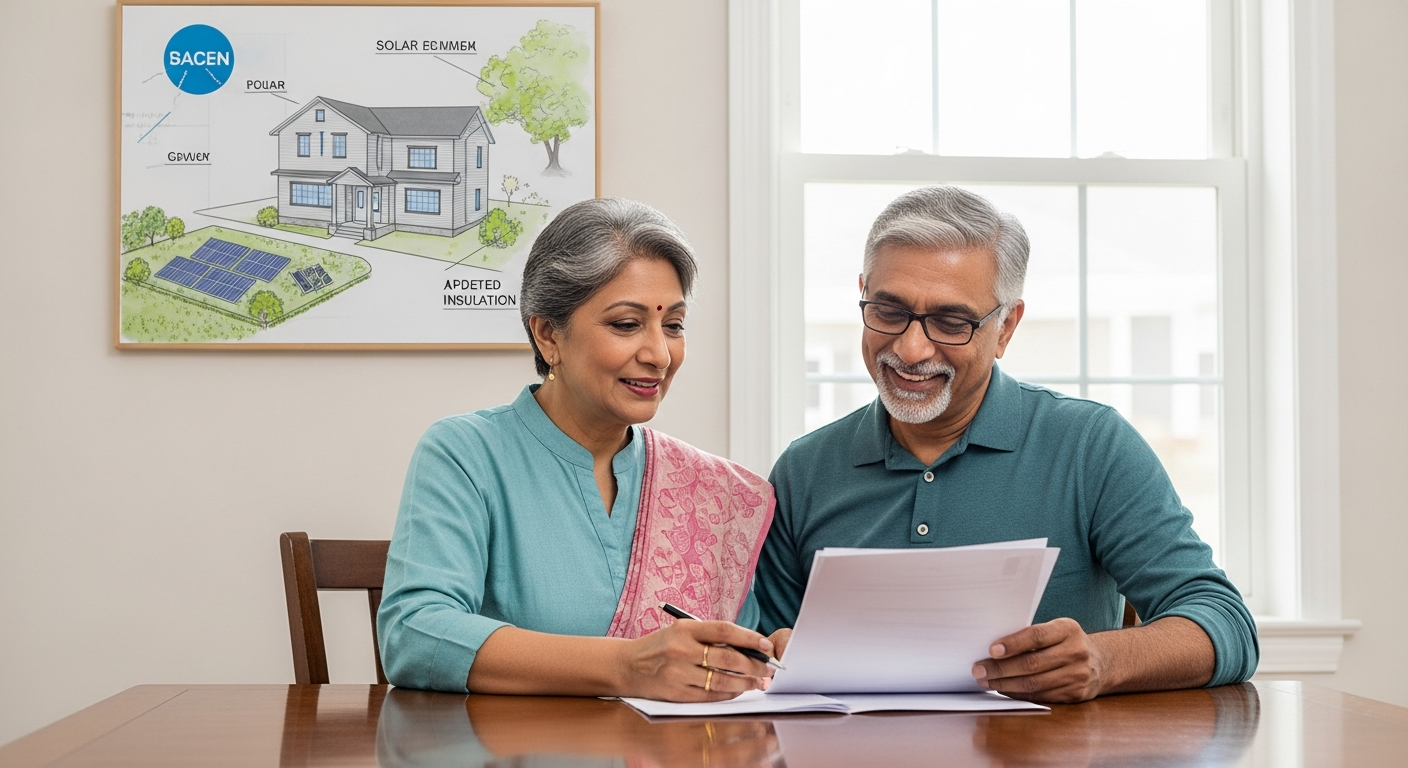
Sustainability in retirement isn't about sacrifice—it's about alignment. By upgrading your home to net-zero or near-zero standards, you're creating multiple benefits:
- Environmental: Reduced lifetime carbon footprint, climate impact mitigation
- Financial: Lower energy costs, home value enhancement, inflation hedge
- Personal: Comfort, health, alignment with values
- Legacy: Passing an efficient, sustainable home to heirs; modeling environmental stewardship
A reverse mortgage makes this vision achievable without forcing difficult trade-offs between your environmental values and your retirement security.
Your home can become a demonstration of sustainable retirement living—an investment in your values, your comfort, and the world you leave behind.
Ready to Learn More?
Get the free Ontario Reverse Mortgage Guide and find out exactly how much you could unlock from your home.
Get My Free Guide →