
Reverse Mortgage on Property in Multiple Provinces: Cross-Border Planning
Ontario seniors owning property in multiple provinces face complex reverse mortgage challenges. Learn how to handle cross-border real estate and use reverse mortgages for multi-province ownership.
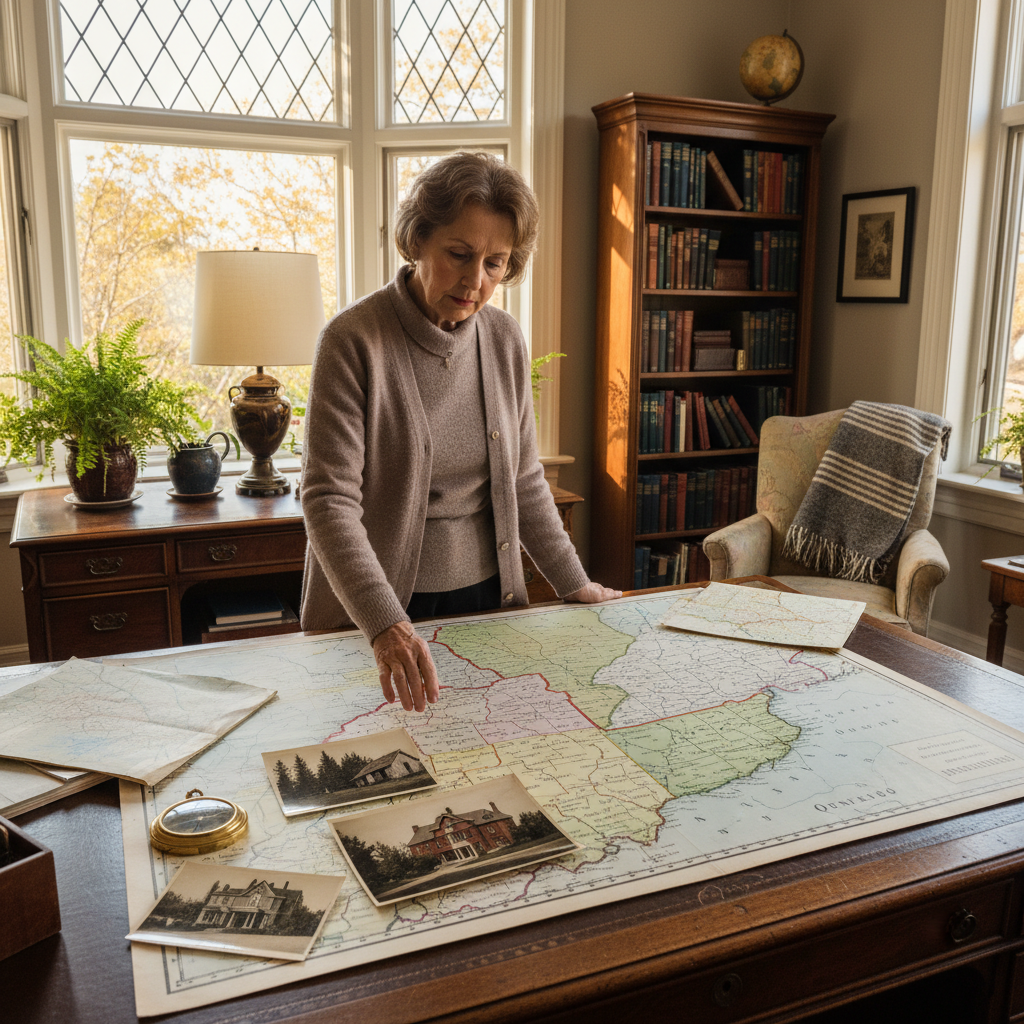
Many Ontario seniors own property beyond Ontario borders. A cottage in British Columbia. A condo in Florida. A farm in Quebec. A rental property in Alberta.
Multi-property ownership creates complexity. Add a reverse mortgage, and that complexity multiplies. Which property can you reverse mortgage? How does provincial law affect the loan? What happens to the other properties? How does this affect your estate plan?
These are not theoretical questions. For Canada's property-owning seniors, they're practical challenges with significant financial implications.
The Canadian Multi-Property Reality
Statistics are sparse, but estimates suggest 15–20% of Ontario seniors own property outside Ontario. These aren't wealthy individuals in specific cases:
- Snowbirds: Own winter homes in Florida or Arizona
- Family cottages: Multi-generational properties in other provinces
- Inheritance: Inherited property from parents in their home provinces
- Retirement relocations: Moved partially, keeping Ontario property
- Investment properties: Rental or investment real estate elsewhere
Each property complicates finances, estate planning, and reverse mortgage options.
The Reverse Mortgage Limitation: Principal Residence Only
Here's the critical limitation: Most Canadian reverse mortgage lenders will ONLY lend against your principal residence.
Your principal residence is the home you live in most of the year. If you own a cottage in Ontario that you use seasonally, it's a vacation property, not a principal residence.
You cannot easily get a reverse mortgage on:
- Vacation homes or cottages
- Investment properties or rental homes
- Out-of-province properties you own but don't live in
- Commercial properties
This is a major limitation for multi-property owners. You cannot aggregate equity across properties.
Example: You own a $600,000 home in Toronto and a $400,000 cottage in Muskoka. You need $100,000. You can only reverse mortgage the Toronto home. You cannot access the cottage equity through a reverse mortgage.
Exceptions: Some Lenders Will Reverse Mortgage Non-Principal Residences
A small number of lenders provide reverse mortgages on vacation properties or investment properties. These are rare and come with restrictions:
Home Trust (Equityaccess) will consider vacation properties under specific conditions:
- Must be fully paid or have substantial equity
- Typically requires the property to be in Ontario or accessible for appraisal
- May charge higher rates for non-principal residences
Bloom Financial will consider second properties in limited cases.
Private lenders (non-bank firms) may offer reverse mortgages on vacation properties, but rates are significantly higher (5–8% vs. 3–4% for principal residences).
If you own a significant cottage or vacation property, it's worth asking whether these options apply to you.
The Out-of-Province Challenge
Reverse mortgages are regulated provincially. This creates complications:
British Columbia: Has its own reverse mortgage regulations. A BC-regulated reverse mortgage may not be recognized by Ontario lenders. If you own BC property, you'd typically work with a BC lender.
Quebec: Quebec law is civil law, not common law. Reverse mortgage documents and protections differ significantly.
US properties: US mortgages and Canadian reverse mortgages have different legal frameworks. A reverse mortgage on a US property faces unique challenges with cross-border taxation, estate law, and currency exchange.
Cross-border taxation: Owning property in multiple provinces or countries triggers separate tax filing requirements in each jurisdiction.
Most Ontario reverse mortgage lenders won't touch out-of-province properties. If you need to reverse mortgage property in BC, you'd typically use a BC lender.
Strategic Options for Multi-Property Owners
Option 1: Reverse Mortgage Your Ontario Principal Residence; Keep Other Properties
This is the simplest approach:
- Reverse mortgage your Ontario home to full capacity
- Keep vacation/investment properties separate
- Use reverse mortgage funds for overall financial needs
- Manage other properties under traditional mortgages or equity lines
Advantage: Simplicity, competitive rates, clear regulatory framework Disadvantage: Can't access all your equity, may leave money on the table
Option 2: Sell or Refinance Non-Principal Residences
If you need liquidity:
- Sell the vacation property or investment property
- Use proceeds for retirement needs
- No longer carry multi-property complexity
Advantage: Simplifies your estate, may reduce property taxes/insurance Disadvantage: Loses the property, may have emotional attachment
Option 3: Use Traditional Mortgages or Equity Lines for Non-Principal Properties
For properties you want to keep:
- Obtain a mortgage or home equity line of credit (HELOC) on the vacation/investment property
- Use those funds as needed
- Keep reverse mortgage on principal residence
Advantage: Access to multiple properties' equity Disadvantage: Monthly payments required (unlike reverse mortgage), multiple lenders to manage
Option 4: Refinance to Consolidate
If you have existing mortgages on multiple properties:
- Refinance all properties under a consolidation strategy
- Take cash out against total home equity
- Simplify by having one or two lenders instead of multiple
Advantage: Centralized management, potentially better rates Disadvantage: May require qualification for new mortgages (harder for retirees)
Estate Planning Complexity
Multi-property ownership creates estate plan complications:
Who inherits which property?
- Different children might inherit different properties
- Properties in different provinces have different probate costs
- Some properties might pass outside the will (joint tenancy)
Reverse mortgage impact on estate:
- A reverse mortgage on your Ontario home becomes a liability against the estate
- The home must be sold (or the estate must repay the loan) to settle your affairs
- Beneficiaries may not get the home they expected if it must be sold to repay the reverse mortgage
Tax implications:
- Properties in different provinces have different capital gains tax treatment
- Principal residence exemption applies only to one property
- Multi-property owners need careful tax planning to minimize estate taxes
Example: You own a principal residence in Ontario worth $700,000 and a cottage in Ontario worth $500,000. You reverse mortgage the principal residence for $200,000. When you pass away, your estate must repay the $200,000 (plus accumulated interest—potentially $300,000+). The principal residence may need to be sold to satisfy this debt. The cottage and other assets go to beneficiaries, but they're smaller than expected.
A proper estate plan would anticipate this and perhaps designate which assets repay the reverse mortgage.
Tax Implications Across Provinces
Multi-property ownership triggers:
Provincial property taxes: Each province taxes property differently. Ontario's property tax system differs from BC's, Alberta's, and Quebec's.
Capital gains taxation: If you eventually sell properties in different provinces, each jurisdiction may impose capital gains tax differently.
Principal residence exemption: You can only designate one principal residence for capital gains exemption. If you own multiple properties, choose carefully which one you designate.
Rental income reporting: Rental properties in other provinces must be reported to those provincial tax authorities and to CRA.
US property complications: If you own US real estate, you face US federal tax filing, US state taxes, and cross-border taxation under the US-Canada tax treaty.
A tax professional familiar with multi-property taxation should review your situation.
Cross-Border Estate Issues
If you own property in another country (like the US):
US properties require US probate: Your will may be valid in Ontario, but US property goes through US probate in addition to Ontario probate. This is expensive and time-consuming.
US estate taxes: US citizens and some non-citizens owe US estate taxes on US property.
Currency exchange: If property is in another currency (US dollars, etc.), beneficiaries receive either the property or proceeds converted at the exchange rate at the time of your death.
Reverse mortgage complications: A reverse mortgage on your Ontario home doesn't help with US property liquidity. You'd need separate US financing.
These issues make multi-property ownership legally complex and expensive to manage properly.

Case Study: Derek's Multi-Property Situation
Derek, age 74, owned:
- Principal residence in Toronto: $900,000 (paid off)
- Cottage in Muskoka: $450,000 (paid off)
- Condo in Florida: $350,000 (paid off)
- Rental property in Calgary: $400,000 (paid off)
Derek needed $150,000 for retirement income. He considered a reverse mortgage but was unsure how to proceed given his multiple properties.
Strategy:
- Reverse mortgaged his Toronto home for $150,000 (principal residence only)
- Kept cottage, Florida condo, and Calgary property under traditional management
- Used reverse mortgage funds for retirement needs
- Structured his estate plan to anticipate the reverse mortgage liability against the Toronto home
- Designated the Florida property and Calgary property as separate inheritances
Result: Derek accessed needed capital without unnecessarily complicating his other properties. His estate plan was clear about which properties were encumbered (Toronto) and which were free (others).
Had Derek not planned carefully, the reverse mortgage might have forced the sale of multiple properties to satisfy the debt upon his death.
Recommendation: Get Professional Advice
Multi-property ownership + reverse mortgage requires:
- Real estate legal advice: Understand the implications across provinces
- Tax advice: Optimize for provincial and federal taxes
- Estate planning: Coordinate properties in your will and any trusts
- Reverse mortgage advice: Determine which property to reverse mortgage and from which lender
Don't attempt this alone. The complexity is real, and mistakes are expensive to correct.
Conclusion
If you own property in multiple provinces, a reverse mortgage on your Ontario principal residence is possible and often sensible. But it's not straightforward.
Plan carefully. Understand which properties you can reverse mortgage. Coordinate your reverse mortgage with your other properties. Plan your estate with multi-property complexity in mind.
Ontario seniors with multi-property ownership can absolutely benefit from reverse mortgages—but they need professional guidance to do so properly.
Ready to Learn More?
Get the free Ontario Reverse Mortgage Guide and find out exactly how much you could unlock from your home.
Get My Free Guide →Related Articles
Reverse Mortgage for Workplace Injury Recovery: Supporting Adult Child's Career Transition
Help your adult child rebuild their career after workplace injury. Learn how reverse mortgages fund recovery, retraining, and financial stability during career transition.
Read →Reverse Mortgage When Adult Child Faces Student Loan Default: Creditor Protection Strategy
Protect your home when adult child has severe student debt. Learn how reverse mortgage planning shields your assets from student loan creditors in Ontario.
Read →Reverse Mortgage to Fund Adult Child's Real Estate License and Business Launch
Help your adult child launch a real estate career. Reverse mortgage covers licensing, training, first-year operating costs, and marketing to build a sustainable income.
Read →