
Reverse Mortgage for Multigenerational Cottage Preservation and Heritage Maintenance
Preserve family cottage for next generation. Reverse mortgage strategy for maintenance, upgrades, and multigenerational succession planning. Ontario guide.
Your family cottage has been in the family for generations. It's the gathering place where cousins learned to swim, where marriages were celebrated, where memories were forged. But it's aging. Roof needs replacing. Foundation needs work. Infrastructure is creaky. And the cost of maintenance threatens the cottage's survival—and its transition to the next generation.
A reverse mortgage on your primary residence can fund cottage preservation without forcing a sale. By maintaining the cottage for your children and grandchildren, you're preserving not just a building, but your family's legacy.
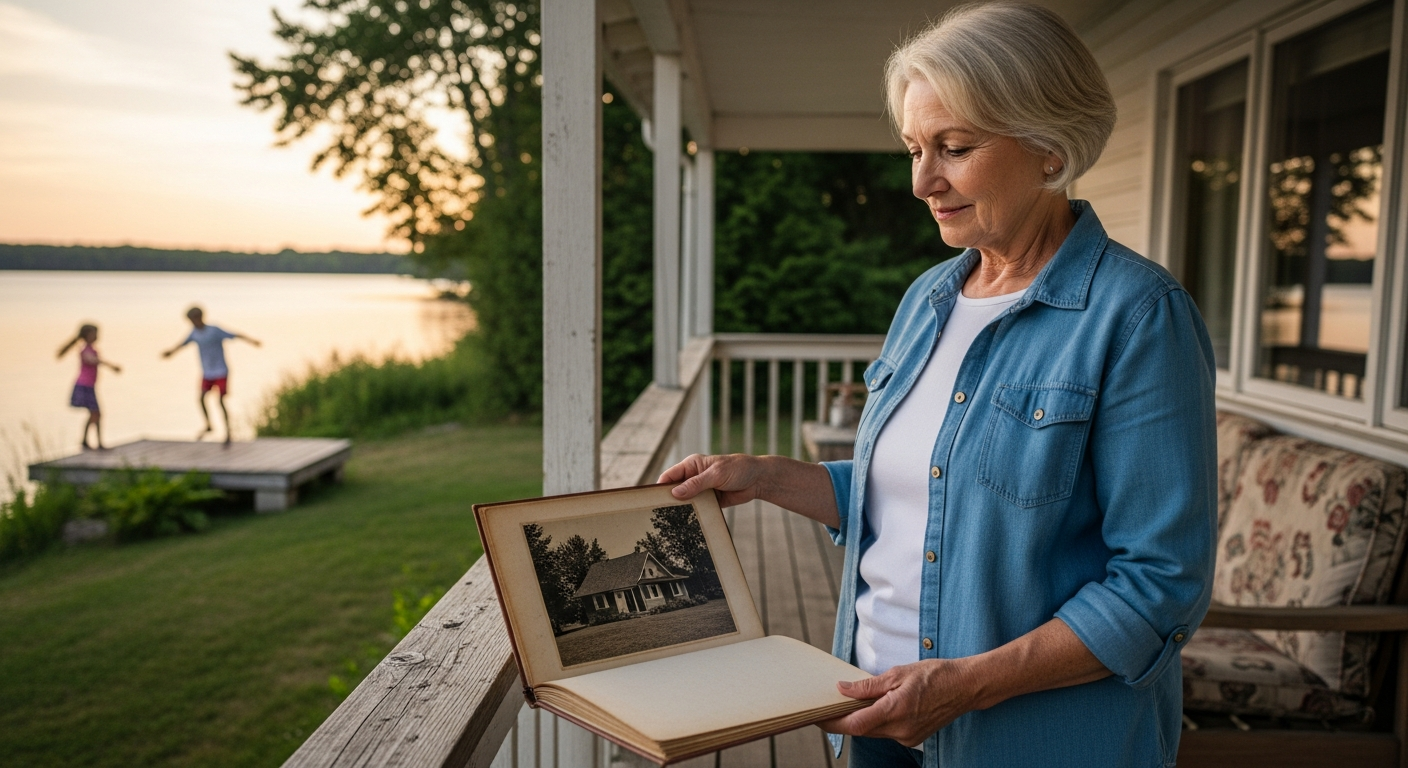
The Multigenerational Cottage Reality
According to the Ontario Real Estate Association, approximately 15% of Ontario families own recreational properties (cottages, cabins, vacation homes). Many of these have been in families for 30–60 years. Today, they face:
| Challenge | Impact |
|---|---|
| Aging infrastructure | 30–50 year old roofs, foundations, plumbing need replacement |
| Rising property taxes | Recreational property taxes increasing 4–6% annually |
| Maintenance costs | Annual maintenance: $5,000–$15,000+ (increasing) |
| Modernization expectations | Next generation expects updates (plumbing, electrical, insulation) |
| Succession costs | Legal fees, property division among siblings, probate costs |
| Environmental pressures | Shoreline erosion, water quality issues, climate resilience upgrades |
The succession crisis: Many cottage owners reach retirement and realize the cottage burden has become unsustainable. Options seem binary:
- Sell the cottage — Family loses historic gathering place; siblings fight over proceeds
- Do nothing — Cottage deteriorates; becomes uninsurable; eventually condemned
A third option exists: Use a reverse mortgage on your primary residence to fund cottage preservation.
How the Reverse Mortgage Strategy Works
You own a primary residence in Ontario (worth $650,000, mortgage-free). You also own a family cottage (worth $450,000, mortgage-free or small mortgage remaining).
Your situation:
- Age: 72
- Retirement income: $55,000 (CPP + OAS)
- Cottage maintenance backlog: $80,000 (roof, foundation, electrical)
- Annual cottage costs: $12,000 (taxes, maintenance, insurance)
- Cottage succession plan: Unclear how children will maintain or inherit
Traditional path: You either sell the cottage (family loses legacy), or withdraw from retirement savings annually to cover costs (retirement income squeezed).
Reverse mortgage path:
- Establish reverse mortgage on primary residence — Access $150,000–$200,000 line of credit
- Fund cottage preservation — Draw $80,000 for deferred maintenance
- Bridge annual costs — Draw $12,000 annually for taxes, maintenance, insurance
- Plan succession — Use remaining line of credit for legal succession planning (notary, property division agreements)
Result: Cottage is preserved for next generation. Your retirement income is protected. Succession planning is funded professionally.

Cottage Preservation Priorities
Phase 1: Critical Repairs (Years 1–2)
These repairs prevent deterioration and insurance/liability issues:
| Repair | Cost | Priority |
|---|---|---|
| Roof replacement | $15,000–$35,000 | Critical (water damage risk) |
| Foundation repairs | $10,000–$50,000+ | Critical (structural integrity) |
| Electrical system upgrade | $5,000–$15,000 | High (safety/insurance requirement) |
| Plumbing/septic system | $5,000–$20,000 | High (health/code compliance) |
| Dock/shoreline stabilization | $8,000–$25,000 | High (erosion/liability risk) |
First draw from reverse mortgage: Fund critical repairs totaling ~$60,000–$80,000
Phase 2: Modern Amenities (Years 2–5)
These upgrades attract next-generation use and preserve family gatherings:
| Upgrade | Cost | Benefit |
|---|---|---|
| Kitchen modernization | $8,000–$15,000 | Family gatherings more enjoyable |
| Bathroom upgrades | $5,000–$12,000 | Comfort; attracts younger family members |
| HVAC/heating system | $4,000–$10,000 | Extended season use; guest comfort |
| Internet/connectivity | $1,000–$5,000 | Remote work option; younger generation appeal |
| Deck/outdoor space renovation | $5,000–$15,000 | Gathering place; entertainment hub |
Second phase draws: $25,000–$50,000 over 3–4 years
Phase 3: Sustainability and Climate Resilience (Years 5+)
These upgrades future-proof the cottage:
| Investment | Cost | Purpose |
|---|---|---|
| Solar panels | $15,000–$30,000 | Energy independence; lower operating costs |
| Rainwater harvesting | $3,000–$8,000 | Water security; reduced municipal costs |
| Backup generator | $5,000–$10,000 | Climate resilience; grid independence |
| Insulation/weatherization | $8,000–$15,000 | Energy efficiency; reduced heating costs |
| Flood mitigation | $5,000–$25,000 | Climate adaptation; insurance benefit |
Third phase draws: $35,000–$50,000 (as needed)
Succession Planning Through Cottage Preservation
A well-maintained cottage eases family succession:
Challenge 1: Unequal Inheritances
If you have 3 children, and only one wants the cottage, how do you divide fairly?
Scenario: Cottage is worth $450,000. Three children inherit equally. But only one wants to keep the cottage. The other two want cash buyout. Total inheritance value: $450,000 ÷ 3 = $150,000 each.
Problem: How do two children liquidate their $150,000 shares when the cottage can't be easily divided?
Solution using reverse mortgage:
- You ensure cottage is well-maintained (reverse mortgage funds repairs)
- You document an agreement: One child will inherit cottage; other two children receive $150,000 each from your primary residence equity
- Your reverse mortgage on primary residence essentially funds the buyout: $300,000 line of credit backs the inheritance distribution
Result: Clean succession; no cottage forced sale; siblings' inheritance fairly distributed
Challenge 2: Shared Ownership Friction
If all children inherit the cottage together, disagreements about maintenance, usage, and costs arise quickly.
Reverse mortgage solution:
Before death, establish a cottage preservation fund (reverse mortgage line of credit available to heirs):
- "Cottage maintenance fund: $80,000 available to heirs for agreed-upon repairs"
- "Annual cost fund: $5,000 available yearly for taxes, insurance, maintenance"
- Heirs access funds cooperatively, preventing cottage neglect or forced sale
Result: Heirs inherit clarity, not conflict
Challenge 3: Rising Costs for Next Generation
Your children inherit cottage but can't afford maintenance on their own salaries.
Reverse mortgage solution:
Your reverse mortgage on primary residence has funded cottage preservation. Cottage is in excellent condition. Annual costs are reasonable. Next generation can afford it.
Alternatively, use your reverse mortgage line of credit to establish a "cottage endowment": $50,000–$100,000 set aside specifically for heirs' ongoing maintenance. Interest helps fund annual costs.
Legal and Tax Considerations
Cottage in Primary Estate vs. Separate Trust
Some families place cottages in family trusts to ease succession. Others keep them in primary estates.
| Structure | Advantage | Disadvantage |
|---|---|---|
| Primary estate (simple) | Straightforward ownership; easy to maintain | Probate costs; potential sibling conflict; may not reflect intent |
| Family trust | Avoids probate; clear succession; multi-generational planning | Expensive to set up; ongoing trust administration; tax complexity |
| Joint tenancy | Automatic transfer to surviving co-owner | Complicates with 3+ owners; may create unexpected inheritance |
Reverse mortgage consideration: If cottage is in trust, the mortgage is against your primary residence (which may also be in trust or personal estate). Consult lawyer to coordinate.
Capital Gains Tax on Cottage Sale
Important: Ontario considers cottage a second property for tax purposes (unless it qualifies for principal residence exemption, which is rare). If your children ever sell the cottage, capital gains tax applies.
Example:
- Cottage purchased 1985: $80,000
- Cottage current value 2026: $450,000
- Capital gain: $370,000
- Capital gains tax (50% inclusion, 35% marginal rate): ~$65,000
Your reverse mortgage doesn't affect this taxation. But it's a reason to preserve the cottage: heirs benefit from a maintained, valuable asset even if they pay capital gains tax on a future sale.
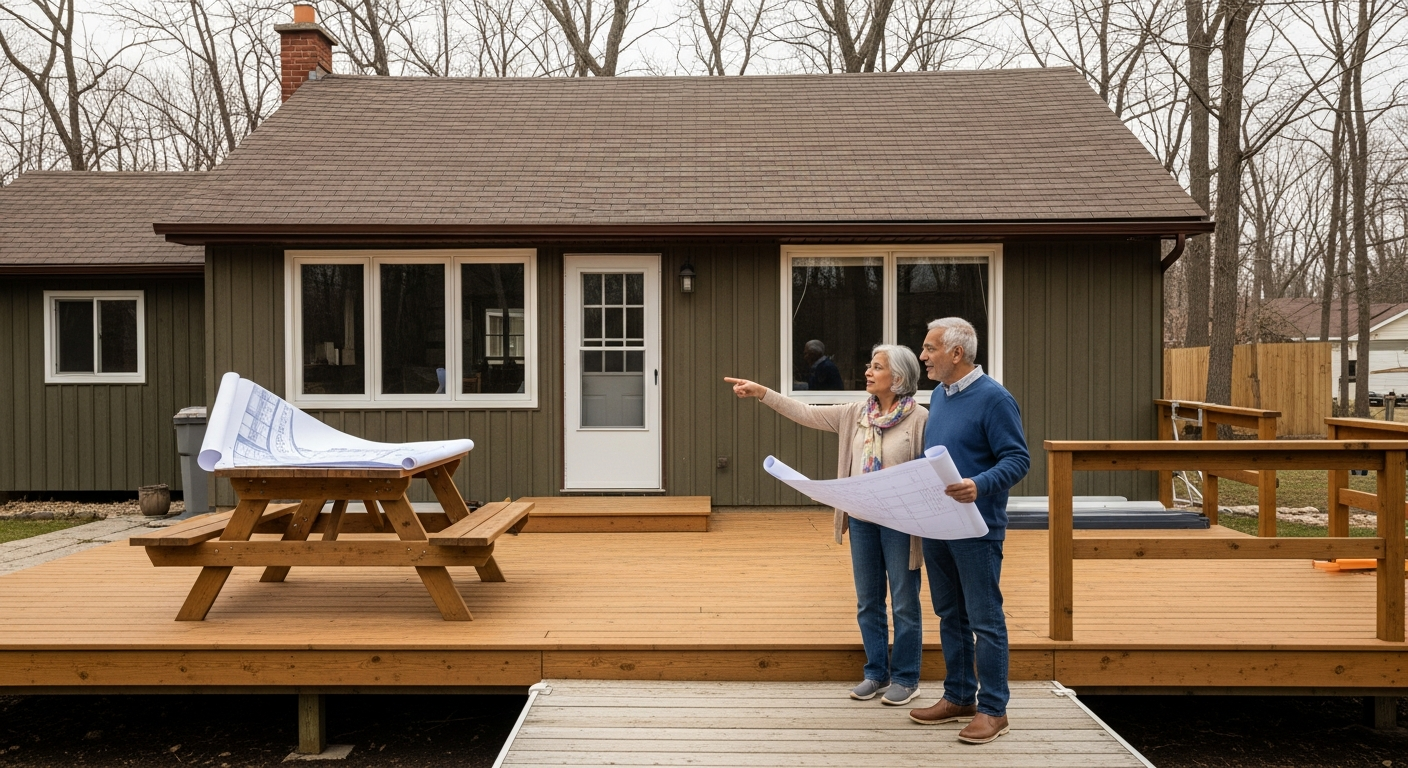
The Emotional Legacy
Beyond financial mechanics, a well-maintained cottage represents:
- Family continuity — Grandchildren swim where parents swam
- Gathering space — Reunions, celebrations, milestones
- Safety net — Rural retreat during urban stress
- Nature connection — Grounding in natural world
- Heritage — Multi-generational ownership narrative
A reverse mortgage funds this legacy directly. You're saying to your children and grandchildren: "This place matters. I'm investing in its preservation so you can create memories here."
Quick Reference
| Question | Answer |
|---|---|
| Can I get a reverse mortgage to fund cottage repairs? | Yes—reverse mortgage on primary residence can fund cottage (secondary property) maintenance |
| How much should I access? | Total deferred maintenance + 10 years of operating costs ($60,000–$150,000) |
| Will this complicate cottage succession? | No—clarify succession through legal agreement (notary-drafted cottage succession plan) |
| What if children disagree about keeping cottage? | Use reverse mortgage funds to buyout non-wanting siblings fairly |
| Is cottage maintenance tax-deductible? | Generally no (personal use property). Except if part-time rental. |
Frequently Asked Questions
Can I get a reverse mortgage on the cottage itself instead of primary residence?
Lenders prefer primary residences (more stable collateral). Cottage reverse mortgages are less common and may have higher rates or lower borrowing capacity. It's typically better to use primary residence reverse mortgage.
What if the cottage needs a new septic system? Is that expensive?
Yes. Septic systems can cost $15,000–$50,000 depending on soil conditions and system type. This is exactly the kind of expense a reverse mortgage line of credit is designed to cover.
If my children inherit the cottage, do they inherit the reverse mortgage debt?
No. The reverse mortgage is against your primary residence, which has its own ownership and repayment mechanism. The cottage is a separate property. Your estate repays the reverse mortgage first; remaining cottage value passes to heirs.
What about cottage property taxes if value appreciates?
Property taxes are reassessed every 4 years in Ontario. If cottage value increases, taxes will eventually reflect it. Reverse mortgage funds can help cover tax increases if needed.
Can I set up a formal cottage endowment using reverse mortgage funds?
Yes. Some families create a "cottage preservation fund" by investing a lump sum from reverse mortgage proceeds. Interest income helps cover annual maintenance. Consult a financial advisor to structure formally.
Key Takeaways
| Point | Details |
|---|---|
| Family cottages face succession challenges | Aging infrastructure, rising costs, unclear inheritance |
| Reverse mortgage on primary residence funds cottage preservation | Without forcing cottage sale; preserves family legacy |
| Succession planning is essential | Clear agreements about ownership and use prevent sibling conflict |
| Emotional value is real | Well-maintained cottage preserves family continuity and memories |
| Multi-phased approach works best | Critical repairs first; upgrades second; sustainability third |
Your family cottage is a legacy asset worth preserving. A reverse mortgage on your primary residence can fund that preservation without compromising your retirement security.
Contact Rick Sekhon Reverse Mortgages to discuss how a reverse mortgage can support your cottage succession and preservation strategy.
Ready to Learn More?
Get the free Ontario Reverse Mortgage Guide and find out exactly how much you could unlock from your home.
Get My Free Guide →Related Articles
Reverse Mortgage and Estate Planning: What Your Executor Must Know
Guide for executors and heirs: understand how reverse mortgages are handled in probate, what the no-negative-equity guarantee means, and how to manage repayment of the loan.
Read →Keeping the Family Cottage: Reverse Mortgage Transfer Strategies
Reverse mortgage family cottage transfer strategies for Ontario families. Fund capital gains tax, avoid forced sale, and keep the cottage in the family.
Read →Gift Home Equity to Your Family While Alive: The Living Legacy Strategy
Discover how to transfer home equity to adult children while you're alive using a reverse mortgage strategy in Ontario.
Read →