
Reverse Mortgage When You Receive an Inheritance Windfall: Strategic Timing
Inherited money but want to preserve it? A reverse mortgage lets you access home equity instead, giving you financial flexibility when inheritance arrives.
You just inherited money—but you're hesitant to spend it on current living expenses. Many retirees face this dilemma: an inheritance provides a financial windfall, but using it for everyday costs feels wrong. You want to preserve that inheritance (perhaps for grandchildren's education, a legacy gift, or emergency reserves) while still funding your current retirement needs. A reverse mortgage solves this conflict: access the equity in your home instead of spending down your inheritance. You preserve the inherited money for its intended purpose.
This article is for educational purposes only and does not constitute financial advice.
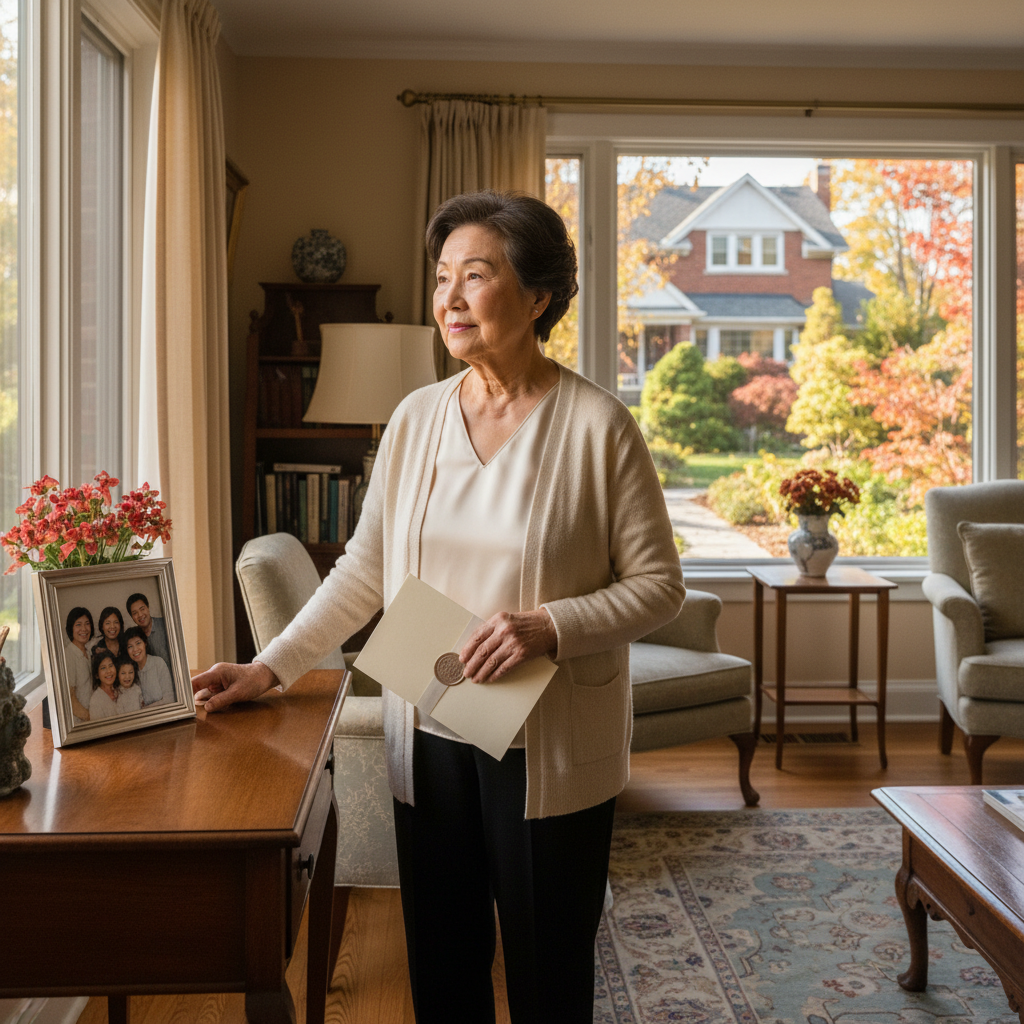
The Inheritance Timing Dilemma
Inheriting money creates a psychological and financial crossroads for many retirees. You have capital in hand, but also strong emotions about how to use it.
The Inheritance Conflict
| Situation | Your Feelings | The Problem |
|---|---|---|
| You need extra retirement income | Use the inheritance to bridge gaps | But then you're spending it down, not preserving it |
| You want to fund grandchild education | Preserve inheritance for tuition | But where will current living expenses come from? |
| You want a legacy to heirs | Keep inheritance intact to pass on | But current retirement shortfalls persist |
| You inherited real estate | Hold property for future gifting | But property costs (taxes, maintenance) drain cash |
| You inherited investments | Don't want to sell at current prices | But you need liquidity for retirement expenses |
Many retirees feel paralyzed: they have money but don't want to use it, yet they face real cash flow gaps. A reverse mortgage breaks this deadlock by providing current retirement income from your home equity instead of the inheritance. The inheritance stays intact for its intended purpose.

Strategic Inheritance Preservation with a Reverse Mortgage
A reverse mortgage lets you have it both ways: current retirement income AND preserved inheritance. This is particularly powerful if you have specific plans for the inherited money.
Real Scenario: Inheritance Preservation in Action
Jane, 68, inherited $150,000 from her mother. She wants to:
- Gift $50,000 to each grandchild (education fund) — $100,000 total
- Preserve $50,000 for her own emergency reserves (catastrophic health crisis, major home repair)
- But she also needs $8,000/year more in current retirement income to cover modest lifestyle costs
Without a reverse mortgage: Jane might use $8,000/year from her inheritance, depleting it by $40,000 over five years. Her emergency reserve shrinks. Grandchild education gifts get smaller.
With a reverse mortgage: Jane accesses $40,000 from her home equity via reverse mortgage (split over five years, or $8,000/year). She preserves her $150,000 inheritance entirely. Grandchildren each get their full $50,000. Emergency reserves stay intact.
The result: Jane funded her retirement income needs without touching a single dollar of her inheritance. The inherited money accomplishes exactly what her mother intended.

Reverse Mortgage vs. Spending Down Inheritance
Spending inheritance on current living expenses feels wrong to many people—for good reason. A reverse mortgage offers an alternative approach.
Comparison: Two Strategies
| Metric | Spend Inheritance on Income | Use Reverse Mortgage Instead |
|---|---|---|
| Inheritance preserved | 0% | 100% |
| Inheritance goal met | Not possible | Fully intact for intended use |
| Monthly payment burden | None | None (reverse mortgage) |
| Credit required | N/A | None |
| Interest costs | N/A | Yes (~7.5%–8.5% annually) |
| Home equity preserved | Yes | Gradually consumed |
| Psychological impact | Stressful — feels like waste | Empowering — inheritance preserved |
| Best for | Spending-down mentality | Legacy-preservation mindset |
For retirees with strong emotional attachment to preserving inherited wealth, a reverse mortgage is the better choice. The interest cost is typically offset by the peace of mind and intact legacy you achieve.
According to the Financial Consumer Agency of Canada (FCAC), reverse mortgages are increasingly used by retirees to preserve inherited assets while maintaining retirement lifestyle—a strategy that preserves both current security and family legacy.
Specific Inheritance Scenarios Where Reverse Mortgages Help
Different types of inheritance create different planning opportunities.
Inheritance Type Strategy
| Inherited Asset | Typical Challenge | Reverse Mortgage Solution |
|---|---|---|
| Cash/Liquid funds | Want to preserve; need current income | Use RM for income; keep inheritance invested |
| Real estate | Holding costs drain cash; want to keep property | Use RM for carrying costs (taxes, insurance) |
| Investments | Don't want to sell in unfavorable market | Use RM instead; let inherited investments grow |
| Small business | Inherited operating business; complex valuations | Use RM to cover personal living costs while business stabilizes |
| Collectibles/art | Have value but illiquid; emotional attachment | Use RM to avoid forced sale of inherited items |
Tax Implications of Inheritance Plus Reverse Mortgage
The timing of inheritance and reverse mortgage application has important tax considerations.
| Consideration | Impact | Action |
|---|---|---|
| Inheritance receipt | Not taxable (except some investments) | Report to CRA as required; consult accountant |
| Inherited investments | May trigger capital gains tax | Understand tax implications before liquidating |
| Reverse mortgage interest | Not tax-deductible (personal use) | Understand true cost of borrowing |
| Inherited property | Principal residence exemption may apply | Document for estate/CRA purposes |
| Estate equalization | Reverse mortgage may affect what heirs receive | Update will; discuss with beneficiaries |
| Investment income | OAS clawback considerations | Manage inheritance investment income strategically |
Consult a qualified tax advisor for guidance specific to your situation.
The "Preserve First, Spend Second" Retirement Mindset
Using a reverse mortgage to preserve inheritance reflects a conscious retirement philosophy: leverage what you own (your home) before spending what was gifted to you.
This approach has psychological benefits:
- Honor your parent's intention — Use inherited money for what they would have wanted
- Reduce financial anxiety — Know your safety net (inheritance) is intact
- Enable legacy goals — Fund grandchild education or family gifting as intended
- Retain control — Make conscious decisions about inheritance use, not forced by cash flow
- Model financial wisdom — Show adult children thoughtful, strategic planning
Many retirees find this mindset liberating. Rather than viewing inheritance as a shortcut to solve current problems, you view it as a preserved legacy—while solving current problems through reverse mortgages on your own assets.
Quick Reference: Inheritance + Reverse Mortgage Strategy
| Question | Answer |
|---|---|
| Best for | Retirees wanting to preserve inherited assets |
| Inheritance type | Any — cash, investments, property, assets |
| Reverse mortgage timeline | Apply anytime; no requirement to wait |
| Can I use inheritance for down payment | Some lenders allow it; ask when applying |
| Interest rate impact | Interest on RM is cost of preserving inheritance |
| Estate impact | RM reduces your estate balance by loan amount |
Frequently Asked Questions
Should I use inheritance as a down payment to reduce my reverse mortgage?
You could, but strategically it might not be optimal. If your inheritance is invested and earning 4–5% returns, using it to reduce a reverse mortgage at 7.5–8.5% interest only saves you the interest spread (2–3%). Instead, many advisors recommend keeping inheritance invested while using a reverse mortgage at higher percentage, then paying the reverse mortgage down later when inheritance has compounded further.
What if I inherit real estate in addition to cash?
You have options: sell the inherited property and add to your cash inheritance, or hold it and use a reverse mortgage on your primary home to cover the inherited property's carrying costs (taxes, maintenance, insurance). This lets you preserve the inherited property for long-term appreciation or future gifting.
Does inheriting money affect my OAS or GIS benefits?
Inheritance itself is not taxable income and doesn't reduce OAS/GIS. However, if the inherited money is invested and generates income (capital gains, interest, dividends), that investment income could trigger OAS clawback. Plan inherited investments carefully with your tax advisor.
Can I use a reverse mortgage if I just inherited my home?
If you inherited the home and now own it outright, yes—you can qualify for a reverse mortgage on the inherited property (if you're 55+). The reverse mortgage proceeds are tax-free, and you have no monthly payments. Many retirees use this strategy to cover inherited property costs while preserving liquid inheritance.
Is this strategy ethical? Am I somehow being irresponsible?
No. Using a reverse mortgage strategically to preserve inherited assets is thoughtful financial planning, not irresponsibility. You're leveraging assets you own (your home) appropriately while honoring the legacy of inherited wealth. Consult with Rick Sekhon to discuss your specific inheritance situation.
Speak to a licensed mortgage professional. Independent legal advice is required before closing a reverse mortgage in Ontario.
The Bottom Line: Inheritance as Legacy, Not Just Cash
Inheriting money doesn't mean you must spend it on current needs. A reverse mortgage lets you preserve that inheritance for its intended purpose—grandchildren's education, emergency reserves, or family gifting—while funding your current retirement from your home equity instead.
This is strategic, conscious inheritance management. Your parent's legacy stays intact while your retirement runs smoothly.
Get your free Ontario Reverse Mortgage Guide →
This content is for illustrative purposes only. Rates may vary. Call Rick Sekhon for the best rates and more information.
Ready to Learn More?
Get the free Ontario Reverse Mortgage Guide and find out exactly how much you could unlock from your home.
Get My Free Guide →Related Articles
Reverse Mortgage as Your Financial Safety Net: Building Peace of Mind in Retirement
How a reverse mortgage provides security and peace of mind in retirement. Less about borrowing, more about psychological safety for Ontario seniors.
Read →Reverse Mortgage After Major Loss: Financial Recovery After Crisis
How a reverse mortgage can help you rebuild after major life loss: death of spouse, serious illness, or job loss. Financial recovery guide for Ontario seniors.
Read →Reverse Mortgage When Workers' Compensation Is Your Primary Retirement Income
Bridge income gaps when workers' comp is your main retirement source. Reverse mortgage strategy for work-injury retirees in Ontario. Complete guide.
Read →