
Reverse Mortgage During Economic Recession: Financial Stability Strategy
Use a reverse mortgage to stabilize your retirement income during economic downturns and market volatility in Ontario.
What happens to your retirement if a stock market crash wipes out 30% of your portfolio in six months, and you've already tapped your RRIF for living expenses? Many Ontario retirees are vulnerable to sequence-of-returns risk—being forced to sell investments at the worst possible time to cover essential living costs. A reverse mortgage provides a powerful hedge: guaranteed access to home equity during recessions, allowing you to pause investment withdrawals until markets recover.

The Recession Risk Every Retiree Faces
Recessions are inevitable. Since 1980, Canada has experienced five significant recessions—on average, one major downturn every 7–8 years. If a retiree is forced to sell stocks during a recession to pay for food, utilities, and healthcare, they lock in losses and miss the recovery.
Consider this scenario:
2026: Your portfolio: $600,000 invested in diversified index funds. You withdraw $30,000/year (5%) for living expenses.
2027: Recession hits. Markets drop 35%. Your portfolio is now worth $390,000.
Problem: You still need $30,000 this year. If you sell $30,000 in depressed markets, you've realized losses and reduced your capital for recovery. Research shows retirees in this position take 5–8 years to recover lost wealth, if they do at all.
Reverse mortgage solution: If you had accessed a $50,000 reverse mortgage in 2025 as a "recession reserve," you could draw from that instead of selling depressed stocks. When markets recovered (2028–2029), your original $600,000 would have grown back to $800,000+ while you preserved it untouched.
How a Reverse Mortgage Works as Economic Insurance
A reverse mortgage provides flexibility that investment portfolios cannot. It's available regardless of:
- Market performance
- Economic cycles
- Interest rates (after you lock in your rate)
- Your investment returns
| Scenario | Without Reverse Mortgage | With Reverse Mortgage |
|---|---|---|
| Markets down 35%, need $30,000 | Sell $30,000 of depressed stocks at loss | Draw from reverse mortgage reserve, keep stocks intact |
| Inflation spikes 5%, living costs rise | Force RRIF withdrawals to higher tax brackets | Draw additional funds from reverse mortgage, manage tax impact |
| Bond yields collapse 2%, fixed income drops | Increase stock allocation (raises risk) | Stable reverse mortgage funds reduce pressure to take excessive risk |
| Recession ends, markets recover | You missed the recovery while rebalancing | Your stocks recovered fully while reverse mortgage was untouched |
The Ontario couple with a $400,000 portfolio and a $60,000 reverse mortgage reserve can weather almost any recession because they have flexibility to choose timing of withdrawals rather than being forced into forced selling.
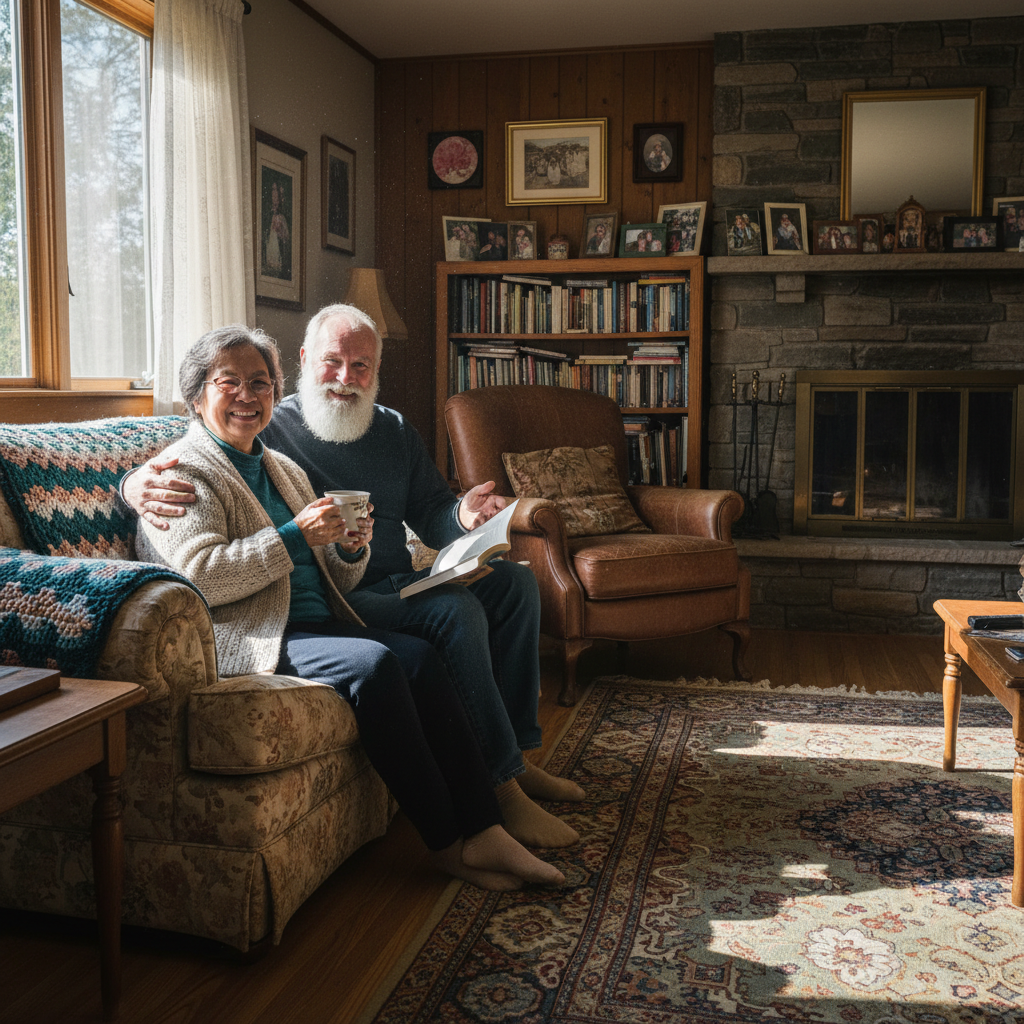
Real-World Scenario: The Chen Family's Recession Hedge
Margaret and David Chen (both 69) have a combined CPP + OAS income of $32,000 annually. Their home is worth $825,000. They've accumulated a $500,000 investment portfolio over decades.
Original plan: Withdraw $40,000/year from portfolio + $32,000 from pensions = $72,000 annual spending.
2023–2025: Markets perform well. Withdrawals are easy. But they worry about inevitable recessions.
2025 strategy: They take a $50,000 reverse mortgage and park it in a high-interest savings account earning 4.5%. This creates a $50,000 recession buffer.
2027: Recession arrives. Markets drop 28%. Instead of withdrawing $40,000 from their now-$360,000 portfolio, they:
- Draw $30,000 from their investment portfolio (not catastrophic at depressed prices)
- Draw $10,000 from their reverse mortgage buffer
- Their stocks stay mostly invested, positioned to recover
2029: Markets recover to $520,000 (growth exceeds historical average during recovery). Because they preserved capital through the recession, they have significantly more wealth than if they'd been forced to sell at the bottom.
Cost of protection: $50,000 reverse mortgage at 5.5% interest = $2,750/year in interest costs. But they avoided potential losses of $50,000–$100,000 by not selling depressed assets. The insurance paid for itself many times over.
Integration with Your Retirement Income Plan
A reverse mortgage recession hedge works best alongside:
✓ CPP + OAS — your guaranteed government income (unaffected by markets) ✓ Pensions — if you're lucky enough to have one (stable, unaffected by markets) ✓ RRIF withdrawals — flexible timing means you can pause during recessions ✓ Reverse mortgage buffer — emergency fund during market downturns
According to FSRAO, reverse mortgage interest is completely tax-deductible if funds are used for investment purposes. Your recession-hedging reverse mortgage has favorable tax treatment.

Timing: Should You Establish This Now or Wait?
Financial advisor research suggests establishing your reverse mortgage before a recession hits, while you're in a strong financial position:
✓ Pre-recession: You can access funds at reasonable rates and terms ✗ During recession: Lenders tighten lending standards, rates rise, qualifying becomes harder
The Ontario couple with a clear, stable financial picture qualifies easily for favorable reverse mortgage terms. The couple already in financial stress during a recession faces worse rates and stricter terms.
Frequently Asked Questions
How much of a reverse mortgage buffer should I establish?
Financial advisors suggest 12–24 months of living expenses. If you spend $70,000/year, establish a $60,000–$140,000 reverse mortgage reserve. During a typical 18–24-month recession, this bridges the gap until markets recover.
Should I invest my reverse mortgage buffer in the stock market or keep it safe?
For a recession hedge specifically, keep it in high-interest savings account (4%+) or short-term GICs. You want stability and accessibility, not equity risk. The whole point is to have safe, available funds when stocks are down.
Does a reverse mortgage buffer affect my OAS or GIS eligibility?
The funds in a reverse mortgage buffer are not income—they're borrowed capital and don't count toward income tests for OAS or GIS. Consult Service Canada if you're receiving means-tested benefits, but typically, a reverse mortgage has no impact.
What if I don't hit a recession and never need the reverse mortgage?
The funds remain available to you—you can use them for travel, home renovations, helping family, or any purpose. Unused reverse mortgage funds become part of your estate for your heirs.
Next Steps
Economic resilience is a critical part of retirement planning. To explore how a reverse mortgage could serve as a recession hedge in your portfolio strategy, speak with Rick Sekhon, a licensed reverse mortgage specialist in Ontario.
Ready to Learn More?
Get the free Ontario Reverse Mortgage Guide and find out exactly how much you could unlock from your home.
Get My Free Guide →Related Articles
Using a Reverse Mortgage as an Emergency Fund in Retirement
Discover how a reverse mortgage can serve as an emergency fund in retirement for Ontario seniors. Compare options, costs, and setup strategies.
Read →RRIF Drawdowns vs Reverse Mortgage: Retirement Cash Flow Planning
RRIF drawdown vs reverse mortgage for retirement cash flow — which strategy preserves more wealth? Ontario-focused guide with OAS clawback scenarios and tax analysis.
Read →Reverse Mortgage as a Portfolio Hedge: Protection During Stock Market Downturns
Learn how Ontario seniors use reverse mortgages to avoid selling stocks at market lows during downturns. Preserve your portfolio, reduce sequence-of-returns risk.
Read →