
Reverse Mortgage for Disaster Recovery: Rebuilding After Fire, Flood, or Catastrophic Damage
Learn how reverse mortgages provide emergency funding for home rebuilding after fire, flood, severe storms, or other catastrophic home damage in Ontario.
The Worst Has Happened: Catastrophic Home Damage
A wildfire races through your forest property. A burst pipe floods your basement in the middle of winter. A severe windstorm rips off your roof. For most homeowners, this would be stressful; for retired seniors on fixed incomes, it can feel catastrophic.
Insurance covers some damage, but rarely all of it. Deductibles, coverage limits, and depreciation mean significant out-of-pocket costs fall on you. When rebuilding costs are $50,000-150,000+, accessing that capital quickly becomes urgent.
A reverse mortgage can provide emergency funding for disaster recovery, allowing Ontario seniors to rebuild their homes and restore their lives without forced home sales or devastating impact on retirement security.
Understanding Disaster Recovery Financial Gaps
Most homeowners significantly underestimate disaster recovery costs:
Insurance Covers:
- Structural damage (partially, after deductible)
- Some contents and personal property
- Temporary housing (limited coverage)
Insurance Often Doesn't Cover:
- High deductibles ($1,000-$5,000 or more)
- Depreciation on older homes (insurance pays actual cash value, not replacement cost)
- Code upgrades (rebuilding to current building codes costs more than original construction)
- Business interruption (if your home-based business is disrupted)
- Rental income loss (if you were renting out part of your home)
- Temporary housing costs exceeding policy limits
- Mold remediation and hidden damage discovered during repairs
Typical Disaster Recovery Costs:
- Fire damage to 70% of home: $80,000-150,000+
- Severe water/flood damage: $50,000-100,000+
- Major roof damage from wind/ice: $20,000-40,000+
- Foundation issues from earthquake or settling: $30,000-100,000+
Reality: A disaster that causes $100,000 damage might result in $50,000 insurance payout, leaving $50,000 in out-of-pocket costs.
Why Reverse Mortgage Makes Sense for Disaster Recovery
1. Fast Access to Capital
- Reverse mortgage applications can often be expedited for documented emergencies
- Funds arrive within 4-6 weeks (faster than property sales or other financing)
- Allows immediate contractor engagement and supply chain procurement
2. No Monthly Payments During Crisis
- Traditional loans require immediate monthly payments
- With a reverse mortgage, you focus on recovery without debt service stress
- Payments come due only after the home is sold or you pass away
3. Flexibility in Use
- Funds can cover repair costs, temporary housing, contractor deposits, or living expenses while displaced
- No restrictions on how money is deployed
- Adapt spending as recovery unfolds
4. No Income Qualification
- Unlike traditional loans, no need to prove income replacement ability
- Seniors with fixed incomes (pensions, CPP, OAS) qualify easily
- Reverse mortgage approves based on home equity and age, not income
5. Retain Home Ownership
- You maintain full ownership throughout recovery
- Lender holds a lien, but the house remains yours
- You control the rebuild timeline and priorities
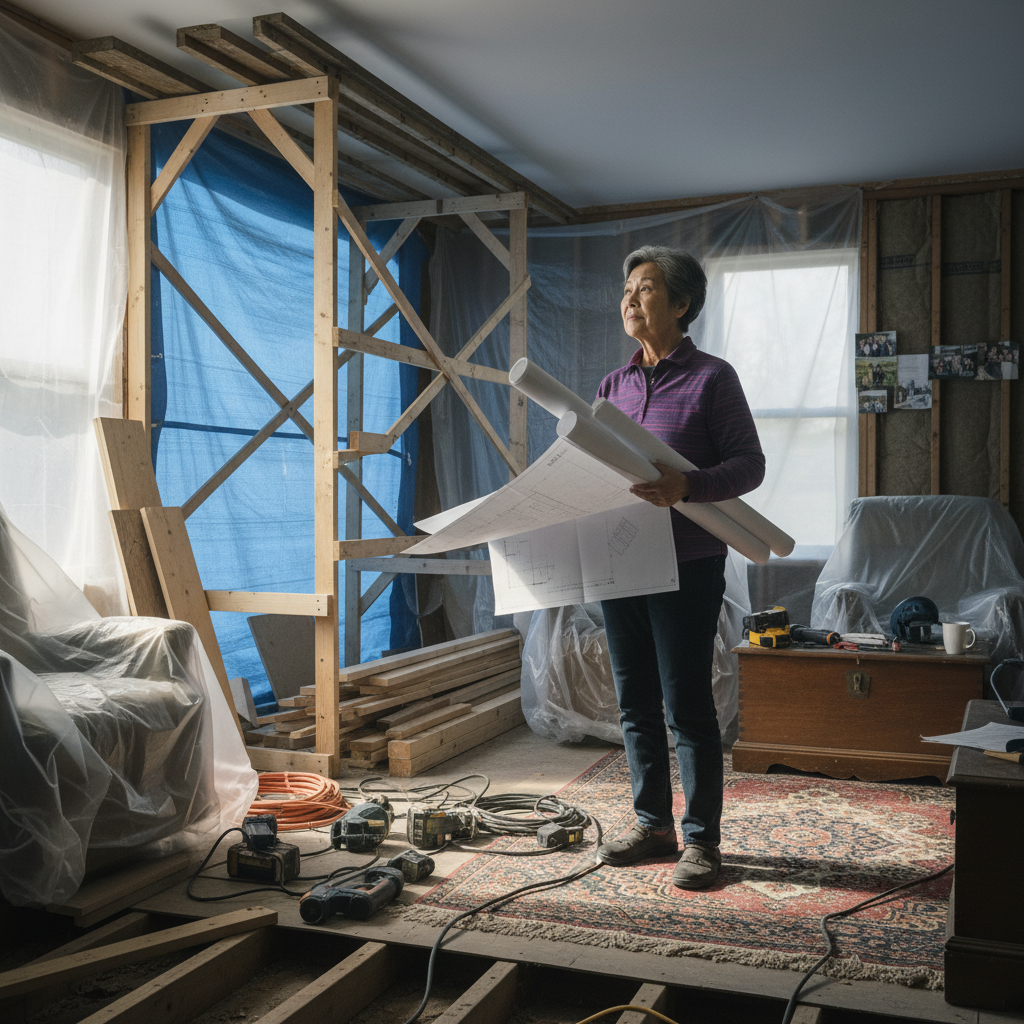
Disaster Recovery Scenarios: How Reverse Mortgages Provide Solutions
Scenario 1: The Cottage Fire
Helen, age 72, has owned a cottage near Algonquin Park for 30 years. A wildfire races through the community in 2024, severely damaging her cottage.
- Home value: $350,000
- Insurance payout: $120,000 (actual cash value after depreciation)
- Rebuild cost: $200,000 (to modern standards)
- Gap: $80,000
Helen's pension income covers her living expenses; she can't absorb an $80,000 loss without selling the cottage or withdrawing heavily from savings. The cottage represents a legacy property—three generations have gathered there.
Reverse Mortgage Solution:
- Helen accesses $80,000 via reverse mortgage on her primary residence ($480,000 value in Toronto)
- Funds bridge the gap between insurance payout and rebuild cost
- She retains cottage ownership during reconstruction
- No monthly mortgage payments; she rebuilds on her timeline
- After reconstruction completes, the cottage is fully rebuilt and more valuable than pre-fire
Cost: Reverse mortgage on primary residence grows at ~$2,500-3,000/year (at typical rates). But cottage appreciates and is fully functional again. Estate value increases significantly.
Scenario 2: The Basement Flood
Frank, age 68, experiences severe flooding during an intense rainstorm in his Durham Region home (valued at $420,000).
- Insurance claim: Water damage covers main floor; basement considered "flood damage" (excluded from typical coverage)
- Insurance payout: $25,000
- Actual remediation costs: $65,000
- Mold remediation: $15,000
- Water extraction and structural drying: $12,000
- Finished basement restoration: $20,000
- Upgraded basement waterproofing system: $18,000
- Gap: $40,000
Frank's RRIF and CPP provide stable income, but a $40,000 emergency draws heavily on emergency savings. The longer his basement remains damaged, the greater the risk of structural damage and mold spread.
Reverse Mortgage Solution:
- Frank accesses $40,000 via reverse mortgage
- Immediately engages restoration contractors
- Prevents secondary damage (mold, structural compromise)
- Basement is fully functional within 3-4 months
- Home value is protected and actually increased due to upgraded waterproofing
Cost: $40,000 reverse mortgage balance grows; but home damage is arrested, preventing $80,000+ in cascading secondary damage.
Scenario 3: The Roof Replacement After Storm
Dorothy and George, ages 66 and 70, live in a Mississauga home with an aging roof. A severe ice storm damages it catastrophically.
- Home value: $520,000
- Roof replacement cost: $28,000
- Insurance coverage: Limited (their deductible is $2,500; coverage is depreciated)
- Insurance payout: $12,000
- Out-of-pocket cost: $16,000
A new roof is essential before winter; delays risk further water damage and mold. Without immediate action, the problem compounds.
Reverse Mortgage Solution:
- Access $16,000 via reverse mortgage
- Immediate roof replacement before winter
- Home is protected from water infiltration
- Avoids $20,000-30,000 in secondary water and mold damage that could occur with delays
Result: $16,000 reverse mortgage prevents $100,000+ in cascading damage.

Steps to Take When Disaster Strikes
Immediate Actions (Days 1-3)
- Ensure Safety: Evacuate if necessary; follow emergency instructions
- Document Everything: Take photos/videos of damage for insurance claims
- Notify Insurance: File claim immediately; gather policy documents
- Secure the Property: Board up windows, tarps on roof, prevent theft/further damage
- Contact Emergency Contractors: Mitigation specialists (water extraction, mold prevention) work 24/7
Insurance Claims Phase (Days 4-14)
- Cooperate with Adjuster: Provide documentation, photos, receipts
- Request Interim Payments: Ask for advance on expected payout for immediate repairs
- Obtain Repair Estimates: Get bids from licensed contractors
- Review Payout Carefully: Understand what's covered, gaps, and depreciation
Funding the Gap (Weeks 2-4)
- Calculate Total Needed: Repair costs minus insurance coverage
- Contact Reverse Mortgage Lender: Explain emergency situation; many expedite disaster recovery applications
- Provide Documentation: Insurance payout letter, repair estimates, property details
- Complete Application: Expedited process takes 4-6 weeks
- Receive Funds: Draw needed capital once reverse mortgage closes
Reconstruction Phase (Weeks 4-16)
- Hire Contractors: Licensed, insured professionals with experience in your type of damage
- Manage Project: Oversee timeline, quality, change orders
- Minimize Disruption: Plan temporary living arrangements if you can't remain in home
- Document Work: Track all invoices, permits, and completion certificates for future claims and home value
Insurance and Reverse Mortgage Coordination
Key Points:
- Reverse mortgage is on primary residence; disaster property may be cottage or secondary property
- Reverse mortgage funds can be used for any property damage you own
- Insurance payout goes to you; use it for repairs, and reverse mortgage bridges additional gaps
- No coordination needed between lenders; you manage both
Strategic Approach:
- Redirect insurance proceeds to initial reconstruction
- Use reverse mortgage funds to fill gaps and prevent secondary damage
- Optimize project sequence to minimize disaster duration and secondary costs
Preventing Financial Catastrophe After Disaster
Before Disaster Strikes:
-
Review Insurance Coverage: Understand what's covered, deductibles, coverage limits
-
Update Replacement Cost: Many seniors have outdated coverage; update to current rebuild costs
-
Eliminate Common Exclusions:
- Consider sump pump overflow coverage
- Add earthquake if in high-risk area
- Add accidental damage coverage
- Consider flood insurance (standard homeowners excludes flood)
-
Document Home Value: Maintain records of renovations, improvements, contents
-
Know Your Reverse Mortgage Options: Understand available equity before emergency strikes
-
Create Emergency Fund: 3-6 months of living expenses plus $20,000-30,000 for emergency repairs
Tax and Estate Planning After Disaster
Insurance Proceeds
- Insurance proceeds themselves are not taxable income
- Repairs and reconstruction expenses reduce insurance proceeds dollar-for-dollar
- No tax deduction for uninsured losses (personal property)
Reverse Mortgage for Repairs
- Reverse mortgage funds are not taxable income (borrowed funds)
- Interest is not tax-deductible on reverse mortgage (unlike traditional mortgages)
- Interest accumulates on reverse mortgage balance over time
Estate Planning Implications
- If disaster damage reduces home value significantly, update estate plan
- Reverse mortgage affects net estate value; ensure will addresses this
- Reconstruction increases home value; updated appraisals affect estate calculation
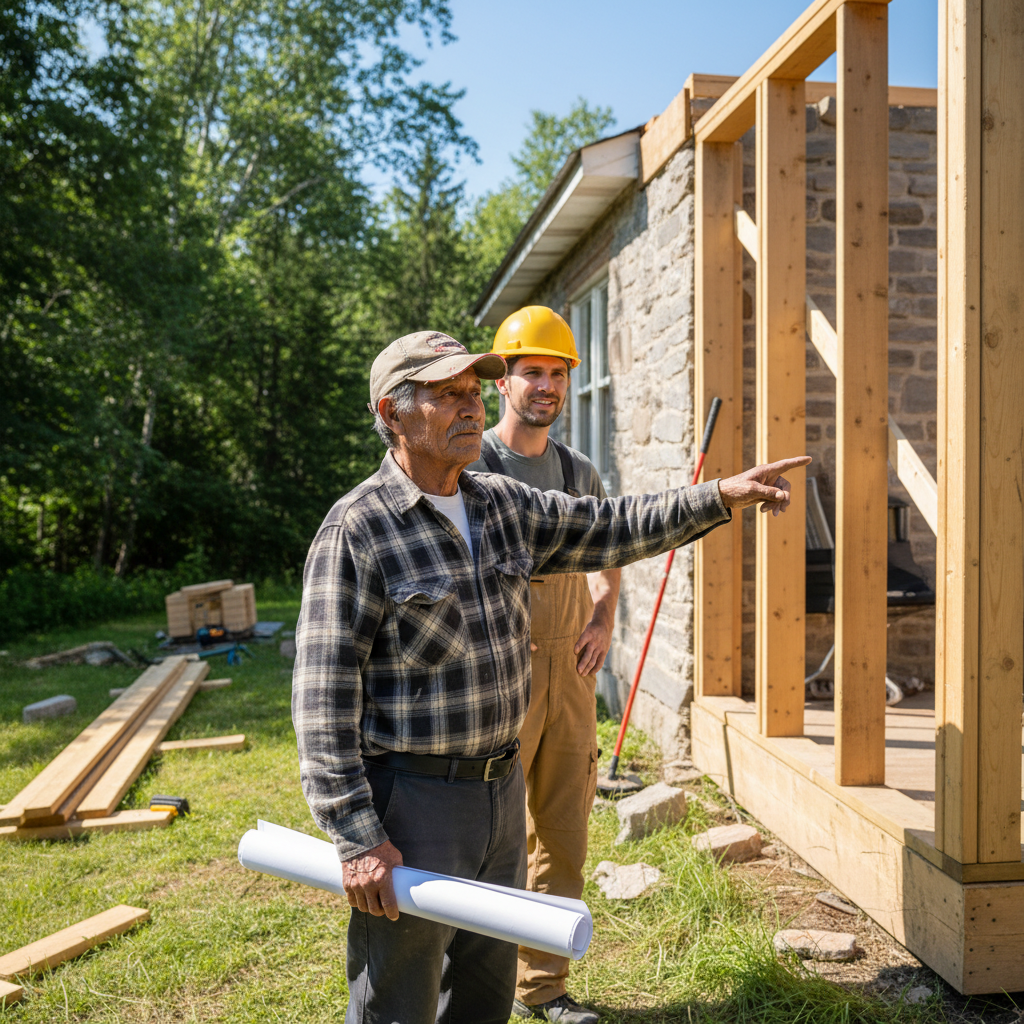
Should You Rebuild or Sell?
After major disaster, some seniors face a bigger decision: should I rebuild or sell the damaged property?
Rebuild If:
- You're emotionally attached to the property (family home, cottage with memories)
- The property has significant appreciation potential
- Rebuilding is faster than selling and rebuying
- You want to stay in your community
- Home will be substantially improved post-rebuild
Sell If:
- The disaster is the impetus you needed to downsize
- Rebuild costs exceed your comfort level even with reverse mortgage
- The property was already on your "maybe sell in 5 years" list
- Moving would improve your retirement quality of life
- You'd prefer not to manage a major reconstruction project
Neither is "wrong"—it's a personal decision amplified by disaster. A reverse mortgage provides financial flexibility to make this decision based on preferences, not financial desperation.
Moving Forward: Resilience and Recovery
A reverse mortgage won't prevent disaster, but it provides the financial resilience to recover and rebuild when disaster strikes. By maintaining accessible home equity through a reverse mortgage line of credit, you create a disaster recovery fund that's already pre-approved and ready to deploy.
For Ontario seniors who've spent a lifetime building and protecting their homes, a reverse mortgage ensures that disaster—whether fire, flood, or storm—becomes a setback, not a catastrophe.
Rebuild your home. Restore your life. A reverse mortgage makes both possible.
Ready to Learn More?
Get the free Ontario Reverse Mortgage Guide and find out exactly how much you could unlock from your home.
Get My Free Guide →