
Managing Multiple Properties in Retirement: Reverse Mortgage Strategy for Cottage + Primary Home
Own a cottage and a primary home? Learn how reverse mortgages fit into multi-property retirement planning, cost management, and succession strategies.
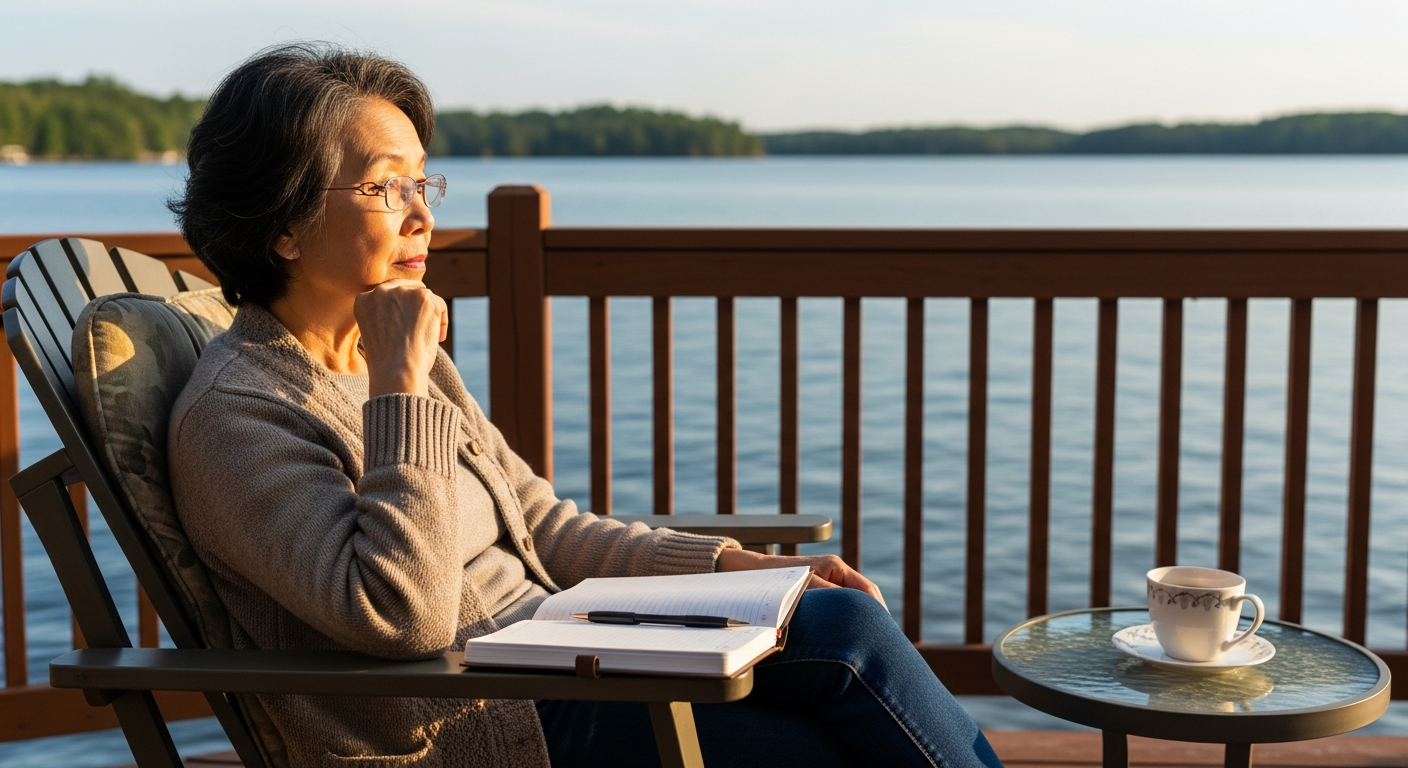
How does owning a cottage change your reverse mortgage strategy? Many Ontario families own both a primary home and a vacation property—and most are unsure how to manage both in retirement. A cottage is a beloved asset, but it also carries significant ongoing costs (property taxes, insurance, maintenance, utilities). A reverse mortgage on your primary home can free up cash flow to maintain the cottage, but only if you plan strategically. Here's how to manage multiple properties, preserve family legacy, and build a sustainable financial plan.
This article is for educational purposes only and does not constitute financial or tax advice. Consult with a financial advisor and tax accountant about your specific multi-property situation.
The Multi-Property Reality: Costs and Complexity
What Multi-Property Ownership Actually Costs
Owning a primary home AND a cottage means double obligations:
| Expense | Primary Home | Cottage | Annual Total |
|---|---|---|---|
| Property taxes | $6,000–$8,000 | $3,000–$5,000 | $9,000–$13,000 |
| Home insurance | $1,200–$1,500 | $800–$1,200 | $2,000–$2,700 |
| Utilities | $2,400 | $1,200 (seasonal) | $3,600 |
| Maintenance/repairs | $2,000–$3,000/year | $2,000–$4,000/year | $4,000–$7,000 |
| Dock/waterfront care | — | $500–$2,000/year | $500–$2,000 |
| Snow removal/landscaping | $2,000–$3,000/year | $1,000–$2,000/year | $3,000–$5,000 |
| Estimated Annual Total | — | — | $22,100–$36,700 |
That's $1,840–$3,060 per month just for basic property obligations across both properties.
For retirees living on CPP, OAS, and pension (often $3,000–$4,000/month), cottage expenses consume 50%+ of retirement income.
Why Cottages Are Emotional (Not Just Financial)
Cottage ownership isn't just about costs—it's deeply emotional:
- Family legacy: "Four generations spent summers here"
- Childhood memories: Where children learned to swim, family traditions were built
- Multigenerational gathering place: Extended family reunions, holidays
- Escape and rejuvenation: Psychological value beyond financial
This emotional attachment is why selling the cottage—even when financially rational—is often the hardest decision families face in retirement.
Three Strategies for Managing Multi-Property Retirement
Strategy 1: Reverse Mortgage + Keep Both Properties
Best for: Families with sufficient home equity, emotional attachment to cottage, healthy adult children who share costs
How it works:
- Close reverse mortgage on primary home (~$150,000–$250,000)
- Use reverse mortgage draws to offset cottage costs ($1,500–$2,500/month draws)
- Your retirement income + RM draws cover both properties sustainably
- Cottage passes to heirs (potentially with some debt if RM was large)
Financial breakdown (example):
-
Primary home value: $600,000
-
Cottage value: $400,000
-
Total assets: $1,000,000
-
CPP + OAS + pension: $3,500/month
-
Combined property costs: $2,500/month
-
Shortfall: ($1,000)/month
-
Reverse mortgage: $180,000
-
Monthly draws: $900/month
-
New cash flow: $3,500 + $900 = $4,400/month
-
Surplus: $1,900/month ✓
Estate impact:
- Primary home: $600,000 - $180,000 RM balance = $420,000 net
- Cottage: $400,000 (debt-free)
- Total estate: $820,000
- Heirs inherit both properties and flexibility
Challenges:
- RM debt reduces primary home inheritance
- Adult children may resent cottage maintenance costs if you pass away early
- Cottage may become financial burden to heirs if property taxes continue rising
- If home value falls, RM balance becomes larger portion of equity
Strategy 2: Reverse Mortgage + Sell Cottage Before/At Retirement
Best for: Families wanting simplicity, concerned about long-term costs, primary home is legacy priority
How it works:
- Sell cottage now (or within 5 years of retirement)
- Invest proceeds or use to pay down primary home debt
- No reverse mortgage needed (cottage sale reduces financial pressure)
- OR close modest reverse mortgage to supplement retirement income
Financial breakdown:
- Cottage sale: $400,000 proceeds
- Use to: Pay down primary home debt, invest, increase retirement lifestyle quality
- Reverse mortgage: Not needed, or very small ($50,000–$100,000)
Estate impact:
- Primary home: Fully owned or small RM balance
- Cottage: Sold; proceeds benefit current retirees, not heirs
- Heirs inherit clear primary home, potentially investment accounts from cottage sale proceeds
- Simpler estate planning; less ongoing obligations for heirs
Emotional challenge:
- Difficult decision to sell beloved family property
- Family members may resist
- Loss of gathering place for extended family
Strategy 3: Reverse Mortgage + Shared Cottage Ownership
Best for: Families with multiple adult children, shared passion for cottage, collaborative decision-making
How it works:
- Close reverse mortgage on primary home
- Adult children invest in cottage (become co-owners or partial owners)
- You maintain primary home; children help fund cottage costs
- Cottage is owned jointly; succession plan is clear
Ownership structure (example):
- Parent: 50% ownership of cottage
- Child A: 25% ownership of cottage
- Child B: 25% ownership of cottage
Cost sharing (example):
- Total annual cottage costs: $30,000
- Parent contributes: $15,000 (50%)
- Child A contributes: $7,500 (25%)
- Child B contributes: $7,500 (25%)
Reverse mortgage role:
- RM provides funds for parent's 50% share ($15,000/year = $1,250/month)
- Children cover their own shares from personal income
- Parent remains involved; children have ownership stake
Estate impact:
- Primary home: Goes to parent's estate (RM debt deducted)
- Cottage: Already owned 50% by children (not in estate)
- Clear succession; children already invested; less conflict
Legal complexity:
- Requires formal co-ownership agreement (lawyer drafts)
- Clarifies ownership, management, buyout rights if someone leaves
- Prevents disputes if parent passes away
- Cost: ~$1,500–$3,000 in legal fees (worth it)

Financial Sustainability Questions
Before committing to reverse mortgage + cottage strategy, ask:
| Question | Why It Matters |
|---|---|
| Are cottage costs sustainable for 20+ years? | If you live to 90–95, can your RM draws + income cover cottage? |
| Will my heirs want the cottage? | If not, they'll face pressures to sell it, paying capital gains tax and estate costs |
| Am I building a long-term burden for heirs? | Rising property taxes may make cottage unaffordable for next generation |
| Can adult children contribute to cottage costs? | Shared costs reduce your burden significantly |
| What's my exit plan if finances deteriorate? | Can you sell cottage quickly if needed? At what price? |
| Does cottage appreciate or appreciate slower than primary home? | If cottage appreciates less, it's a drag on overall retirement returns |
Succession Planning: Cottage to the Next Generation
The Cottage Will Clause
If you're keeping the cottage, your will should clearly state:
Option A: Cottage to specific child
"I leave my cottage property, address [cottage address], to my daughter
[Name]. This is in lieu of [portion] of her inheritance from my estate.
My son receives the primary home after reverse mortgage is repaid.
My other children receive [cash/investments] of equal value."
Option B: Cottage to be sold, proceeds divided
"My executor shall sell my cottage property within [12 months] of my death.
Proceeds shall be divided equally among my children [names]."
Option C: Cottage to all children jointly
"My cottage is to be held in trust for my children [names] as joint tenants.
Each child has equal ownership rights and must contribute equally to costs
and taxes. If one child wishes to exit ownership, remaining children may
buy them out at fair market value (determined by appraisal)."
Discussing the Cottage Plan with Your Children
Before finalizing your will, have a family meeting:
-
Explain the cottage situation clearly
- "Here's what the cottage costs annually"
- "Here's how the reverse mortgage helps"
- "Here's my plan for the cottage in my will"
-
Gauge children's interest
- Who actually wants the cottage?
- Who is willing to contribute to costs?
- Who would resent inheriting shared property?
-
Address fairness concerns
- One child inherits cottage (valuable property) + one child inherits primary home
- How do you equalize inheritance between children?
-
Document your intentions
- Put your plan in writing; file with will
- Share copies with executor and children
- Prevents surprises and conflicts after you pass away
Property Tax Deferral and Multi-Property Strategy
Ontario Property Tax Deferral for Seniors
Ontario offers Property Tax Deferral for homeowners 65+:
- Defer property tax increases (not full tax, just increases)
- Interest accrues at modest rate
- Deferral amount is payable when home is sold or inherited
Does it apply to both properties?
- Primary residence: YES
- Cottage (secondary residence): NO
You can defer primary home property tax increases, but cottage taxes are not eligible.
Strategic use:
- Defer primary home tax increases; use reverse mortgage draws for cottage costs instead
- This frees up cash flow without paying full property tax bill immediately
Frequently Asked Questions
Can I get a reverse mortgage on my cottage instead of my primary home?
No. Reverse mortgages require the property to be your principal residence (primary home). Cottages, vacation properties, and rental properties are ineligible. You must use your primary home as collateral.
If I sell my cottage, can I use the proceeds to pay off my reverse mortgage?
Absolutely. Selling the cottage generates proceeds that can repay the reverse mortgage entirely, partially, or be invested. This is one of the cleanest ways to exit a reverse mortgage.
How are capital gains taxes handled when I eventually sell the cottage?
Capital gains tax applies to cottage appreciation. The cottage is not your principal residence (exempt from capital gains), so typically 50% of the appreciation is taxable income. For a cottage appreciating $200,000, you'd owe ~$50,000 in capital gains tax (at 50% marginal rate). Sell the cottage before you pass away; let heirs inherit clear property without tax liability.
If my adult children co-own the cottage with me, how does inheritance work?
Co-ownership can complicate inheritance. Work with a lawyer to structure it correctly:
- Joint tenancy: If one owner dies, their share automatically goes to other owners (outside estate, no probate)
- Tenancy in common: If one owner dies, their share goes to their heirs (through estate, probate required)
- Discuss which structure is best for your family.
Should I buy life insurance to cover reverse mortgage debt if I own multiple properties?
Consider it if you want to ensure primary home passes debt-free. Example: $200,000 life insurance policy covers $180,000 RM balance. This simplifies estate and ensures heirs inherit primary home clearly. Cost is modest (~$60–$120/month age-dependent).
How do property tax increases affect multi-property retirement planning?
Both properties' taxes typically increase 2–3% annually. Over 20 years, a $6,000 annual primary home tax becomes $10,000+; a $4,000 cottage tax becomes $6,500+. Plan for this in your reverse mortgage draw amount. Don't just cover today's costs; budget for future increases.
Get your free Ontario Reverse Mortgage Guide → Learn more about reverse mortgages, multi-property planning, and cottage succession strategies
Ready to Learn More?
Get the free Ontario Reverse Mortgage Guide and find out exactly how much you could unlock from your home.
Get My Free Guide →Related Articles
Reverse Mortgage and Estate Planning: What Your Executor Must Know
Guide for executors and heirs: understand how reverse mortgages are handled in probate, what the no-negative-equity guarantee means, and how to manage repayment of the loan.
Read →Reverse Mortgage and Second Property Taxes: Managing Multi-Property Tax Obligations
Own a cottage or vacation property? Learn how reverse mortgages on your primary home affect second property taxes, capital gains, and multi-property financial planning.
Read →Reverse Mortgage for Cottage Country Retirees in Ontario: What to Know
Ontario retirees who live full-time in cottage country — Muskoka, Kawartha Lakes, Prince Edward County — can use a reverse mortgage on their primary residence. Learn how it works.
Read →