
Reverse Mortgage for Adult Child's Chronic Illness: Home Modifications and Medical Equipment
When adult children have chronic illnesses, specialized home modifications and medical equipment enable independence. A reverse mortgage can fund these critical supports.
The Equipment and Housing Reality of Chronic Illness in Young Adults
Your daughter was diagnosed with rheumatoid arthritis at 28. The progressive joint damage is limiting her mobility. She needs specialized equipment in her bathroom, ramps for accessibility, adapted kitchen counters. The equipment and modifications total $8,000-$15,000. She can't afford them on her modest income while paying for treatment.
Your son has Multiple Sclerosis. Some days are manageable; others he can barely walk. Living in a shared apartment with stairs and a cramped bathroom isn't sustainable. He needs accessible housing with grab bars, a walk-in shower, and an accessible bedroom. The modifications cost more than he can save in years.
Your child developed Ehlers-Danlos Syndrome as a teenager. It's invisible but disabling, affecting joints and connective tissue. They need specialized equipment for pain management, a bed and chairs that properly support their unique needs, and modifications for managing fatigue and mobility limitations. Standard medical equipment doesn't work for their condition.
Chronic illness in adult children creates a specific financial burden: expensive, essential home modifications and specialized medical equipment that enable independence but exceed what young people with limited income can afford.
A reverse mortgage allows parents to fund these modifications—not as charity, but as investment in their adult child's independence and quality of life.
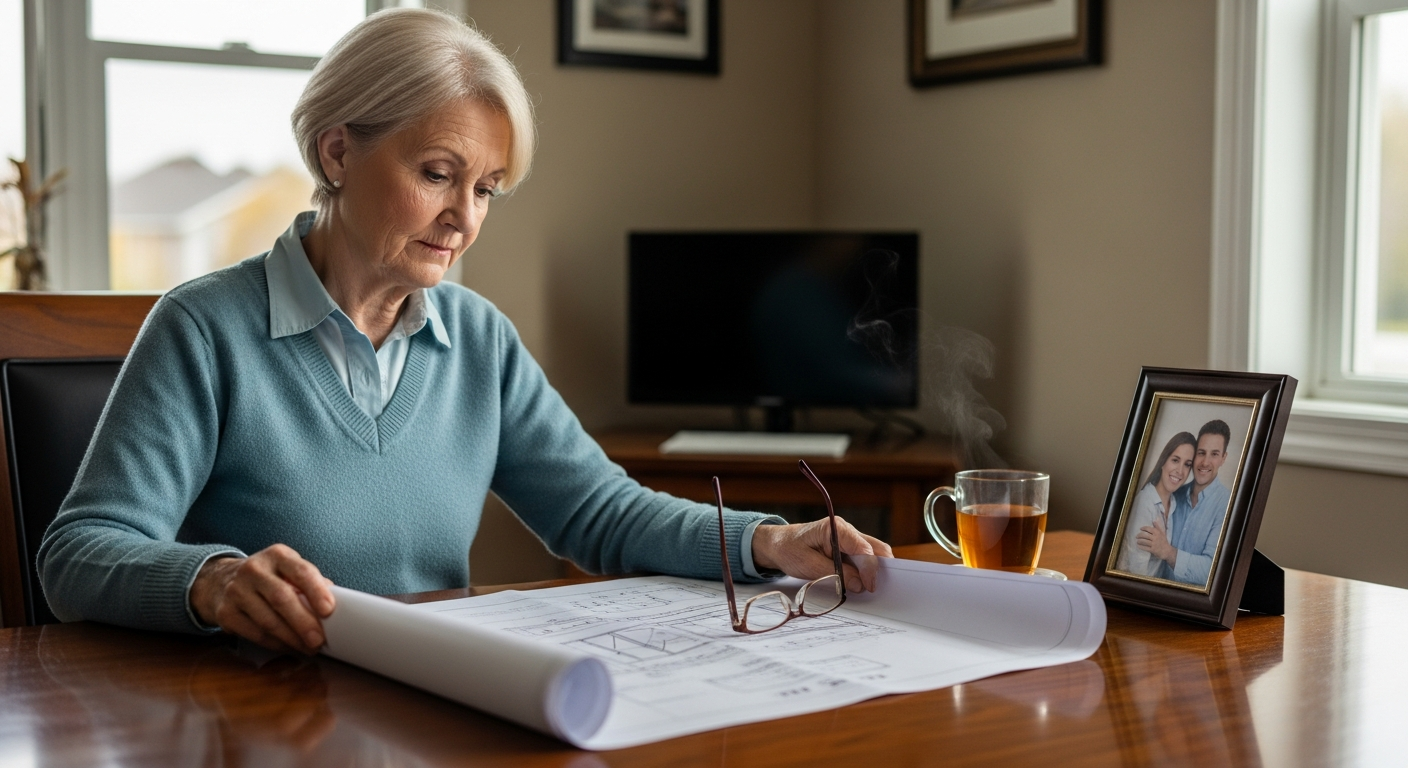
The Full Cost of Chronic Illness Housing Needs
When an adult child has a chronic illness requiring accessibility modifications, costs accumulate:
Bathroom modifications ($3,000-$8,000)
- Walk-in shower (instead of tub): $2,000-$4,000
- Grab bars and safety equipment: $500-$1,000
- Accessible toilet or bidet: $1,000-$2,000
- Non-slip flooring: $500-$1,500
- Accessible sink/vanity: $500-$1,500
Accessibility and mobility modifications ($2,000-$6,000)
- Ramps (interior and/or exterior): $1,000-$3,000
- Widened doorways: $500-$2,000
- Accessible flooring/removal of carpet: $1,000-$3,000
- Handrails throughout: $300-$800
Kitchen modifications ($2,000-$5,000)
- Lowered or raised counters (depending on mobility needs): $1,000-$3,000
- Accessible appliances (lowered or side-opening): $500-$1,500
- Accessible storage and cabinet design: $500-$1,000
Bedroom accessibility ($1,500-$4,000)
- Accessible bed and positioning system: $1,000-$2,500
- Ceiling hoist system (for limited mobility): $2,000-$4,000
- Flooring and bedroom design modifications: $500-$1,500
Specialized medical equipment ($2,000-$10,000+)
- Motorized mobility aids: $1,000-$3,000
- Specialized mattresses for pain/positioning: $1,000-$2,000
- Pain management equipment (TENS units, heating/cooling): $500-$1,500
- Condition-specific equipment (varies widely): $1,000-$5,000+
Assistive technology and smart home adaptations ($500-$3,000)
- Voice-controlled lighting and temperature: $500-$1,500
- Automated doors and locks: $500-$1,500
- Emergency alert systems: $300-$500
Total realistic cost for comprehensive modification: $8,000-$20,000+ depending on severity and specific condition.
Many adult children with chronic illnesses live in inadequate housing simply because they can't afford to modify it. Parents with home equity can change this.
Real Scenario: Supporting an Adult Child's Accessibility Needs
Michael, 60, and his wife Jennifer have a 32-year-old daughter, Sarah, who was diagnosed with Multiple Sclerosis at age 27. Her mobility has been declining. She uses a wheelchair for mobility distances but can walk short distances indoors with support.
Sarah lives in a shared house with two roommates. The house isn't accessible: stairs to enter, narrow hallways, small bathroom, inaccessible kitchen. Sarah is considering moving into a care facility because independent housing seems unaffordable.
"I didn't want my daughter in institutional care at 32," Michael said. "She's smart, employed, independent in every way except mobility. She just needed an accessible home."
Michael's approach:
- Assessed Sarah's housing and accessibility needs ($5,000-$8,000 for comprehensive modifications)
- Explored reverse mortgage: $400,000 home equity available
- Funded a down payment on an accessible condo ($20,000) plus critical modifications ($7,000)
- Total reverse mortgage funding: $27,000
The modifications included:
- Walk-in shower with grab bars and accessible toilet: $5,000
- Widened doors throughout: $1,500
- Accessible kitchen counters: $1,500
- Flooring and accessibility features: $2,000
- Motorized bed and equipment: $2,000
The result:
- Sarah moved into her own accessible home
- She maintained her job and independence
- Her quality of life improved dramatically
- She could pursue relationships and community engagement
- Michael and Jennifer have clarity that Sarah can age in place in an appropriate home
"That reverse mortgage investment changed my daughter's life," Michael said. "Not as charity, but as recognition that she deserves independence. The cost was substantial, but it enabled her to live her life."
The Invisible Struggle: Young Adults With Chronic Illness
Young adults with chronic illnesses face unique challenges:
- Underestimated by healthcare providers — "You're young, you should be fine" dismisses real limitations
- Misunderstood by employers — Chronic illness is invisible; many face workplace discrimination
- Financially trapped — Medical treatment costs + inability to work full-time + need for accessible housing = impossible situation
- Socially isolated — Inaccessible housing and limited mobility reduce social engagement
- Limited family support — Many parents underestimate the real cost of supporting an adult child with chronic illness
When parents step in to fund housing modifications, they're not enabling dependence—they're removing a barrier to independence. The difference is crucial.
A 32-year-old with MS who can work and manage their life independently, but needs a wheelchair-accessible home, is fundamentally different from a 32-year-old who can't work. The housing modification enables the independence that's already present.
Types of Chronic Illnesses Requiring Housing Modifications
Mobility-limiting conditions:
- Multiple Sclerosis
- Cerebral Palsy
- Spinal cord injury
- Muscular dystrophy
- Parkinson's disease
- Severe rheumatoid arthritis
Severe fatigue/pain conditions:
- Myalgic Encephalomyelitis/Chronic Fatigue Syndrome
- Fibromyalgia (severe cases)
- Ehlers-Danlos Syndrome
- POTS (Postural Orthostatic Tachycardia Syndrome)
- Complex Regional Pain Syndrome
Accessibility needs arising from:
- Invisible but mobility-limiting conditions
- Neurological conditions affecting mobility and balance
- Joint/connective tissue disorders
- Respiratory conditions affecting mobility
The common thread: young adults who are otherwise capable of independent living but need specific housing modifications to make that independence sustainable.
How to Approach This Conversation With Your Adult Child
If your adult child has a chronic illness and you're considering funding housing modifications:
Start with listening, not offering:
- "What modifications would make your life easier?"
- "What limitations do you face in your current housing?"
- "What would independence look like for you?"
Assess actual needs, not assumed needs:
- Your idea of helpful modification may not match their priority
- Some adaptations change independence; others are nice-to-have
- Budget-conscious prioritization: most critical first
Respect autonomy:
- This is about enabling their choices, not directing their life
- If they prefer to solve housing independently, support that
- Offer help without pressure
Discuss boundaries:
- "We can fund housing modifications. We can't fund housing beyond what you can sustain."
- "These are tools for your independence, not permanent dependence."
- "We expect you to work and manage your life within your health limitations."
Document the support:
- Is this a gift or a loan?
- Are there expectations attached?
- How does it affect inheritance or sibling fairness?
Funding Strategy: Reverse Mortgage + Adult Child Responsibility
One effective structure:
Parent funds:
- Essential accessibility modifications: $5,000-$8,000 (gift)
- Specialized medical equipment: $2,000-$3,000 (gift)
- Total parent contribution: $7,000-$11,000
Adult child funds/finances:
- Housing itself (they secure housing and mortgage/rent within their means)
- Maintenance and ongoing costs
- Additional modifications beyond essentials
- Furniture and personal items
Result: Parent invests in enabling independence, but adult child maintains financial responsibility for their own housing and life. This is empowering, not enabling.
Accessibility Grants and Insurance Coverage You May Not Know About
Before fully funding modifications, explore:
Provincial grants for accessibility:
- Ontario Disability Support Program (ODSP): may cover some modifications
- Assistive Devices Program (ADP): covers some equipment
- Local health unit accessibility programs: varies by region
Federal tax credits:
- Medical Expense Tax Credit: some modifications may be deductible
- Disability Tax Credit: opens access to other programs
- Consult accountant about what's eligible
Insurance coverage:
- Some employee health plans cover medical equipment
- Disability insurance sometimes covers accessibility modifications
- Home insurance may cover accessibility modifications after illness diagnosis
Nonprofit organizations:
- Some disease-specific organizations (MS Society, etc.) offer equipment and modification grants
- Community accessibility organizations may offer funding
- Religious organizations sometimes fund accessibility for members
Leverage these first; reverse mortgage funds cover the gap.
The Living Legacy of Accessibility
Supporting an adult child's housing accessibility is ultimately about recognizing their full humanity and potential. It says: "We see your capabilities, we recognize your limitations, and we're willing to invest in infrastructure that lets you live your best life."
This is living legacy at its finest: not money left after death, but tangible support enabling your adult child's independence, dignity, and participation in community.
For many parents, this is the purpose of retirement wealth: enabling the people you love to flourish within their realities, whatever those realities may be.
The Bottom Line
Adult children with chronic illnesses often face a false choice: live in inadequate housing they can afford, or move into institutional care because accessible, independent housing is unaffordable.
A reverse mortgage allows parents to fund the modifications that remove this false choice. The investment in housing accessibility is investment in your adult child's independence, dignity, and future.
In Ontario, where many young people are managing serious chronic illnesses while trying to maintain independent lives, parental support for housing accessibility is often the difference between struggling isolation and thriving independence.
If you have an adult child with chronic illness and substantial home equity, this support deserves consideration. The cost is significant, but the impact on their quality of life is immeasurable.
Ready to Learn More?
Get the free Ontario Reverse Mortgage Guide and find out exactly how much you could unlock from your home.
Get My Free Guide →Related Articles
Reverse Mortgage for Workplace Injury Recovery: Supporting Adult Child's Career Transition
Help your adult child rebuild their career after workplace injury. Learn how reverse mortgages fund recovery, retraining, and financial stability during career transition.
Read →Reverse Mortgage When Adult Child Faces Student Loan Default: Creditor Protection Strategy
Protect your home when adult child has severe student debt. Learn how reverse mortgage planning shields your assets from student loan creditors in Ontario.
Read →Reverse Mortgage to Fund Adult Child's Real Estate License and Business Launch
Help your adult child launch a real estate career. Reverse mortgage covers licensing, training, first-year operating costs, and marketing to build a sustainable income.
Read →