
When Adult Child Caregiving Becomes Full-Time: Reverse Mortgage Support Strategy
Support an adult child who has become your full-time caregiver using a reverse mortgage while protecting both your retirement and their financial security.
What happens when your adult child quits work to become your full-time caregiver? This increasingly common scenario creates financial strain: your child loses income, you face guilt and pressure to "compensate" them, and retirement security is at risk. A reverse mortgage can fairly support both of you while maintaining clear financial boundaries and protecting your home equity.
This article is for educational purposes only and does not constitute financial advice.
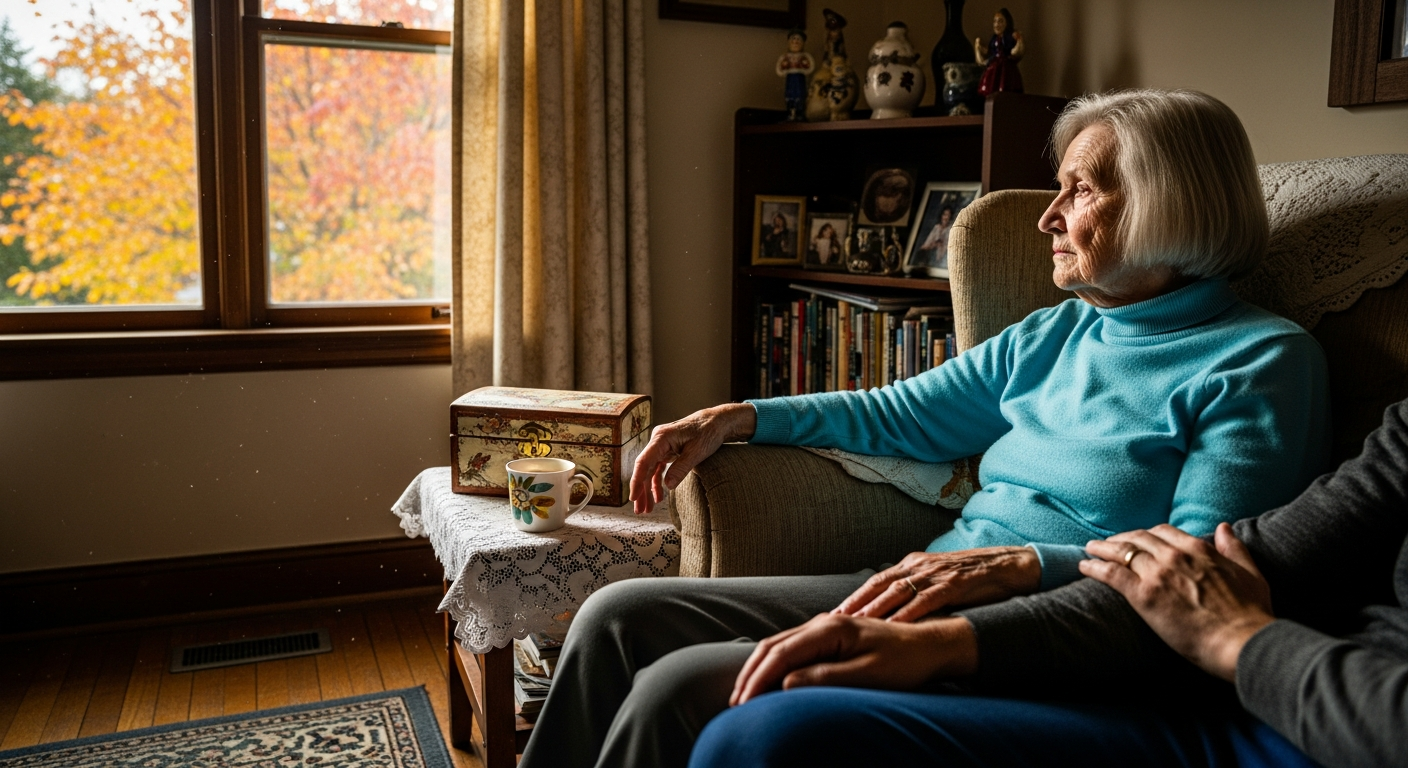
The Full-Time Caregiving Crisis
The scenario is increasingly common:
Margaret, age 72, is diagnosed with early dementia. Her adult daughter Sarah, age 42, has a successful marketing job earning $85,000/year. Sarah is the primary caregiver (still working, managing appointments, coordinating care, providing evening and weekend support).
Then Margaret's condition worsens. Sarah faces a choice:
- Keep working, risking job loss due to caregiving responsibilities
- Quit work, provide full-time care, lose $85,000/year income
Sarah chooses to quit. Now:
- Margaret feels guilty; wants to "pay" Sarah for care
- Sarah has no income; her savings deplete rapidly
- Margaret's retirement income ($52,000/year pension + CPP) covers her expenses barely
- Both are under financial stress
This is not uncommon. The Canadian Caregiver Coalition estimates 2.7 million Canadians provide unpaid care; many are adult children in mid-career.
The Compensation Dilemma
Parents in this situation struggle with fairness:
"Should I pay my daughter for care?"
Considerations:
- You're not obligated (legally, adult children must support aging parents, but you're not obligated to pay them)
- Many cultures view caregiving as a family responsibility
- Yet your child sacrificed a significant income
- Compensation could be seen as "paying" for love (uncomfortable)
- If you compensate one child, do you compensate others who provide lesser support?
Without a clear strategy, parents often:
- Make ad-hoc financial gifts (creating expectation and entitlement)
- Guilt-fund every need (draining retirement savings)
- Avoid the conversation (creating resentment)
- Promise to "take care of them in the will" (too late; they need income now)
Reverse Mortgage as Fair Solution
A reverse mortgage provides a structured, transparent way to support a caregiving adult child:
Option 1: Formal Care Wages
- Establish a fixed monthly "care wage" (e.g., $1,500-$2,500/month depending on intensity)
- Use reverse mortgage proceeds to fund the wages
- Creates a documented, fair arrangement
- Other family members can see it's reasonable and justified
- Child has reportable income (can apply for CPP credits later)
Option 2: Equity-Sharing Arrangement
- Adult child moves in or is present full-time
- Document a co-ownership or "equity share" agreement
- Upon your passing, child receives reduced inheritance to account for the share
- This is complex; requires legal documentation
Option 3: Hybrid Approach
- Base care wage covers lost employment income (~$50,000 for high-income caregiver)
- Additional support for specific expenses (medical appointments, travel, equipment)
- Clear boundaries between "care compensation" and "family gifts"
According to Caregiver Voices Canada, the average full-time caregiver loses $28,000-$35,000 annually in income. Fair compensation acknowledges this sacrifice without bankrupting the parent.
Real-World Scenario: Sarah's Fair Compensation
The numbers:
Sarah quit her $85,000/year job. She's 42 and likely to work another 20+ years. Loss of:
- Current income: $85,000/year
- Retirement contributions: $8,500/year (matching) lost
- Career advancement: likely 3-5% annual raises not earned
- Long-term CPP credit: years of zero income = lower future pension
Total lifetime cost to Sarah: ~$1.2M-$1.5M (lost wages, benefits, and retirement).
Margaret's reverse mortgage solution:
Margaret, age 72:
- Home value: $550,000
- Borrowing capacity: ~$308,000 (56% at age 72)
- Request: $200,000 lump sum
- Cost: ~7% interest annually
Allocation:
- $1,500/month care wage to Sarah for 10 years = $180,000
- $20,000 emergency fund for unexpected care costs
- Coverage: until Margaret passes or care arrangement changes
Documentation:
- Written care agreement: specifies duties, hours, wages, and benefits
- Signed by both Margaret and Sarah (notarized for clarity)
- Copy provided to Margaret's executor/lawyer
- Clear in Margaret's will: "The $180,000 paid to Sarah for care is compensation for services, not an advance on inheritance. All other assets distributed equally to all heirs."
Outcome:
- Sarah has $18,000/year income security while caregiving
- Margaret avoids guilt and maintains retirement spending
- Other family members understand it's fair, not favoritism
- Upon Margaret's death, the reverse mortgage is repaid from estate (all heirs affected equally, not just Sarah)
Tax and Benefit Implications
Income tax:
- Care wages ARE taxable income to the adult child
- Treat them like regular employment (issue T4 if ongoing)
- Remit payroll deductions (CPP, EI if applicable)
CPP credits:
- Caregiver may be eligible for CPP caregiving contribution room
- Consult Service Canada about caregiving provisions
OAS/GIS (if parent is low-income):
- Reverse mortgage proceeds don't count as income
- Caregiver wages to adult child don't affect parent's benefits
- Adult child's income is separate
Will and estate:
- Document whether care wages are "loans" (repayable from child's inheritance) or "compensation" (no impact on inheritance)
- This affects how executors calculate distribution
Consult a tax advisor before implementing a formal care wage arrangement.
What If the Caregiving Relationship Breaks Down?
Risks:
- Adult child leaves suddenly
- Relationship becomes strained
- Caregiver becomes controlling or exploitative
- Family dynamics deteriorate
Protections with a reverse mortgage structure:
-
Written agreement spells out expectations clearly
-
Can be terminated if performance issues arise
-
Care can be supplemented with paid professional care if needed
-
Protects both parent and adult child
-
Have a lawyer draft the care agreement
-
Include termination clauses
-
Specify dispute resolution process
Consult Rick Sekhon Reverse Mortgages about structuring the loan to support care arrangements.
Quick Reference: Care Wage Models
| Income Level Lost | Monthly Care Wage | Annual Cost | 10-Year RM Borrow |
|---|---|---|---|
| $60,000/year | $3,500 | $42,000 | $45,000-50,000 |
| $75,000/year | $4,375 | $52,500 | $55,000-60,000 |
| $85,000/year | $5,000 | $60,000 | $65,000-70,000 |
| $100,000/year | $5,833 | $70,000 | $75,000-80,000 |
Frequently Asked Questions
If I pay my daughter for caregiving, does she owe me income tax?
Yes. Care wages are employment income; she must report them and pay tax. Consider this when calculating the care wage amount.
What if my adult child is already receiving government benefits (ODSP, CPP Disability)?
Care wages may trigger benefit clawback. Consult with the program administrator before implementing care wages. Some benefits have caregiver exemptions or integration provisions.
Should I pay my daughter more if I have multiple adult children?
This depends on your values and family culture. Consider:
- Paying all caregiving children fairly (not just one)
- Adjusting will to account for care compensation
- Being transparent with all children about the arrangement
What happens if my daughter takes time off for vacation?
Your written agreement should specify whether vacation is paid or unpaid, and how absences affect care provision. For example: "5 days paid vacation annually; additional absence requires 2 weeks notice and substitute caregiver."
Can I pay my adult child directly from a reverse mortgage, or must I borrow and then pay them?
You can set up the RM as a line of credit and draw as needed for care wages. Or borrow a lump sum upfront. Ask Rick Sekhon Reverse Mortgages about flexibility in your specific situation.
If I can't afford to pay my child fairly, what are my options?
- Borrow less and supplement with professional paid care
- Negotiate part-time care wages (your child works part-time, earns some outside income)
- Focus RM proceeds on supporting the caregiving arrangement indirectly (home modifications, professional care equipment)
- Consult a family mediator about shared caregiving (multiple adult children rotating responsibility)
Speak to a licensed mortgage professional. Independent legal advice is required before closing a reverse mortgage in Ontario.
Get your free Ontario Reverse Mortgage Guide →
This content is for illustrative purposes only. Rates may vary. Call Rick Sekhon for the best rates and more information.
Ready to Learn More?
Get the free Ontario Reverse Mortgage Guide and find out exactly how much you could unlock from your home.
Get My Free Guide →Related Articles
Reverse Mortgage for the Aging Caregiver Parent: Balancing Multi-Generational Needs
Support your aging parents while helping adult children. Navigate multi-generational caregiving with financial strategy using a reverse mortgage.
Read →My Adult Child Is My Caregiver: How a Reverse Mortgage Helps Both of You
Your adult child quit their job to care for you. A reverse mortgage can ease the financial strain on both of you—compensating them fairly while funding care costs.
Read →Reverse Mortgage for Workplace Injury Recovery: Supporting Adult Child's Career Transition
Help your adult child rebuild their career after workplace injury. Learn how reverse mortgages fund recovery, retraining, and financial stability during career transition.
Read →